Showing posts with label England. Show all posts

Wednesday, October 16, 2013

Brazil? Nuts!

Facebook/Football Association
There may have been a few hangovers across the shires of England this morning, but it would be tragic if last night's FIFA World Cup 2014-qualifying win by the national side led to anyone losing their job.

Because any England fan who thought the 2-0 victory over Poland was worthy of the sort of drinking sesh that ends with a "uh...(cough)...sorry, Boss, but I won't be coming in today. Dicky stomach. Something I ate..." phone call has probably pissed away their career prospects. Literally. No sane employer would respect such poor judgement.

Yes, Stevie G carved out a pleasing individual goal, and Rooney brought a welcome return to the sort of ruthlessness his game at Old Trafford has been missing, but really - has this been a campaign to rattle the teeth of the Dutch, the Spanish, the Germans, the Italians, the Argentinians, of course the Brazilians, or even the Belgians heading for the Copacabana in strength?

So, yes. Samba time. Roo In Rio (though not Rio in Rio, ha ha). Prepare for a barrage of poor quality Brazilian-themed puns and laboured cultural references between now and kick-off next June. You will, I promise, hear jokes about bikini line waxes more than once.

Let's enjoy the build up, but not get carried away. Face facts: last night's game was a distinctly average affair, played by two distinctly average teams. England look a weaker footballing side than at any time in living memory.

Facebook/Football Association
If the team Roy Hodgson has been forced to deploy in this final round of qualifiers is anything like that which he will take to Brazil next June, Glenn Hoddle's recent clairvoyance won't be in doubt.

This was a team which, in a group comprising Ukraine, Poland, Montenegro, Moldova and San Marino, was supposed to qualify comfortably. And yet even in last night's must-win fixture, it was impossible to suppress the nerves as the Dannys Welbeck and Sturridge continued to misfire, Joe Hart looked ever more a capable goalkeeper lacking confidence (or an incapable goalkeeper covering up his game with a veneer of confidence), and a defensive quarter appeared to be in the throes of suffering the classic 'three-quarters' problem - there's always one of them you've got a question mark over.

The final Group H table flatters to deceive, too. England may have ended their ten-match qualifying run unbeaten - which deserves some credit, obviously - but the won six, drawn four, lost none stats reveal a less then convincing sequence. Especially when considering the win margins of the other teams already booking their business class seats for next summer.

Clearly, no one should be in a rush to counter FA Chairman Greg Dyke's low expectations for England's fortunes next summer ("I don't think anyone realistically thinks we are going to win the World Cup in Brazil."), and Gary Lineker's doubts that there could be a quick fix.

Facebook/Football Association
Hodgson has his doubters, but the FA could appoint Harry Potter and a nuclear-powered magic wand, and still there would be mass chin-scratching as to whether he had the right credentials to run the national team.

At risk of having worms scurrying in every direction from the can in which they've been happy to reside up until this point, expectations for the fortunes of the England national football team - at next year's World Cup and every subsequent competition - must be conditioned by the reality that England as a footballing nation is distinctly average.

Moreover, we're not going to get much better, all the time English players (or "qualifying" English players...) are unable to develop the skills and talent to make them not only break into our so-called elite teams, but also make England a worthy competitor on the world stage. And that's the Achilles Heel. You can go on about 30, 40, 50 years of hurt, but we're not going to see an Englishman - or a Belgian with Albanian, Kosovan, Serbian and Turkish eligability - lifting the Jules Rimet in an England shirt until the nation's footballing competitiveness is improved.

It's not just about a lack of opportunities for English players at the top English club, either. If domestic football was a barrier to national excellence, the Dutch wouldn't be the runaway European favourites they are. Ditto Belgium. To ape Father Ted, "something needs to be done about this sort of thing".

I'm looking forward to Brazil 2014 like any other right-minded football fan should be. It's in Brazil, for a start, which should make it a party like no other (and I'm not even going to grace the argument about stadium construction) and it will therefore be a treat for all watch it on television as much as those who'll be out there in person. But, unusually, considering he's a Manchester United fan and he put Roland Rat on TV, I'm with Greg Dyke on this: England in 2014? That would just be a load of Brazil nuts.

Thursday, March 21, 2013

He's not the Messiah, just a very gifted footballer

In much of the world, we've become quite used to the commonly employed calendar system. We know that this is 2013 AD, and at some point in time there was a year 1AD.

Before that, we had the BC era, which goes back to, well, whenever somebody first named the years in decreasing numbers until you got to 1BC, skipping 0, clearly, because that would have meant having 0BD/AD as a year, which would have sounded like a blood group.

Fans of the England football team, however, follow a similar system to the Jewish calendar, ignoring conventional chronology. Orthodox followers of English football believe the modern era began in 1966. And it’s been downhill ever since.

1966 should have heralded a glorious new dawn, but it darkened pretty quickly. By 1972, in fact, when West Germany wrought revenge for the Wembley brouhaha involving a Russian linesman, and ejected England – not for the first time, either – from the European Championships that year. Worse was to come with failure to qualify at all for the 1974 World Cup, and again in 1978 when we all became honorary Scots, And so on, and so on, and so on..

So excuse the miracle-starved among us  for thinking there was a new Messiah abroad when, in 1998, a young boy danced through the Argentinian defence at the French-hosted World Cup match to score a wonder goal.

The boy was Michael Owen: born in Chester on December 14, 1979, and who this week announced his intention to retire at the end of this season. At the age of 11, he joined Liverpool as a schoolboy player, turning professional on his 17th birthday. By this stage there was already plenty of buzz about him. Was he The One? On his first-team debut for Liverpool, Owen scored against Wimbledon, setting the hopes, dreams and aspirations of a nation alive with his arrival.

And then came 30 June 1998. In Saint-Étienne (the French town, not the Sarah Cracknell-fronted indy electro darlings). Aged just 18, he pulled off the goal that had us all convinced he was The One. Collecting a pass from David Beckham, Owen set off on a winding run through the Argentina defence, snaking through it like a raging, coursing river, before letting fly just outside the penalty box, with the ball whistling past goalkeeper Carlos Roa.

While Beckham would get sent off just after half-time for his petulant kickout at the odious Gabriel Batistuta, and the game would end ingloriously on penalties (with Argentina progressing to the quarter-finals), that one goal would be burned in our memories as the start of something new.

The following season’s home Chelsea league fixture against Liverpool was a must-attend. We all wanted to see the wunderkind who’d lifted our hopes that summer.

For Liverpool, Owen would deliver 158 goals in 297 appearances (take note, F Torres). However, by the time the-then 26-year-old made a Mr. Big Pants move to Real Madrid, his star - even with such a prodigious goal record at Anfield - had already started to wain. Some say it had faded by the time he turned 21.

Today, Michael Owen may be preparing for retirement with a multitude of records to his name, but the one least likely to appear in his private trophy cabinet is the title of "Most Likely To Be Found On A Treatment Table". Like a footballing meteor lighting up the night sky, Owen's early promise did, let's be honest, fizzle somewhat, thanks to injuries which surely couldn't have been helped by being thrust onto the world stage so young.

Owen's switch to Madrid produced a solitary season of just 40 appearances with Galacticos like Zidane, Figo, Carlos and Raul, and a return of just 14 goals. But as inevitable as injuries were, part of the problem was the fit: he just missed the Premier League. Who can blame him?

Returning to England, Owen could have gone back to Liverpool: he wanted to, but the record shows that one Rafa Benitez wasn't interested. I'll say no more than that. Instead. Newcastle took him on, until a broken metatarsal playing for England at the end of 2005 led to a year out, and Owen was never the same player again, though 30 goals in 79 games for Newcastle is still not that bad. Sadly,

After Owen parted company with Newcastle in 2009, Sir Alex Ferguson took a punt and brought the striker to Manchester United. A 30-year-old striker is not necessarily a bad thing. Look at Didier Drogba. But at 30 Owen was, in Premier League years, and old man. Still, he gave Manchester United 17 strikes in 52 games, and another couple of seasons at a top club, before moving this season to Stoke for just seven appearances so far and a single goal.

No one, however, is that surprised Owen has chosen to retire at the and of this season. Injuries not withstanding, the fire that tore apart the Argentinian defence in 1998 has long since been reduced to a flickering flame.

You could argue that the 15 years since Saint-Étienne have seen diminishing returns. But let's not quibble too much. Some things aren't meant to last long: Jimi Hendrix only made three proper albums; The Beatles broke up less than 10 years into their recording career; and it is true that a Big Mac is over with too soon. If only for that one goal in France in 1998, we can be thankful that Michael Owen blazed. It was just a bit early, and didn't last long.

Wednesday, July 4, 2012

Euro Vision

The rain in Spain might stay mainly on the plain, but since last Sunday evening, hangovers have continued to pound in large parts of the Iberian peninsular, as well as countless capitals around the world where Spaniards gathered to watch what is now largely regarded as the finest football final in living memory.

Now we, I, you, Spain, have put three days' distance between Euro 2012 and the void that is "pre-season", what can we take out of the three-and-a-bit weeks of football hosted for our pleasure by Poland and Ukraine, along with the besuited behemoth that is UEFA?

Let's go back to the eve of battle, June 7. There were, then, naysayers predicting, well, nothing special. There was the odd extremist prophesising a bloodbath of right-wing hooliganism (I recall the word "coffins" being mentioned at one point), but in the end, there was neither the snoozefest suggested by pre-tournament apathy or a mass outbreak of malevolence from Eastern European Neo-Nazis. Thankfully.

Instead we had a feast. A proper feast. 31 courses varying in quality from the Michelin-starred experience of Spain's run to the Dutch omelette that turned up already falling apart and disappeared back to the kitchen for a serious inquest with chef. While in this food vein (sorry), let us not forget the Italians, who, like their cuisine, provided tasty servings that sometimes flattered to deceive and at other times exceeded expectations. And then there was England, who turned up, did the job they'd come to do, were a little better than might have been predicted, and then went home again without setting anyone's footballing palates on fire. I'll leave myself open to comments about British food.


Clearly this tournament belonged to Spain, even if their maiden Group C innings against Italy brought led them to being tagged "boring". Who knew? In the end La Roja gave football and its disciples a masterclass, returning to meet L'Azzurri again in a memorable final (even if the Italians looked jaded from the outset), resulting in second consecutive international tournament title.

There was so much to like about Euro 2012: refereeing, for a start. We normally enter a tournament with the referees and their assistants already typecast as moustache-twirling villains, but this time around there was genuinely nothing major to complain of. The cards were kept to a blessed minimum, the preening and posturing was left to the likes of Cristiano Ronaldo, and games were managed with a balance of the right sort of attention from the officials.

Of course, we wouldn't have a tournament without at least one goal-line incident, and while Ukraine's ghost-goal against England wasn't as dramatic as Frank Lampard's in South Africa, the fact that a UEFA-appointed line referee was gawping at the ball as it bounced over the English line brought us once again back to the topic of technology. And a spectacular U-turn by the ever preposterous Sepp Blatter (I can't be bothered to go over it all again, but just Google what he said in 2010 and again after the England-Ukraine game. What a twat.).

I'm not going to go on, either, about England's performance at Euro 2012, mainly because I've already done so (For once, it's OK) and secondly because there were far better individual and team performances. Spain, for a start.

In Xavi, Silva, Alba, Iniesta, Fabregas and even the much-maligned Torres we were treated to a fluidity of play, of telepathic understanding, of passes of prosciutto-cut precision, the likes of which will be studied for years to come. 
That Spain were almost disregarded as title prospects says a lot about jaded football punditry. 


In the end we witnessed a team waltz to a trophy. In other countries around the world - and the dentures will be grinding most profusely in my homeland - footballists will be looking at Spain and wondering: what if? Here is a national side that has, over time, 'lent' players to other leagues but ultimately is at its best when it is comprised of talent that plays together domestically and nationally.

Let's not forget the Germans, doing absolutely nothing whatsoever to dispel national stereotyping about robotic efficiency and clinical tactics...until they were left completely shell-shocked by an Italian side spearheaded by a 21-year-old colossus with temperament issues. Joachim Loew's reactions to both goals by Mario Balotelli in their semi-final were a delightful 

From complete teams to the one-man army that was Portugal, a fairly average side for them, but blessed beyond all that is fair by a preening narcissist with exquisite pace, poise and agility.

It's hard to effectively label Christiano Ronaldo. I know we all like to consider the compulsive winker as part genius-savant, part-pantomime villain, and his constant glances up towards the stadium big screens hardly helps endear him further, but there is little one can do but being absolutely breathtaken when he's on the ball.

The tears at the end, the sensitivity to Danish fans' "Messi! Messi! Messi!" chants ("You know where Messi was at this time last year? He was being eliminated in the Copa America, in his own country. I think that's worse, no?" - Oooooh!! Get her!) all demonstrate that for all the multi-million Euro trading between clubs, and the tutorage of two of the best coaches in the business (A. Ferguson, J. Mourinho), there is more boy in Ronaldo than man. But then there is also a terrific footballer.

In Ronaldo, then, and Mario Balotelli, we have two diamonds, one apparently flawless, the other rougher than a girls' night out in Essex, but clearly in no more need than a concerted program of polishing and etiquette. I'm tempted to say that Balotelli simply needs a Swiss finishing school, but that would be inviting the wolf to not only enter the henhouse but pick it clean. Maybe, then, just a qualified psychiatrist is all he needs.

If Euro 2012 had ended with the semi-final between Germany and Italy, we would have been hailing Balotelli as the player's undisputed star.

His two goals against Germany repaid every bead of sweat shed in trepidation by coach Cesare Prandelli, or indeed by Manchester City's Roberto Mancini, who took the biggest punt of all on the Ghanaian-born, Sicilian-raised striker.

Even Prandelli had been flumoxed trying to figure out the 21-year-old ("How do you try to work out what goes on in the head of such a young man?" he has said)

Here is a player who prompted this fabulous quote from Croatian tennis player Goran Ivanisivic: "I like Balotelli. He's someone who can damage himself, the team and his opponent. He can score the winning goal then set fire to the hotel." Two goals, in a game Italy had been expected to lose, transformed Balotelli from trouble with a capital T to national hero. "Until now, he has been the most controversial, talked about and, in part, detested national team player," said journalist Sandro Modeo of the Corriere della Sera. "His goals against Germany changed all that; it was the break which makes him a champion."

At the other extreme from Balotelli's teenage truculence, his national captain, Gianluigi Buffon, demonstrated dignity and humility in spades. His smile as he walked through the Spanish guard of honour to receive his runners-up medal spoke volumes of a seasoned pro with a complete grip on perspective. "Tonight, there was no contest, [Spain] were too superior," the goalkeeper graciously conceded. "The bitterness at losing this final is only relative. It was a great adventure."

Italy were, surprisingly, the surprise package of Euro 2012. Italian football can be a petulant, negative affair, dominated more by effete posers unable to stay on their feet in the faintest of tackles, but despite repeated attempts, we saw precious little of that from Italy this time. Of course, they are always feted as possible champions, a prediction rarely based on evidence of form, it has to be said.


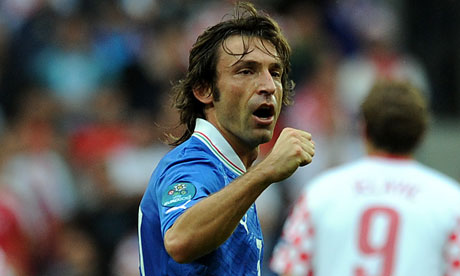
Perhaps its because they are the perennial horse backed by neutrals (especially the ladies...) who either expect a cultured performance or glorious hair.In Andrea Pirlo they had both. They also had a midfielder who covered more ground than the average Italian car does before something falls off it. Some say he carried Italy. I disagree - he was simply an outstanding player in a good side.

I watched this tournament through an odd lens: living in Paris, the most vociferous interest I'd seen in the tournament came from Portuguese, Italian and Spanish ex-pats, along with tourists who belted up and down the city's main thoroughfares after each game their teams have played, honking horns, flapping flags and generally yelping like they'd just brought down a vicious dictatorship. The sight last Sunday of jubilant Spaniards draped in red and gold tearing up my street was one to match that of Paris in 1998 going Tonto following their World Cup triumph over Brazil.

So that was the good. What about the bad and the ugly? And is there room for the so-so?

Let's skip straight to the ugly: I don't wish to re-rake old, still-smoldering coals, but at risk of excess metaphor, has there ever been a firework that looked as potent in the shop as the Netherlands but went off like a damp squib, setting its own shed on fire in the process? I say "the Netherlands", but almost everyone - including UEFA - seemed to refer to the Dutch as ”Holland" which, pedants unite, refers to only one part of the country.

With an identity crisis like that, no wonder their football team can't ever get it together when it counts. Either way, I can't recall a team as disappointing in the build-up and execution of a major football tournament (and in that measurement I include England as exemplars of the art of failure), in terms of expectation created and not fulfilled.

We joke about the Dutch habit of implosion, but it should only have ever happened once - like Kevin Keegan throwing a punch at Billy Bremner (oh, alright, Kevin Keegan losing it on live TV). Fractiousness of that kind it shouldn't be an ever-present threat. And yet repeated Dutch coaches have encountered it, wrestled with it, and ultimately failed to cap it.

"We should all take a good look in the mirror,” winger Arjen Robben said as his team prepared to head home. “Everyone one of us has failed. There are some things that happened in the squad, but we must keep them to ourselves."

Perhaps he includes his alleged retort of "shut your trap" to coach Bert van Marwijk, who had the temerity to criticise him in training.

Similarly, France find themselves staring yet again into their collective navel, wondering why the 2000 European champions and the 1998 World Champions should have faded so poorly amid more internal strife. France will host the next European Championships, which means that whoever is in charge of les bleus by then - and that may not necessarily mean Laurent Blanc's immediate replacement - will have the weight of a nation that was clearly thinking about other matters this time to really get behind his side.

The last word on Euro 2012 must be left with the hosts, Poland and Ukraine. There were doubts about their ability to host a tournament as complex as this, but they proved without reservation that they were more than capable. UEFA's Michel Platini is now floating the idea that after France has cleaned up in 2016 (funny that...) the tournament could be hosted across 12 cities in different countries, with an extra 20 games added by widening the field of competitors from 16 to 24.

This might sound like a positive attempt at inclusion, by increasing the tournament size to that of the World Cup, but the reality, I'm afraid, is more cynical than that. 51 games equals 51 sets of TV rights. Yes folks, we're talking about money. We're certainly not talking about a footballing jamboree whereby the fans of competing nations - and a few others - converge on a host nation (or at most, two host nations) to celebrate their culture as much as the matches being staged.

The World Cup in Germany six years ago, universally acknowledged as the finest in terms of staging in modern times, set the benchmark for a tournament to be enjoyed by everyone - at home in front of the TV, in the pub, in front of the FanZone jumbo screens, or at the stadia themselves. Poland and Ukraine lived up to that standard. Let's hope nobody comes along and messes with a winning formula. Eh, Michel?

Monday, June 25, 2012

For once, it's OK

Another Monday, another round of recrimination, another sad, dejected journey home from some far-flung land, tails between legs, fresh scars from another humiliating defeat.

Yeah, yeah, and all that. It is starting to become depressingly familiar even writing such an intro, given that the origin of this very blog lay in England's miserable, wretched performance in the 2010 World Cup.

"Let the wailing and gnashing of teeth begin," were my somewhat uninspired opening words, admittedly bashed out in pique on a 7am Monday morning commuter train. England's ejection from South Africa, at the clinical feet of an organised, effective and impressive Germany (and a disorganised, ineffective and unimpressive FIFA) was just reward for the dismal way they'd limped through the group stages, weighed by their own egos, inflated expectation and by an uncommunicative manager who seemed to have turned up to run a different football team entirely.

Well not this time. Let the flags of St. George continue to fly, and may the white and red face paint remain unwashed for a few more days at least. It's OK, it really is.

England made a good fist of Euro 2012. They weren't fancied to begin with, they were never likely to win the thing anyway, but, like a progressive junior school maintaining that taking part is just as good as winning, they got involved, they looked like a team, finally, and they made their way through Group D and into another ill-fainted quarter-final. 

Had England beaten Italy - and, just like Chelsea in Munich on May 19, penalties could have ended differently - they'd have faced a Germany who are, this year, even more organised, effective and impressive. Sound familiar? Ask Roberto Di Matteo.

The press have and will continue to make remarks about penalties, "cruelty" (it's not cruel, it's just 10 men kicking a ball from a dead position and two men trying to stop it) and that England weren't 'all that' at Euro 2012. Well, that's as maybe, but at least this time they acknowledged their deficiencies from the outset, recognised their weaknesses, and got on with doing their best, and nothing more.

Moreover, national expectations were suitably recalibrated. There was no talk of a "golden generation" in the press, none of that "If we can't win with this side, then we'll never win" reverse psychology cobblers. Even invocation of 1966 was refreshingly stricken from the national conversation as it finally dawned on people that 46 years of hurt is starting to be symptomatic rather than a repetitive conspiracy. Mention of Italia'90 and Euro'96 were kept to a minimum, lest they raise hubris too high, though no-one seems to care that neither tournaments ended any better for England, with more misery at the hand of you-know-whats to the you-know-who in the you-know-when.

In 2012 there was no mention of internal rancor, splits, divisions and card schools. Even John Terry behaved himself impeccably off the field. The WAGs, too kept a respectful distance, though I'm not linking these two statements.

While the outcome of the Poland & Ukraine adventure for England may have been the same as previous expeditions, it was a different England taking part. Credit, for their composure, their "normality", their workmanlike, sleeves-rolled-up approach must go to Roy Hodgson, a manager who exudes all three of those virtues. 
For all the misgivings about the somewhat suburban manager taking over a team of uptown personalities, Hodgson's quiet, down-to-earth manner was the right one. 

"How come?" you may contest, seeing as he didn't produce any sort of material improvement on previous England results in tournaments at this level. He produced a team. From back to front, England looked and played like a unit, a "group", as Jose Mourinho would call them. 

They behaved like a team, even one that largely fell together in the weeks leading up to Euro 2012, with a manager appointed little more than a month before the competition began. All this followed a vacuum in which all sorts of devilish behaviour went on surrounding race relations and other matters. Despite it things turned out, well, OK.

Coming from a country which regards The Great Escape as a icon of national success (it ends mostly in disaster, by the way), I am putting a brave face on England's performance in and ejection from Euro 2012. Things weren't perfect, and Sunday's encounter with Italy threw a vicious spotlight on a gap (but not a "gulf" - © all newspapers) - in class with England. True, Andrea Pirlo ran a masterclass in midfield ownership, something even the most die-hard, Cross of St. George body-tattooed England fan would have to recognise.

On top of this, England did look tired at times: I know England fielded a squad of multi-millionaires, but even these pampered souls, with their Louis Vuitton toilet paper and his'n'hers matching Range Rovers, have been run into the ground by a long Premier League season. The Chelsea boys had to deal with an extra 240 minutes of Champions League football over their teammates, while the Manchester United and City players, not to mention Spurs' Scott Parker, were required to give their all right up until the final whistle of the domestic season. These may be supreme athletes, but they're also human, and it was starting to show.

So, what next? World Cup 2014. And we get to go through it all over again. 
"If nothing else works, a total pig-headed unwillingness to look facts in the face will see us through." - General Anthony Cecil Hogmanay Melchett, Blackadder Goes Forth

Tuesday, June 19, 2012

Shhhh.... Don't tell anyone, but the football's on

Incredibly, it is now Day 12 of Euro 2012, and things are hotting up nicely. I mean the football, of course, as clearly summer has decided to stay home and send autumn in its place.

Here in Paris you'd be hard pressed to know the football was even taking place. It is remarkably quiet.

At Trocadéro, down the road from where I live, there is an official UEFA 'fan zone'. This blue-tented big screen affair has generated some noise, mostly from Portuguese, Spanish and Italian expats exuberantly driving home and honking their car horns in celebration of their respective group stage victories.

The lack of local French interest is baffling, however. If this was America, it would be understandable: when the Pasadena Rosebowl near Los Angeles hosted the 1994 World Cup Final locals interviewed outside it had absolutely no idea what was going on inside it. France, though, should patently know better: they won the World Cup on home turf just four years later, a result that carried them through to winning Euro 2000 in Rotterdam two years after that.

Perhaps, then, the reason for the muted French interest in Euro 2012 lies in the fact the years since Rotterdam have been somewhat turbulent for Les Bleus. A group stage exit from Euro 2008 preceeded the abject misery of their performance in the World Cup two years ago (matched only in its depth of despair by England's dreadful run in South Africa), managing just a solitary point from their group draw with Uruguay. To compound the rancoer nationale, a nuclear mushroom cloud hung over the team following Nicolas Anelka being sent home for "comments directed against the national coach", Raymond Domenach (he of the Thunderbirds-themed visage). 

It was a split as divisive as any imaginable, like the shells of a clam prised apart by boiling water, and resulted in players indulging in the national industrial pastime for going on strike. Zut and, indeed, alors. However, there was more 
turbulence to come last year when it was alleged that the FFF, la Fédération Football Française, and new coach, Laurent Blanc, had discussed "informal" quotas for limiting the involvement of players from African and Middle Eastern backgrounds in the French national team.

It's not entirely clear what effect this has had on the French team, this morning sitting on top of Group D, a single goal ahead of England, but it doesn't seem to have done much to shift the
indifference. Whereas suburban English homes are currently draped in Union Flags and German cars race through Berlin, Hamburg and Munich trailing pennants of black, gold and red, France appears to be hoisting one giant Gallic shrug to the whole affair.

Should France progress tonight, some of the spirit that memorably spilled out onto the streets of Paris in 1998 will return, but it is unlikely to dislodge the current national preoccupation in the country's tabacs, the oh-so-French bust-up between the women in newly installed president Francois Hollande's life (his current partner, the agreeable Paris Match hackette Valérie Trierweiler, and Ségolène Royal, the mother of his children and a defeated candidate in this weekend's senatorial elections).

Anyway, back to the footy. Tonight's matches between England and Ukraine and Sweden and France will bring Euro 2012's group stage to a close. Sweden, Russia, Croatia, Ireland and the Netherlands are already heading home. Poland are already home, which is handy. 


Of the early departees, the Dutch have been by far the greatest disappointment. Runners-up to World Champions Spain in South Africa, much was expected this time. Instead we saw their fractious spirit raise its implosive self yet again, with blame, egos and genetic impatience rearing up in the wake of defeat to Denmark, and then again defeat to that always contentious opponent Germany.

Installing Rafael van der Vaart and Klaas-Jan Huntelaar for the final Group B game against Portugal appeared to be a brave attempt by Bert van Marwijk at restoring dynamism to a limp side, whose hopes had rested on Robin van Persie's otherwise good season with Arsenal. The change came at the cost of dropping van Marwijk's son-in-law, the red card waiting to happen that is Marc van Bommel, whose family connection was never going to be a pacifying ingredient in the boiling soup of orange-clad egos.


Van Marwijk's decision to play van der Vaart looked to have worked when the Tottenham midfielder  latched on to Arjen Robben's pass in the 11th minute and looped in one of the best goals of the tournament so far. But the Oranje had forgotten about the preening, narcissist that is Cristiano Ronaldo.

Real Madrid's most prodigious proponent of hair product may well be one of the most annoying ponces to have ever graced the beautiful game, but you can never fault his ability on the ball. And with the Dutch defence looking like they were still enjoying a Sunday morning lie-in at nine in the evening, Ronaldo went through them like a comb through over-gelled hair. Or a monster ego through a sea of them.

After the match van der Vaart commented: "We all have to take a good, long look in the mirror," something Ronaldo presumably wouldn't have any difficulty with. Arjen Robben reflected equally painfully: "Of course there were some internal issues, but we'll keep them indoors." Well, partly: "The hunger in the team is there, but we failed together" he added through gritted teeth before heading home to a dejected nation packing its orange T-shirts, face paint and flagons of Heineken and chilled rosé away until the next time this nation gets behind its national football team in such vibrant enthusiasm.

Media wags have noted that the teams from countries floundering economically in Europe - Greece, Italy, Spain and Portugal - are enjoying Euro 2012 the most. I'm not quite sure what that says about England. Expectations have been lowered this time around. English hubris has been shattered too many times in the past; too often we've been informed of a "golden generation" of players, a media invention that has served to hype things up to unsustainable levels.

This time around there has been a more muted build up to England's appearance. Perhaps its just a sign of these austere times, maybe it's just me being on the other side of the English Channel and surrounded by local disinterest, or maybe it's that the jury is refusing to deliberate on Roy Hodgson - but there is a distinct lack of fervour surrounding the English.

As with France, the spectre of South Africa hangs around England like a foul odour. Even now, mention of Algeria in any English pub will launch a tirade. The English have politely given Hodgson benefit of the doubt, and without the white heat of attention that usually piles up on hapless England managers, Hodgson has been quietly getting on with his job. One of his undoubted strengths.

Handicapped by pre-tournament injuries to Lampard and Cahill, batting them away over the suggestion that excluding Rio Ferdinand had more to do with non-footballing matters than footballing matters, Hodgson has demonstrated great tactical nous in England's two games so far.

While the amazing win over Sweden could have gone horribly the other way, Hodgson got the best out of a side that has had the confidence it lacked (or lost) in South Africa restored. For now, there seems to be a restfulness about England, a welcome absence of silos, of factions, of fissures of the kind that split the Netherlands apart. Against Sweden, England looked like a team, played like a team and won like a team.

Let's hope it lasts. Of course, in a tournament like this, getting into the knockout stages means you're always 90 minutes away from the next plane home. England, tonight in the Donbass Arena in Donetsk will want to win and win well to avoid meeting Spain in a quarter-final. They only need a point, but three is what we want.

Wayne Rooney's return from suspension comes with mixed feelings. Andy Carroll did such a good job against Sweden - with one of the finest headed goals I've ever seen - you almost feel compelled to give him a shot at starting tonight. Rooney's availability, however, changes everything. He may be potty mouthed, he may have anger management issues, he may have an unnaturally full head of hair again, but he is, from the first whistle, a handful for defenders. Carroll will probably score, but Rooney is more likely to, especially after being caged up, metaphorically speaking, over England's opening two games.

Either way, it will be no easy game tonight. That is, I know, a footballing cliché of the most heinous kind, but what else can you say about England taking on the one remaining co-host, Ukraine, who have much to fire them up, and not just the fact the tournament is partly taking place on their home soil. There is, according to the Ukraine team doctor, a "50-50 chance" that Andrei Shevchenko might not play - no bad thing, you may have said during his Chelsea years - but with the national captain back to outrageously good form, his absence may prove telling. Unless the cheeky Ukraine scamps are pulling a fast one...

The real mystery for me, however, is what happens if, as expected, France go through. Paris has hardly made a peep yet about Euro 2012 - will progress tonight uncork the noise?

Tuesday, May 1, 2012

In praise of The Quiet Man

“Do not underestimate the determination of the quiet man,” is the oft-quoted protestation of former Conservative Party leader Iain Duncan Smith who, during his time running the blue faction of British politics, rarely demonstrated any form of impactful oratorial qualities, and was ritually "shushed" ironically by Opposition MPs whenever he stood at the dispatch box.

With an acronymic name like IDS he didn't stand a chance. It sounds too much like "IBS" to survive in an environment of formerly playground-bullied bed-wetters like the House of Commons. Not that Ed Balls exactly comes off any better in the realm of tauntably-named politicians.

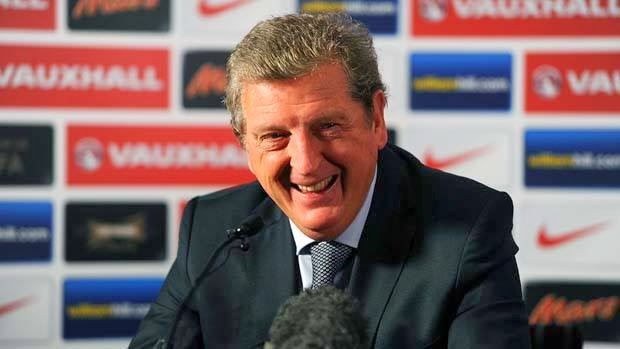
Anyway, I have no interest at all in former Tory leaders but, instead, today, I concern myself with the fortunes of Roy Hodgson, the softly-spoken Croydon lad who took the silent route to seniority in his football management career by pursuing that unlikely of English sporting paths - moving abroad. And he has now been unveiled as the next England manager.

When Woy, sorry, Roy, pitched up at the newly-minted Blackburn Wo...er...Rovers in 1997 he had already managed four Swedish clubs - Halmstad, Oddevold, Örebro and Malmö - along with Swiss outfit Neuchâtel and the Swiss national side itself. Not to mention a little club in Italy by the name of Internazionale.

Only Kate Moss has since eclipsed Hodgson in making good of a Croydon upbringing on the global stage. Actually, Hodgson may have reclaimed that crown by the time he accepted Mohammed Al Fayed's pieces of silver in 2007 to manage Fulham, having added a second spell at Inter, the Zurich club Grasshopper, FC Copenhagen, Udinese, the United Arab Emirates,Viking in Norway and the Finnish national team to his CV. And since then a sorry spell at a politically fractious Liverpool and, until the end of this season, a solid but unspectacular stint at the Hawthorns running West Bromwich Albion.

On paper, this collective expertise makes him an obvious choice for the vacant England manager's position. So why is it that, until Sunday evening when the FA took the unprecedented step of pre-announcing Hodgson as the only candidate to be interviewed for the job, the nation had collectively installed Harry Redknapp in the role - almost as soon as Fabio Capello flounced out of the Wembley in a huff over John Terry's sacking?

Indeed, it wouldn't be unfair to say that news on Sunday evening of Hodgson being invited in to meet the FA's four-man selection panel - David Bernstein, Alex Horne, Sir Trevor Brooking and Adrian Bevington - came as a surprise to Hodgson himself.

Hodgson is in stark contrast to "Flash" Harry, whose wheeler-dealer history and bright orange wife has made him as much a character form Minder as one of the most prolific club managers in England. And yet, we all thought the England job was his.

Even his February residency at Southwark Crown Court on tax evasion charges didn't swerve our opinion that he was a shoe-in at the end of the season to take over England and take them into Euro 2012 in Ukraine and Poland. In fact it may even have, in our twisted football-supporter logic, galvanised our view that he'd be ideal. This is the same twisted logic that regarded the Krays as folk heroes, not that I'm lumping Redknapp in the same company, but you know what I mean - we love a lovable rogue.

By all accounts, it didn't necessarily swerve the FA, either. So why did they, all of a sudden, go exclusively for a manager who'd hitherto been mentioned as a "possible" also-ran in the betting, along with Newcastle's Alan Pardew, Glen Hoddle (again), Jose Mourinho (no chance) and current caretaker Stuart Pearce?

Redknapp's fiscal challenges and residual reputational issues may have warded off the Football Association. If there is one thing we know about the FA, they are as adept at avoiding scandal as a Parisian is at dodging street-strewn dog poo. Just ask Glenn Hoddle and his, erm, beliefs.

Then there is talk that Redknapp had a very different view to the FA's longer-term vision. What, then, makes Hodgson more appropriate? He has held 19 managerial positions - some barely a single season long - and not in that time picked up any silverware. Granted, he took the Swiss national side to Number 3 in the world rankings, and he has demonstrated an ability to man-manage average-looking sides to mid-table mediocrity. That's no criticism. The facts speak for themselves.

Hodgson may be no more than a middle-management civil servant being given his chance - at 64 - to step up to run the one department not on his CV. His journeyman resumé suggests average managerial talent, and his reputation for a somewhat old-fashioned - some might even say stale - style of training does not necessarily indicate a new broom about to breathe new life into England's jaded, over-pampered, overpaid superstars, whose hubris has been repeatedly lanced by excess expectation turning to disappointment.

However: "He is probably the best man-manager I worked with," former Swedish international Stefan Schwarz told the Daily Telegraph. "He had the knack of knowing when to give a player a kick up the backside and when to build them up." To that, Schwarz cites Hodgson's skills in dealing with problems  and, countering rumblings from one or two of Liverpool's malcontnents, a professional approach on the training pitch. Swiss international Ramon Vega echoed this sentiment, who claims Hodgson has a good tactical approach. We shall see.

Hodgson will have to win over the current crop of England stars. Today's Sun helpfully noted that, with Twitter the unofficial channel of record for just about every professional footballer these days, there was absolutely no reaction at all when news emerged from Wembley on Sunday that Hodgson was to be interviewed. In contrast, when Capello quit, England players couldn't wait to install Redknapp (“Harry Redknapp would be my choice by a distance,” tweeted Rio Ferdinand while Wayne Rooney posted: “Gutted Capello has quit. Got to be English to replace him. Harry Redknapp for me.”).

Perhaps Hodgson is ideal for England. For too long we have regarded ourselves as world champions-in waiting, whereas in reality anyone else around the world sees England as anything but. We may well have invented the modern game, but in the almost 46 years since we last won a trophy, our footballing prowess has been determined more by the wheelbarrows of cash being lugged around the Premier League rather than any on-pitch ability with which we could be truly compared to the likes of Spain, Brazil, the Dutch, Italy or even the United States.

Bringing in an experienced but unspectacular manager like Hogdson, with his subtle urbanity and suburban newsagent's demeanour, may be the best decision the FA could make. We're not going to win anything anytime soon, so we might as well bring in a manager who'll ensure we won't lose too badly either.

This is the key to judging England. I was recently admonished by a Dutchman of some considerable wisdom who said: "You English think too highly of yourselves, and that's why you'll never win anything. You go into every tournament thinking you are supposed to win it, when in reality there are better sides, like Spain. They win without expectation, England lose because of it." Well, true. What was it that gave us the right to believe we were the best in the world? 1966? The Premier League?

The England job, we all know, is football's most tainted poisoned chalice. Your time in the job is spent like James Bond in Live And Let Die, stepping stone-leaping across the open mouths of snapping media alligators. No one is safe, no one is immune. Even Stuart Pearce has suffered all the usual slings and arrows and he's only been in temporary charge. Will Hodgson be able to handle this any better? Redknapp certainly would have done. During his lengthy tenure of West Ham and time in charge of Portsmouth, Southampton and Spurs he has been able to deftly balance egos and modest budgets, giving him at least one vital skill for managing England.

However, since Redknapp was first pre-installed as England boss by the unofficial selection committee on Twitter the wheels have started to loosen at Tottenham. The suggestion is that the England job turned Redknapp's head and, in the process his focus. Today, even with Spurs still, in theory, in with a shout of Champions League football next season, you could hardly say that the north London club is poised to challenge the Manchesters for the top spot any time soon.

And given that Redknapp's trophy cabinet isn't any more full than Hodgson, is he really - today at least - any better a candidate for the job than Hodgson? Harry Redknapp might be a more colourful character, but this may be the time for the Quiet Man to step in and take over an impossible job.

Stop press: Owls that look like Roy Hodgson - here!

Sunday, April 15, 2012

99 posts later, there are still lines being crossed...or not


Ninety-nine posts ago, What Would David Bowie Do? made its debut with a lengthy diatribe about England's ignominious departure from the 2010 World Cup.

It was an angry rant, with its bile composed of England's piss-poor performance in South Africa, their ejection by Germany yet again, by the fact it was written exceedingly early on a Monday morning and during an arduous daily train ride to a destination I was growing decidedly antsy about, and by virtue of me being in a generally foul frame of mind, the reasons for which are best left unmentioned.

Viewed from a better perspective, the root of my bateyness was the fact that during England's final 16 encounter with Germany, Frank Lampard's delightful 38th-minute chip had bounced off the German bar and across the line so far the ball ended up in a different post code. Millions watching around the world saw it cross the line, as did most of the 40,510 spectators inside the Free State Stadium. I missed it as I was, at the time, somewhere beneath the English Channel where technology has yet to find a means of relaying radio signals. As it transpired, I wasn't alone in missing it: Uruguayan referee Jorge Larrionda, his two assistants and FIFA's fourth and fifth officials had also blinked just as the ball crossed the line.

It is unfortunately circuitous, then, that WWDBD?'s 100th post should fall on the occasion of another refereeing howler, again involving a team featuring Lampard, albeit with the prolific midfielder being on the victorious side this time. Chelsea's second "goal" in yesterday's FA Cup Semi-Final against Tottenham is not one I, as a Blues fan, will be particularly proud of. But if I'm uncomfortable at the goal standing, referee Martin Atkinson should be hiding his head in shame at allowing such a comical decision to stand.

Larrionda is said to have exclaimed "Oh my God!" when he later saw a replay of Lampard's disallowed goal. I wonder how hard and jagged was the item Atkinson swallowed when he saw video of various Spurs and Chelsea players bundled together like newly-betrothed snakes as Juan Mata's shot bounced off the sole of Benoit Assou-Ekotto's boot, effectively still in play.

According to Harry Redknapp, the referee has at least copped to his mistake: “[He's] watched it now and says he feels worse than I do. I said, ‘I don’t think so’. But he says he feels bad," the Spurs manager said afterwards. “He knows he’s made a mistake and he says he’ll have a bad week as well.”

So here we go with wave upon wave of renewed calls for goal-line technology and shallow defensive comments about referees being "only human", and indeed some are. Some are also splendidly gullible.

The argument against technology, certainly, is no longer tenable. When there are so many cameras around the ground that players can be punished retrospectively for off-ball incidents, it seems nonsense that decisions can't be made instantly when a disputed goal is scored. Or not.

Introducing technology has nothing to do with messing with the traditions of the game or even challenging the authority of the man in the middle. It's just that the pace of football now, coupled with the level of scrutiny afforded everyone except the match officials themselves is such that without technology they are disadvantaged.

We shall never know whether, had the goal been disallowed, the 5-1 scoreline would have been any different. It's possible that Spurs could have rallied, and beaten Chelsea handsomely. England, had Lampard's goal stood, may have also gone on to trounce Germany (although only the most myopic England supporter would have expected that, given the team's abject displays in the three games prior).

The absence of technology to conclude irrevocably that a goal had been scored has left us, yet again with more questions about how good our referees are in another weekend of big clubs, big decisions and big mistakes. There also remains questions about the moral fidelity of players. Diving, "simulation" or just plain old 'cheating' has rarely been further from attention than as now. So is there a difference between Ashley Young winning his second penalty in a week through another challenge to Tom Daley as Britain's greatest diving hope, and a ball not crossing the line, the referee attesting that it did, and the player with a claim to the 'goal' wheeling away as if he'd just struck a blinder?

To be fair to Juan Mata, the rush of blood to the head after you've put the ball in the back of the net (or at least sent it in that general direction) will blind the player to all other rational thought. Wembley is a magical place, and it's not just English schoolboys who dream of scoring on its hallowed turf. Can you really blame Mata for celebrating having, in his mind, added his name to Wembley lore?

And what about John Terry - should he have offered to set Atkinson straight? His admission, later, that "I thought it hit me and stayed out" does beg the response "Well, why didn't you tell the ref, then?" but given the season Chelsea's players have had, least of all Terry, it would take a particularly unusual player to have not taken that "ghost goal". It's not, either, as if it killed the game. Spurs are made of stronger fibre than that, and the fact that they clawed one back via Chelsea's season-long gappy defence, shows they weren't - at that point at least - going to just put their feet up. Until, of course, tiredness crept in, heads dropped and Florent Malouda, of all people, poked home Chelsea's fifth goal, following Ramires' cool third and Lampard's spectacular fourth.

I'll take that 5-1 win over Tottenham, but in my heart I'll regard it as 4-1. It's still an impressive scoreline for a Wembley encounter. The only note of real discomfort is the small minority who chose to disrespect the memories of the Hillsborough 96 and Livorno's Piermario Morosini, who collapsed and died 31 minutes into his Serie B game against Pescara the day before.

Football is only a game. It has its flaws and imperfections, but it is only a game. Spurs fans will be smarting, but compared with an FA Cup Semi-Final played on April 15th, 23 years ago, they will at least be able to go on smarting about a poor piece of refereeing for the weeks to come, as opposed to mourning the loss of 96 fellow human beings who left their homes one morning to watch a football match, and never came back. And that is something no replay can ever explain and certainly no technology can ever revoke.


Saturday, March 24, 2012

The real Great Escape


Only we Brits - and, specifically, the English - could choose the title music from a film about a wartime failure as a means of bolstering support for our frequently beleaguered national football team.

But whenever England play, there they are, up in the stands with their big bass drum, tuba and trumpets, 'entertaining' fellow supporters with their oh-so ironic rendition of Elmer Bernstein's theme from The Great Escape.

You'd have thought - or, at least, hoped - that by now someone would have tapped the self-proclaimed 'Official England Supporters Band' on the collective shoulder and reminded them that the music they are playing comes from a movie about the attempted mass exodus by 200 downed Allied airmen from a seemingly escape-proof German prisoner-of-war camp, which ended pretty badly for all but three escapees.

The other aspect of this well-intentioned but witless irony is that England's performances, especially in tournaments, are as predictable as the fact that when there's a bank holiday in Britain one of the broadcasters will trot out John Sturges' 1963 film. Is there any living person in the United Kingdom today who has never seen it? I somehow doubt it.

The Great Escape, like The Dambusters, 633 Squadron and countless others, is a stirring tale of wartime derring-do and stiff upper lips, of the kind Britain took great pleasure in glorying to ensure no one ever forgets that without such lantern-jawed bravery, Harry Hun would never have been defeated and Europe would be still under the jackboot's murderous grip today. On top of all that, The Great Escape formed a barrage of war movies in the 1960s and 70s - like The Dirty Dozen and the brilliant crime caper Kelly's Heroes - which brimmed with the biggest Hollywood stars of the day.

Here, Steve McQueen headlined as the über-cool Hilts (who can't keep himself out of the solitary confinement 'Cooler') along with James Garner, Richard Attenborough, James Coburn, Donald Pleasence and, naturally, Charles Bronson in his usual role of humourless Pole.


Although based on a book by Paul Brickhill, an Australian Spitfire pilot who had been a prisoner at Stalag Luft III, The Great Escape bears very little resemblance to the actual events which took place on the night of March 24-25, 1944. For a start, there were no Americans involved in the real escape. This is something of a handicap when you're trying to get backing for a Hollywood movie losely adapted from real events. And at no time did any of the Stalag Luft III PoWs attempt to ride their way to Swiss neutrality by vaulting a motorbike over a barbed-wire frontier fence. Not that Hilts actually succeeds in doing so.

In reality, the real escape was an even more daring challenge. Stalag Luft III was regarded by the German hierarchy as a state-of-the art facility. Built under Luftwaffe chief Herman Göring's direction, it was located near the town of Sagan, in what is now Poland, on the basis that the ground underneath it would be unsuitable for tunneling. Such was the Germans' hubris about keeping prisoners locked in that the camp enjoyed a relatively convivial atmosphere, run by the German air force, rather than other more brutal environments controlled by German army units. The guards were mostly older conscripts or injured combatants, and prisoners enjoyed reasonably good treatment, from food to accommodation. However, this 'soft' reputation didn't make it any less a prison, or diminish the intentions of those incarcerated within it to break out.

In the spring of 1943, an RAF officer, Squadron Leader Roger Bushell (who became Richard Attenborough's Roger Bartlett in the movie) called together an escape committee and determined that "Three bloody deep, bloody long tunnels" should be built in the hope of freeing as many Allied pilots back into the war effort.

For almost a year the prisoners dug their tunnels 30 feet below the ground - deeper than escape tunnels in other camps - finding novel ways of making the excavated earth disappear throughout the camp grounds. That didn't stop the Germans from rumbling that something was up, but they never found out exactly what. Even deporting suspected ringleaders to other camps didn't to deter the nightly digging.

With German suspicions growing at the beginning of 1944, as soon as the final tunnel was ready and a moon-free night would be on offer to provide cover, 200 selected prisoners out of the 600 involved in the tunneling made their break for freedom.

In the end 76 actually made their way successfully out of the tunnels, a 77th prisoner being spotted by guards who raised the alarm. By then, the others were already on their way through snow on one of the coldest nights in that part of Europe for more than three decades. Panic stations raised,  the Germans dispatched all available forces to recapture the escapees. Three did, however, get away - two Norwegians and a Dutchman. But such was the bruise left by the other 73 breaking free that Hitler ordered each of the recaptured prisoners to executed, despite protestations from senior officers reminding him of the Geneva Convention. In the end, 50 were shot as a punishment and a warning to other Allied PoWs.

The repercussions from the real Great Escape were felt long after the war ended in 1945. German officers involved in the 50 executions were eventually called to account during the Nuremberg war crimes trials. The harsh reality is that this event will just be one of thousands of incidents that took place during World War Two that have never and will never be immortalised in film.

Not that you can really think of The Great Escape as the immortalisation of actual events. It's an entertaining two-and-a-half hours of Boy's Own hokum with which to fill up a dreary Easter Monday afternoon. And it made a superstar out of Steve McQueen, forever associating his name and reputation with the essence of 'cool'.

The real events, however, on March 24, 1944, were certainly less than cool - part desperation, part heroic, part stupidity. All of which is easy to say as someone who has rarely been in a pub lock-in, let alone incarceration.


Thursday, March 1, 2012

Management expectation

There has been an awkward vibe around football this week: with André Villas-Boas clinging by the last layer of fingertip flesh to his job at Chelsea, his compatriot and mentor Jose Mourinho reappears in London to meet an estate agent.

Given Mourinho's penchant for the theatrical, The Sun’s blurry snap of his meeting all but lacked the Portuguese conspiratorially twirling his moustache like a silent movie villain, a tinkling piano signaling impending doom for some young damsel tied to a railway track. Which is how Villas-Boas must feel right now.

In another part of the capital, however, a 49-year-old Sex Pistols fan who goes by the name of 'Psycho' was preparing to lead out the England team in a somewhat pointless friendly against the Netherlands. You could be forgiven for thinking that the Stuart Pearce had won the one-off chance to manage England in a competition on Blue Peter, such is the unlikelihood of him being anything more than a temporary appointment while the Football Association works out how to get Harry Redknapp out of Spurs.

For all Pearce’s status as a minor national treasure for his unbridled patriotism – his sinew-stretching pre-match singing of the national anthem and that fist-pumping, post-penalty elation that he shared with the entire country after the England-Spain shootout during Euro’96 – few England fans would say he has the credentials to take England into and beyond the 2012 European championships. It is something that Pearce humbly and characteristically suggested before last night’s game, that he “didn’t have the CV” to become the permanent England manager, a point he then repeated after the 2-3 home defeat to the Dutch. "The full-time manager of England at this moment in time is probably somebody else, not me," he reflected.

While it would be tempting to feel a little sorry for Pearce, having been given the chance to manage the senior team for one game, but his brief spells in club management were less than stellar (although compared with Villas-Boas, Pearce is positively weighed down with experience). His ongoing management of the England Under-21 squad, while positive, hasn’t given the impression that, charged with the next generation of England player, he would be lifting silverware any time soon.

In the end, the sobriquet ‘caretaker’ was more than appropriately applied to Pearce. Although he effectively suited up for the night, adopting the Italian/Spanish style of dark suit, dark tie, tan shoes, tan belt, the end result for England was less than spectacular. It wasn’t bad. Just not good. As caretaker, Pearce stood on the touchline, waving his arms in the manner managers are meant to wave their arms, even though it rarely does anything to make the team perform any differently. Meanwhile, we watched on trying to work out what the plan was. There didn’t seem to be one, although if it was “contain Robben”, it had clearly been forgotten.

I don’t wish to knock Pearce, and he certainly won’t brook any sympathy. If he wants the England job full-time, dressing smartly for the press isn’t really the most important requirement. The trouble is, no one really knows what is required to be the new England manager. If it is managing the egos of a group of ageing stars, then Capello was your man, until his fit of pique over John Terry saw him flounce off.

If it is about bringing through a new generation of players, motivating them and making them want to play for themselves as a team, not for their own individual reputations, then there would be no one better than Redknapp. True, Redknapp’s trophy record at club level hasn’t exactly been remarkable either, but most fans would agree that he’s the best option left untried in the never-ending search for an end to English expectation.

When Three Lions replaced God Save The Queen (the original version) as the temporary national anthem in 1996, “30 years of hurt” seemed a long time then for England to go without a tournament trophy. “46 years of hurt” in 2012 not only doesn’t scan (so please, anyone considering re-recording that song before this summer bear that in mind…), it is also a perilous reminder of the length of time with which the country which founded association football has been potless.

We all know that, however. No need to remind us. No need to drag up the fact that every four years we talk of another ‘golden generation’ who flatter to deceive and fail to deliver. No need to recall how often we’ve heard the phrase “If this team can’t win the tournament, then none of them can”.

The World Cup in 2010 was supposed to be the opportunity for England: a sharp team, playing at the highest level of the Premier League, under one of the most respected managers in football. And yet it ended in durge and another early departure.

Perhaps our expectations are too high? Perhaps 1966 was the fluke Germans still claim it was? Perhaps England – despite being the home of arguably the most tactically exciting domestic league in world football – just can’t cut it as a national side. Perhaps England is the mirror reverse of the Netherlands, which has some of the most dire domestic football and yet consistently puts out incredible national teams, albeit frequently self-destructive teams.

But back to the job of England manager, because no matter what, he will bear the heaviest weight of expectation of all. Which is funny, because the parallel between that position, and the manager’s job at Chelsea is starkly similar. Both are the most poisoned of chalices; both have, over the last few years, been the subject of experiments (be it the shot in the dark that is Villas-Boas and was Steve McClaren; the boutique appointments that were Sven Goran-Ericsson and Fabio Capello; or the “inspired” appointments of Mourinho, Ancelotti or Scolari which ended in acrimony); and both seem to be appointed without any clear plan, just a ‘let’s see if this works’.

The FA is, according to Sir Trevor Brooking, in no immediate hurry to appoint a permanent successor to Capello, even though we're now just over three months away from the kick off of Euro 2012. Perhaps it will be Harry Redknapp or perhaps it will be a complete surprise. Perhaps the FA will do what the BBC did when Angus Deayton was sacked as host of Have I Got News For You, and there's a guest manager for each game England plays. Surely you'd eventually find someone who could win something...

Wednesday, February 8, 2012

When We Was Fabio

A Ferdinand
Amongst the many things I struggle to comprehend, the origins of World War 1 have long been a fruitless source of bafflement.

The facts, as they stood, are that on 28 June, 1914, the Archduke Franz Ferdinand - heir to the Austro-Hungarian empire and inspiration for a Scottish art rock band - took a bullet from a cross young Bosnian and, within a month, most countries, it seems, were piling into France and Belgium for a punch-up that would leave more than nine million people dead over the course of the next four years. How we went from one event to another is a mystery to me.

Skip forward, if you will, to Sunday, October 23rd, 2011 and the Barclays Premier League encounter between Queens Park Rangers and Chelsea.

An exchange of words between another Ferdinand - the home team's Anton - and the visiting club's captain, John Terry, results in a conflagration that is continuing to take lives, proverbially speaking, almost four months on.

Last Saturday What Would David Bowie Do? remarked on what an utter mess the original incident at Loftus Road had left football in. If you missed it, here's a handy summary:
  • Terry is facing a criminal trial for his alleged "public order offence" towards Ferdinand (A) and had the England captaincy taken off him because of the impending court date 
  • Terry and Ferdinand are now at the center of collapsing inter-team relationships
  • QPR captain Joey Barton rants about the affair and Terry's deferred court case on Twitter
  • Ferdinand's brother Rio gets booed by Chelsea fans after giving his public support for Anton in an ill-advised TV interview on the eve of the Blues meeting Manchester United
  • QPR captain Joey Barton is, apparently, threatened with jail for contempt of court by ranting about the affair and Terry's deferred court case on Twitter 
  • Players threaten a toxic split in the England camp if Terry even turns up as a squad member for England's pre-Euro 2012 fixtures as well as the tournament itself
  • England are now without a captain four months before the start of a major tournament
And now, to that list, we can add "England seeks new manager". Again.

Fabio Capello's resignation tonight - bizarrely, scant hours after Harry Redknapp, widely tipped to be the next England manager, was acquitted of tax fraud charges - was coming. The Italian was incensed that the FA's senior executives didn't loop him into the decision to strip Terry of the England captain's armband.

Capello was known to be an enormous fan of Terry's on-pitch leadership skills, even if his off-pitch track record left something to be desired for the notoriously discipline-minded coach. Capello had, of course, been responsible for sacking Terry after his affair with Wayne Bridge's former girlfriend, but had also reinstated him in as bold a statement of his determination to have Terry lead the national side, come-what-may. 

The FA's decision to sack Terry before English football's reputation got any further out of hand may have been a sensible (and unavoidable) action, all things considered, but in blanking Capello, the Italian's days in the post were numbered. Capello did little to hide his ire, giving an Italian TV interview in which he said: "They really insulted me and damaged my authority," and that he "...thought it was right that Terry should keep the captain's armband." Capello's strong conviction was that his captain had not been convicted of anything: "In my opinion one cannot be punished until it is official and the court - a non-sport court, a civil court - had made a decision to decide if John Terry has done what he is accused of."

As Harry Redknapp was walking away from Southwark Crown Court, Capello was walking in to Wembley Stadium to meet FA chairman David Bernstein and general secretary Alex Horne. The expectation was of a terse meeting. The expectation, too, was that this would also end in Fabio Capello's reign coming to an end.

When the digital jungle drums of Twitter sprung to life to report that Capello had indeed resigned, few people were all that surprised, any more than they'd be surprised that the odds on Redknapp replacing him were shortening with every second.

The official statement from Bernstein was the expected dull-as-dishwater affair, stressing how "...Fabio has conducted himself in an extremely professional manner." and that in accepting Capello's resignation they were "agreeing this is the right decision," followed by the obligatory platitudes about thanking Capello for his work with England and to "wish him every success in the future".

Most people will agree that the former Milan, Madrid, Roma and Juventus coach gave a mixed return on the £6 million a year the FA furnished him with for his expertise. Although the stats show Capello had a creditable 67% win rate as England manager there was consensus that England hadn't made much more progress under him than they'd done under Sven-Göran Eriksson. These stats must also be balanced with England's abject performance in the 2010 World Cup, including the ignominy of another tournament exit at the hands of bloody Germany.

Perhaps the timing of Capello's resignation wasn't too bad after all: four months is a long time for the new man - whether Redknapp or anyone else on the bookies' shortlists - to come in and get the squad prepared for Euro 2012.

Whoever does come in will be picking up one of sport's most poisoned chalices. I wouldn't mind betting, either, that come the start of the Euros the chalice will contain more than a drop of the taint still traceable from whatever stupid comment was uttered in the heat of battle, one autumnal Sunday afternoon in West London.

Like a pebble dropped onto a still pond, the Ferdinand-Terry affair has triggered a series of concentric ripples that, by the time they are reaching the shoreline, are becoming extremely choppy indeed. Choppy enough to leave casualties - and careers - starting to pile up.

Saturday, February 4, 2012

And we thought the Dutch were self-destructive

What a mess. What an absolute, utter mess. John Terry has the England captain's armband unceremoniously taken off him for a second time in his career because he is considered too much of a liability to team unity.

For once, you can't fault the Football Association. What else could they do? Having seen Terry reinstated by England coach Fabio Capello (after he lost the armband previously for having an affair with teammate Wayne Bridge's girlfriend), the FA was then confronted with the prospect of the national captain heading for a major summer football tournament with a criminal trial for allegedly making a racist remark on the other side of it.

Terry's sacking as skipper only addresses one part of the problem. Reading striker Jason Roberts claims that the England dressing room at Euro 2012 “could be toxic” if Terry is even involved in the tournament, even as a member of the squad. And he claims his view is based on comments from England players he knows.

Chelsea are standing by Terry as club captain in the whole debacle, which began on October 23 when the defender is alleged to have called QPR's Anton Ferdinand a "f****** black c***" in a heated off-ball moment during their clubs' Premier League encounter. Chelsea's backing of Terry is understandable at such a critical stage of the domestic season, but one can wonder whether this is the start of the 31-year-old player's footballing career unravelling.

It shouldn't be forgotten that Terry has not been found guilty of any offence - either a football disciplinary charge (the alleged incident between Terry and Ferdinand was not recorded by the match referee, so no charges could be brought by the FA) and the criminal prosecution - built from, apparently, lip readers and YouTube footage - is clearly sub-judice.

But with the footballing world around Terry looking increasingly divisive - with black professionals even asking critical questions of Chelsea's black teammates for either backing him or not publicly criticising him - whatever really happened in that fleeting exchange between two players, in the heat of an intense Sunday afternoon London derby, is casting a bigger stain on the career of a player who's ability on the pitch has been habitually undermined by events off it.

© Twitter
The FA's announcement yesterday - which, apparently, Fabio Capello knew nothing about in advance - has led to the inevitable stream of invective and counter-invective online.

Joey Barton, the QPR skipper and a player with hardly a spotless reputation (two criminal convictions for violent behaviour - a six-month prison sentence for assault and a suspended sentence for actual bodily harm to on teammate Ousmane Dabo) spent much of yesterday evening ranting on Twitter about the case involving his club colleague Ferdinand. This included a particularly ugly spat with TalkSport's Adrian Durham and the Daily Mirror's Darren Lewis, in which Barton branded them "spineless maggots".

Much of Barton's stream of bile was legally borderline, but in one tweet he was spot on: "Once the issue went out of the FA's control, it was always going to get messy. They should have dealt with it instantly. Now its a farce." Indeed, had the affair been investigated by the FA back in October, and a referral to the police made instantly, there is a chance that the legal proceedings could have been commenced earlier.

As much as I support John Terry as captain of my football club, and as much as I fully support the "innocent until proven guilty" principle, I wonder whether the lawyers who pushed for Terry's trial to be held after Euro 2012 were thinking about anyone else's interests than their own. All the time Terry - still, arguably, the best candidate for England captain (sorry Rio, we don't need your expert long-ball punting skills...), drags this affair behind him, there will be a foul smell surrounding English football itself.

Great preparation for the national side in the run-up to a tournament that is meant to restore the nation's pride after the ignominious embarrassment of the South Africa. I expect the Dutch, with their talent for self-destruction, must be laughing in their clogs.

Thursday, December 2, 2010

Blattered beyond belief

So now we know who will host the World Cup Finals in 2018. It won't be England. It won't be Spain and Portugal. It won't be the Netherlands and Belgium. It will be Russia.

Sepp Blatter has, like the Vatican chimney, issued forth the puff of white smoke that has identified which country will enjoy the lucrative host nation status, seven years and eight months from now.

The inevitable media inquest is already blaming the media itself. The BBC's decision to screen a Panorama investigation into alleged FIFA corruption, just four days before the vote, is bearing the brunt of this backlash. Even Russian prime minister Vladimir Putin has helpfully chimed in that the British media was to blame (a kind of reverse of the famous headline IT'S THE SUN WOT WON IT). But I disagree.

Panorama's somewhat underwhelming exposé and the original Sunday Times scoop may well have coloured opinions within FIFA about England as a nation, but I don't think it made a blind bit of difference to the vote. FIFA had wanted to see a World Cup staged in Eastern Europe, as much as it chose Qatar - a nation smaller than the Falkland Islands - over the United States to host the competition in 2022.

If FIFA had simply come out and said that they wanted Russia to stage it, they could have saved us all the bother - and all the nudge-nudge, wink-winking about what's been going on behind closed and not-so closed doors in the run-up to the Zurich vote. 

Rightly or wrongly, the Sunday Times and the BBC have shone the spotlight on an institution which is, at best, out of touch with modern corporate transparency, and at worst, rotten to its core. Alleged bribery nothwithstanding, the World Cup voting process has been carried out with all the objectivity and probity of the Eurovision Song Contest, determined by hotel corridor politicking and schmoozing amid clouds of cigar smoke and the fumes of a glass of Remy Martin.

To learn, as we have done now, that England failed at the first round of voting makes a mockery of some of the early optimism and even positive indications coming from some of the voting members. England, we're told, had the best presentation, the best bid, and the personal involvement of Prince William, David Beckham and David Cameron (whom, we were told at every opportunity, had shuttled between Zurich and Westminster for PMQs and back again. Bravo, Dave! You're clearly one of the people).

England's 2018 bid ticked - on paper at least - all the right boxes. It would have rewarded the world with the authentic football experience in the very country where it all began. Football would have come home: there's a reason the English Premier League is the most televised football league around the world; there's a reason the FA Cup is one of the most popular annual events around the world. It would have all been good. Even the Dutch and the Spanish - who were also bidding for 2018 - were saying that England should win it.

Sadly, England's fate was sealed long before Wills straightened his comb-over and made any awful jokes about his own "big event". We English pride our sense of fair play. We take pride in queuing and pour scorn on any Johnny Foreigner who disrespects our love of manners, decency and refined order. We dislike cheating and dishonesty. The World Cup is not just a sporting extravaganza, but an enormous enterprise for FIFA and host nation alike. And yet it's location is determined by a process akin to a chief constable "seeing what he can do" about the parking ticket of a fellow mason. 

And what of the winning bid? We should, I suppose, congratulate Russia. No, really. We know that it will be a shambles; the fan experience will be dreadful, the racist culture in Russian football will not be solved, the public transport will be a disaster, the hotels will be inadequate, the stadia will be badly built with Mafia money, the visa process will be inflexible, and the overall infrastructure a mess. But FIFA has got what it wanted - a World Cup in the east.

So why go through a bid process in the first place? Why not accept the bag of roubles and have done with the circus that rolled into Zurich this week? The probity of the FIFA voting process should be called into question. It obviously has nothing to do with integrity, national reputation or even the ability to present a viable proposition, but personal favours, personal interests and...well, who knows what else? It's clear the whole thing is as bent and crooked as a DVD sold at a street market. 

FIFA is not an administrative organisation, but a political gentlemen's club where networking and influence is currency. It is run with stunning arrogance by a leadership that considers proven acts of bribery worthy only of the equivalent of wrapped knuckles. Perhaps, on reflection, England shouldn't want to be awarded a World Cup as a result of the back-handers and two-faced deceit that went on.

This is the second World Cup disaster England has suffered this year; but whereas the England team's ejection from South Africa in June was rightfully blamed on poor performance, few could fault the impressive show put on by the England 2018 bid team to try and swing votes their way.  

The sad part is that England won't get an opportunity to bid again until the process begins for the 2030 World Cup. 66 years since the Jules Rimet trophy was last presented on English soil to the world champion of football. And that's an awful lot of hurt.