Showing posts with label The Sopranos. Show all posts

Sunday, September 15, 2013

What did you binge on last night?

Newspaper columns, which tend to be written by middle aged and profoundly middle class columnists, have a habit of being filled with self-pitying pieces about what it is to be middle aged and middle class.

Thus, if you read such class stalwarts as The Times, the Daily Telegraph and The Guardian you will regularly encounter problems such as Waitrose running out of humous, the inconvenience of getting vaccinated for holidays in remote parts of Asia, and why something should be done about car parking in Clerkenwell. Yada, and, if I may, yada.

This weekend, The Times actually ran a feature about being boring.

When the Pet Shop Boys wrote a song about it, they were being ironic. The Times, though, devoted a lengthy piece on how you know you've become boring when you start discussing with your partner gardening, optimal driving routes to visit relatives, the school area postcode system and plot developments in American drama series.

The Telegraph's Judith Woods even wrote an extensive piece on the role of TV box sets in holding together a marriage, arguing that lounging around on the couch for days on end is the new "country walks and meals out". I'm not so sure.

What is true is that television viewing has been turned upside down, inside out, rethought, remade and forced to reconsider itself all over again. Whereas not so long ago, the advertising sales departments of American television networks came up with the notion of "appointment TV" - that you would build your entire Thursday evening around The West Wing coming on at 9pm, with hit sitcoms building up to it, and the 10pm news and the flagship nightly chat show building off it - now, thanks to box sets, online downloads and IPTV, scheduling is fast turning into a crapshoot.

In Britain, the fact that American dramas should, now, even be regarded as routine conversation pieces is equally as significant. With, perhaps, the exception of Dallas in the 1980s, American shows have rarely been cited as of such cultural importance that they should equal schools and gardening as dinner discussion. Rarely, as a teenager, do I recall meals animated by conversations about whether the A-Team will ever cure BA Baracus of his fear of flying, or if Hill Street Blues' Norman Buntz should get a spinoff series (which I believe he did).

In these dark days of economic downturn and, as the excruciating phrase goes, "staying in is the new going out" (strange, I never thought of staying in as fashion statement, quite the reverse), we are comforting ourselves with the technology to indulge.

We won't just watch an episode of Homeland and spent seven days wondering whether Saul will, once more, dig Carrie out of her latest career blunder, we'll mainline four episodes in a row. This is the television equivalent of finishing off an entire tube of Pringles in one setting. Which often goes hand in hand with the box set binge.

Much of this has, I have to say, to do with the quality on offer. Now I know, as the son of a former BBC technician and therefore a BBC loyalist (take that, Daily Mail...!) I should uphold British television for being a world leader. And it is. But ever since the American cable network HBO made Band Of Brothers (starring Homeland's old Etonian, and very English, Damian Lewis in the D-Day epic), and The Sopranos ("it's almost Shakespearian" - everyone), the bar has been set impeccably high for long-form television drama.

The Wire (starring Brits Idris Elba and Dominic West, an Eton contemporary of Damian Lewis), came along to challenge The Sopranos' critical acclaim further. More recently, American cable has produced Breaking Bad, Boardwalk Empire, Dexter and many more shows of a quality that could be argued now eclipses that of cinema, especially seeing as Hollywood seems to be obsessed only with moneyspinning but pointless remakes and superhero franchises.

British television, I'm required to point out, isn't without its comparative quality: anything with David Tennant in it tends to be excellent, be it Broadchurch or his mesmerising run in Doctor Who which, despite being sci-fi and therefore a bit soppy, contained some of the best acting and writing in a primetime family show for decades.

What has changed is risk. Some years ago, a hint of buttock in a shower scene in NYPD Blue (then the high watermark for quality drama) resulted in advertisers on TV stations in the American Bible Belt pulling out, followed by the stations themselves disenfranchising themselves from their host network. American television really couldn't say boo to a goose.


Cable has changed that, and with it, has brought a sumptuous quality of richness. Today, the high mantle has been deservedly taken by Breaking Bad. If, a few years ago, you'd have pitched me a TV show about a high school chemistry teacher who becomes New Mexico's methamphetamine kingpin in order to pay for his chemotherapy, I would have accused you of taking too much methamphetamine.

But herein lies the addictive nature of good television writing - and why we are compelled to binge on it: I downloaded the first season of Breaking Bad out of curiosity. Like a good novel, it was slow to heat up. Five and a half seasons in, I recognise what a brilliant arc Vince Gilligan's show has taken, the balance between Walter White's Jekyll and Heisenberg's Hyde gradually shifting, as the mild-mannered teacher descends into compelling menace.

These shows, then, are the good book you can't put down. Which may explain how we consume them. Box sets are hardly new, and nor is high quality drama, but, says actor Kevin Spacey, "The audience wants control. They want freedom."


Spacey's recent US remake of the seminal BBC political satire House Of Cards has challenged the notion of television scheduling still further, being made for and distributed by Netflix, a company previously best known for pioneering DVD rentals by mail order, and which is positioning itself as an 'over the top' online content provider.

Spacey's House Of Cards demonstrated how far US television has walked in and almost taken over cinema's ground, being directed by David Fincher. The real revolution, however, was that all 13 episodes of the series were released at once, rather than in weekly instalments, catering fully to the box-set binger.

"If they want to binge, then we should let them binge," Spacey recently told the Edinburgh Television Festival in his MacTaggart Lecture, the first actor ever to give the prestigious speech. Online distribution of series like his was, he said, proof that the TV industry could learn "the lesson that the music industry didn't learn". "Give people what they want, when they want it, in the form they want it in, at a reasonable price, and they'll more likely pay for it rather than steal it."

Spacey also noted that the Internet's facilitation of mega consumption challenged the idea that television damages intellect: "For years, particularly with the advent of the Internet, people have been griping about lessening attention spans. But if someone can watch an entire season of a TV series in one day, doesn't that show an incredible attention span? When the story is good enough, people can watch something three times the length of an opera."

"The audience has spoken," he added. "They want stories. They're dying for them. And they will talk about it, binge on it, carry it with them on the bus and to the hairdresser, force it on their friends, tweet, blog, Facebook… and God knows what else."

Ricky Gervais recently weighed in this too, with his edgy sitcom Derek being signed up by Netflix: "TV habits have been changing drastically over the last 10 years and it’s been exponential in the last five years," Gervais told NBC's Today show.

"There’s a new generation of 12-to-15-year-olds who don’t even know what we mean when we say we used to sit down at 9 o’clock as a family to watch a show. 'Why would you sit down at nine? I’ll watch it on my way to school.'

At this point, and almost at the end of this post, I must acknowledge that many people - actually, probably most - don't have the ability to spend hours at a time lounging around in their pyjamas watching an entire season of Family Guy in one go, because - you know - of things like children and work commitments. But given that DVD and Blu-ray box sets are just about the only thing keeping HMV stores alive these days, the box set binge is no phenomenon restricted to the lazy and immobile.

And, as pretentious as it sounds, there's a very strong case to be made that, with the quality of product on offer, spending an entire Sunday afternoon and evening intravenously consuming The Sopranos for only the 100th time in the 14 years since they made their debut, you are indulging in high art and one of the most significant evolutions of popular culture in a generation.

Thursday, August 15, 2013

From Tucumcari, NM to Holbrook, AZ: A Saucerful of Secrets


Ever since I first saw Close Encounters Of The Third Kind something has bugged me about the whole UFO thing. Why is it that most supposed alien encounters occur at night and in profoundly underpopulated places?

© Simon Poulter 2013
Surely if extra-terrestrials had the technological ability to travel the vast distances of space, they wouldn't spend their time here hovering over farmland where the only likelihood of contact is with someone named Bubba.

No, they'd be above Times Square, or the Champs-Élysées, or Shanghai, trying to figure out what all those scurrying creatures and flashing bright lights were all about. However, 66 years ago something is believed to have happened in rural New Mexico, which until recently, was one of the main reasons tourists came to this huge, hot and thinly populated state. 

In July 1947, almost two years after the end of World War Two, America was trying to get back to normal again. Despite the economy growing again, the country wasn't entirely settled.

During the summer of 1947 there had been a flurry of sightings of so-called 'Unidentified Flying Objects', "disks" flying through the sky. Some were happy to believe that these were nothing more than experimental aircraft, captured from the Germans and being put through their paces over less populated parts of the US where no one would see them. Post-Hiroshima and Nagasaki, south-western states like Nevada and New Mexico were also becoming important development locations for the American nuclear weapons program. The defeat of Nazism had only, it appeared, given way to the Communist threat. Defence secrecy remained of paramount importance.

© Simon Poulter 2013
In the first week of July, a big thunderstorm over southern New Mexico sent rancher W. "Mack" Brazel out to check his sheep on a farm some 100 miles northwest of Roswell.

He came across what appeared to be metal debris scattered over a wide area. On closer inspection, he was baffled by the unusual properties of the debris. Then he came across a long and shallow trench that had been gouged into the earth.

Showing the debris to a neighbour, who thought he might have in his hand the wreckage of an alien spacecraft - which I'm sure would be everyone's first reaction... - Brazel was advised to inform the county sheriff as, that summer, there had been a number of UFO reports in the United States.

After informing the sheriff, a report of the incident was passed on to an intelligence officer based at the military airbase in Roswell. And thus began a story that soon became the subject of conspiracy theories and counter theories, allegations of cover-ups, of alien autopsies, and, of all the grainy, out-of-focus and possibly faked photographic claims of UFOs over America, the closest we've ever come to the possibility of ET using earth as a convenience stop.

In the spirit of that supposed 1947 visit by little grey men, I have taken a day off from Route 66 and have driven south to see Roswell for myself. I am told not to expect too much, and to be honest, not too much is what I found. The drive from Tucumcari takes almost three hours and is entirely cross-country. In the space of three hours I probably saw no more than 20 vehicles coming in the opposite direction. Rural New Mexico really does have nothing to offer the tourist, whether they arrive by car or flying saucer.

© Simon Poulter 2013
Roswell itself is the largest town in southern New Mexico. It's a bustling community, with the town's UFO-related tourism industry putting money into the local economy that it might otherwise struggle to earn.

As you arrive, you notice little green men everywhere, though thankfully just gimmicks attached to motels and fast food outlets to remind you of what the town is famous for.

Inside the "International UFO Museum & Research Center"the whole Roswell Incident saga is played out, with all sorts of exhibits telling the story of the original find, the official response to it, and the theories about what really did happen, along with a broader collection of items about the history of the UFO phenomenon.

There is a sense of tongues being firmly in cheeks about the whole place, but if it brings people almost 100 miles out of their way to see it, hats off to Roswell for making a buck.

This, then, neatly brings me to the other thing about New Mexico: Breaking Bad. Until it appeared in 2008, the closest thing Albuquerque came to international recognition was being mentioned in Prefab Sprout's The King Of Rock'n'Roll ("Hot dog, jumping frog, Albuquerque!"), and hosting the International Hot Air Balloon Fiesta. But now, thanks to the exploits of high school chemistry teacher-turned crystal-meth kingpin Walt White, tourists are flocking to the city in their droves.

Breaking Bad has joined The Sopranos, The Wire and Mad Men on the list of greatest TV shows ever, the sort of series people will close the curtains for and lock themselves indoors to spend entire weekends working their way through DVD box sets.

And quite rightly too: while mainstream Hollywood focuses on pumping out superhero franchise after superhero franchise, television has been getting on with gathering together the best writing and the most original storytelling. Breaking Bad is firmly in that camp.

Like The Sopranos and The Wire, it is, however, baffling as a tourist boost. The location of Satriale's Pork Store or the Western District of Baltimore are hardly high on the bucket list of world wonders. Albuquerque - where Breaking Bad has been filmed in its entirety - is in the same camp, but has become an unwitting star.

It is, says Bryan Cranston, who plays White, "a sound, solid place that not many people have related to. They’ve seen Los Angeles, they’ve seen New York, but that haven’t really seen Albuquerque and New Mexico."

"People want to come here and see the actual locations where the filming is taking place," Dale Lockett of the Albuquerque Convention & Visitors Bureau recently told International Business Times. Despite the city being "less than thrilled" by Breaking Bad's premise of drug dealing and all the unpleasantness that comes with it, the city is now recognising that there are tourist dollars to be made. IBT reports that tourism in New Mexico has been growing over the last three years, with Breaking Bad cited as a major reason.

Thus, you can now take part in guided tours of the show's filming locations, including the White family home and the burrito restaurant Twisters, which provides the real location for Los Pollos Hermanos. Troublingly, you can also find a donut store selling 'Blue Sky Donuts', named after Walt White's bespoke drug, and a brand of bath salts called - wait for it - Bathing Bad.


Route 66, just to return to the premise of my trip, runs straight through Albuquerque, though it's debatable which is the better draw for tourists. Some of the filming locations for Breaking Bad are somewhat more salubrious.

At the point 66 becomes Albuquerque's Central Avenue, you drive for a good mile past endless RV dealerships. This, for those who know Breaking Bad, is highly ironic, given the pivotal plot role Walt White and Jesse Pinkman's RV plays in the series.

© Simon Poulter 2013
For almost 18 miles, Central Avenue/US 66 takes you past more RV dealers, tyre shops, low-end motels and a large number of society's rejects baking in the intense heat.

Eventually you drive through the district of Nob Hill, a once depressed area that has been revitalised by residents, local businesses and community organisations, with restaurants, art and culture on offer.

66 then continues, past the vast University of New Mexico campus, and into the Old Town of Albuquerque, where Route 66-themed diners and burger joints start to appear again.

The run through Albuquerque may not have been the most photogenic, or aesthetically rewarding, but there is a clear effort by the city to merchandise its importance as a key waypoint in the Root 66's journey west.

New Mexico doesn't have the same going for it as neighbouring Arizona, with the Grand Canyon being the daddy of all tourist attractions, quite frankly, anywhere, and what I've seen of it has been mostly semi-desert scrub. But you can see how the journey on Route 66 keeps evolving.

Out of Chicago and into Illinois it was lush, green farmland; Missouri - thick green forests; Oklahoma, Kansas and Texas - vast open prairies. In New Mexico, the scenery becomes more jagged, dryer and less hospitable, and as Route 66 enters Arizona, and you notice signs at rest stops warning the traveller to be on the look out for poisonous snakes and scorpions, it's clear that the long but final leg of the journey through the high desert to California is about to begin.

© Simon Poulter 2013


Tomorrow: Raising Arizona

Wednesday, June 19, 2013

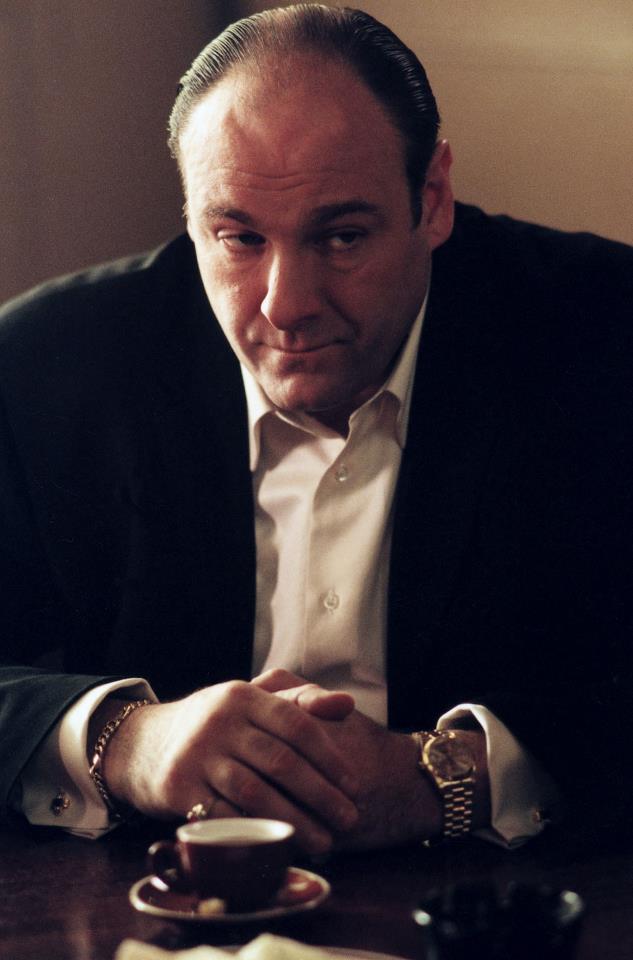
The original Jersey Boy: James Gandolfini 1961-2013


Talk to any actor famous for a particular part and they will, more than anything else, do their level best to divorce fiction from reality. Star Trek's Leonard Nimoy even named his first autobiography I Am Not Spock to get some distance from fans who found it hard not to think of him as the pointy-eared Vulcan.

James Gandolfini - who died today at the age of 51 while on holiday in Italy - was a serious actor, with the Broadway chops to prove it. But when The Sopranos came along in 1999, and effectively rewrote series television drama as anyone had known it, Gandolfini breathed life into one of TV's greatest characters.

Gandolfini's casting as the show's focal point - a New Jersey mob boss balancing suburban family life with the complex politics of his business - appeared to be an uncannily perfect fit. And as the series progressed, through six seasons, it became clear that creator David Chase had produced something extraordinary. I would even argue that The Sopranos was television's greatest ever series. And Anthony John Soprano its greatest ever character.

Gandolfini was born in 1961 to Italian-American parents in Westwood, a town in north-eastern New Jersey and close to where he was living up until his death. After graduating in communications from New Jersey's Rutgers University, Gandolfini moved to New York and working as a bartender, amongst other jobs, until his acting career took off with a Broadway production of A Streetcar Named Desire in 1992. The following year he appeared in Tony Scott's True Romance as Virgil, an enforcer working for Christopher Walken's mobster Vincent Coccotti. It was a part that drew attention to Gandolfini when The Sopranos began casting.

There was, of course, far more to Gandolfini's canon than just Tony Soprano: at 6'1" and a substantial frame, Gandolfini filled the screen with presence in films like Get Shorty, The Mexican and most recently in Zero Dark Thirty as a Pentagon general.

This was a role he'd played before, in Armando Iannucci's big screen version of The Thick Of It, in which Gandolfini stole the show as a thunderously profane, Norman Schwarzkopf-style general who puts the equally potty-mouthed Malcolm Tucker firmly in his place for possibly the first time ever.

However, it was the role of Anthony John Soprano, crew boss in the fictional DiMeo crime family (said to be based on the real DeCavalcante family of New Jersey), who grew up in Newark's tough Ironbound neighbourhood the son of Johnny Boy Soprano before enjoying the comforts of life at 633 Stag Trail Road, North Caldwell in Jersey's considerably more upmarket Essex County.

The Sopranos was more than just another crime show. Part Shakespearian drama, part Greek tragedy, like The Godfather's depiction of the American dream, it depicted the American dream as suburban life.

Yes, it riled some Italian-Americans for being yet another portrayal of crime in their community, but it also held a mirror to modern day America, of modern American family life.

And that was the premise of Tony Soprano: a modern American dad balancing family life and 'family life', with random violence and moral ambiguity ever-present throughout.

"The Sopranos was ambiguous to the point where, to this day, I'm not really sure whether it was a drama or a comedy," it's creator told Vanity Fair last year.

If it was a comedy - and there were numerous funny moments (the best being the episode Pine Barrens, with Paulie Walnuts and Christopher Moltisanti lost in the New Jersey woods) - it was certainly humour of the darkest shade.

Gandolfini's portrayal of Tony Soprano drove that darkness to its core. Through all six seasons it's there, played out in the Soprano kitchen, at the 'Bing or Satrale's, at Vesuvio, and most critically in Dr. Melfi's counselling room.

"We lost a giant today. I am utterly heartbroken," Lorraine Bracco - who played Melfi - said today at news of Gandolfini's death. It's a sentiment that has been shared by many.

"We're all in shock and feeling immeasurable sadness at the loss of a beloved member of our family," a statement on the HBO website for The Sopranos said. [James] was a special man, a great talent, but more importantly a gentle and loving person who treated everyone no matter their title or position with equal respect.  He touched so many of us over the years with his humor, his warmth and his humility.  Our hearts go out to his wife and children during this terrible time.  He will be deeply missed by all of us."

Since The Sopranos ended Gandolfini tried to put a little distance between him and his best known alter-ego. Acting, however, and particularly roles like Tony, had been useful. Last year he told the Associated Press that acting had become a means to deal with an inner rage.

"I don't know what exactly I was angry about," he said. "I try to avoid certain things and certain kinds of violence at this point," he added. "I'm getting older, too. I don't want to be beating people up as much."

Sopranos creator David Chase said today: "[James] was a genius. Anyone who saw him even in the smallest of his performances knows that. He is one of the greatest actors of this or any time. A great deal of that genius resided in those sad eyes."

Those sad eyes. In Tony Soprano, truly the window of the soul. And in James Gandolfini, a brilliant actor whose life has been cut so short. RIP.