Showing posts with label Ryanair. Show all posts
Friday, August 2, 2013
Baggage handling strike
And so we make it to August. Suits are being replaced by shorts, Paris is clearing out faster than a torpedoed bathtub, and the British press are so desperate for front page shockers that Simon Cowell fathering a child by another man's wife warrants the full splash treatment. All in all, a good time to go on holiday and, preferably like the French, not return until September's dappled sunlight begins to form longer shadows.
The Great Getaway also means that all the main motorways to southern France are choked by northern Europeans in copiously packed estate cars. The French themselves are recognisable by the plumes of cigarette smoke spewing from half-cracked windows; the Belgians by the fact they will be tailgating the car in front so closely its driver will be able to perform a full retinal scan on Brer Belg using just his rear-view mirror; the Dutch will be identified by the enormous tent-bearing roof box as they head for the great outdoors, rather than anything with indoor plumbing and a lift; the Germans? Well there are no Germans heading south as they're on the Dutch and Spanish beaches already; which just leaves the Brits, who will be smugly cruising in their Jags, heading for Tuscany with a straw fedora perched pretentiously on the rear parcel shelf.
Everyone else will be travelling by plane. Sensible people will be flying with a reputable airline that delivers them on time to the city they are intending to travel to. Less sensible people will be flying with Ryanair. Ryanair will, by reputation, also deliver them on time, but not necessarily to the airport most closely associated with the destination. It's along the lines of being dropped off on Jupiter and then having to catch a bus to Saturn.
This, as we know from boorish proclamations, is because Ryanair believes in delivering "value" to the traveller. It will fly you to Paris, like everyone else, but will land you at "Paris-Beauvais", which is in fact 98km from the centre of Paris, requiring you to take a €100 taxi. And when you add on things like €30 for an infant and €20 for an infant car seat or cot, €15 to reserve a seat or €10 to board first, €3 for a portion of microwaved chips, €4.50 for a "premium sandwich" and €2.50 for a 250ml can of Pepsi, that "€19" flight to Paris (that actually became €70 when you booked both legs...) starts to look like a very bad deal indeed, when compared to flying 'full fare' with, say, Air France (Heathrow-Charles De Gaulle return, €109 with a €16 return fare to and from the airport by train).
Of course, buying a drink or getting the seat of your choice are all options. But paying extra for an infant who would otherwise be strapped in with a parent? That's just gouging. Ryanair even, somewhat patronisingly, offers tips on "How Do I Avoid Paying Optional Fees?", which includes such suggestions as "Checked Baggage Fee - is avoidable by simply travelling with no checked baggage". Brilliant.
This brings me to the latest declaration from the airline's loathsome CEO, Michael O'Leary: in addition, this week, to apparently asking pilots to fly slower to conserve fuel, the Irishman has declared war on luggage.
O'Leary has had a thing about luggage for a while, regarding bags as simply a burden on profit margins due to the fact they burn more fuel, and by the fact processing baggage adds time (and money) to the turnaround time of aircraft that could otherwise be in the air with fare-paying passengers.
This summer, Ryanair has raised its charges for putting bags in the holds of its Boeing 737s by a further €20, a move O'Leary justified by saying: "We don't want the bags. We will keep increasing charges until we get rid of [hold] bags."
Well excuse me. But unless you are in a hurry to flee a war zone, most people like to pack a suitcase for a trip abroad so that they have, you know, clothes, shoes, underwear, toothbrushes and all the other items you can't leave several hundred miles away at home.
Even for a weekend, I'd prefer not to go out for dinner in the clothes I'd been wearing since the taxi arrived at dawn. I get it that some people can make do with the same T-shirt and bikini for an entire month of backpacking through Thailand, but the beauty of civilisation is that hotels function much the same as your home, and even "informal" restaurants appreciate it when their patrons bathe and wear relatively recently laundered clothing.
Restricting carry-on luggage, on the other hand, is, in my view a good thing: travel, in my opinion, generally brings out the worst in people. Which is why, when queuing to board a flight these days, your queue will include a small fleet of wheeled suitcases gripped by fellow passengers who believe they have as much right to fill up an overhead locker as you have (and slow down the boarding process along the way).
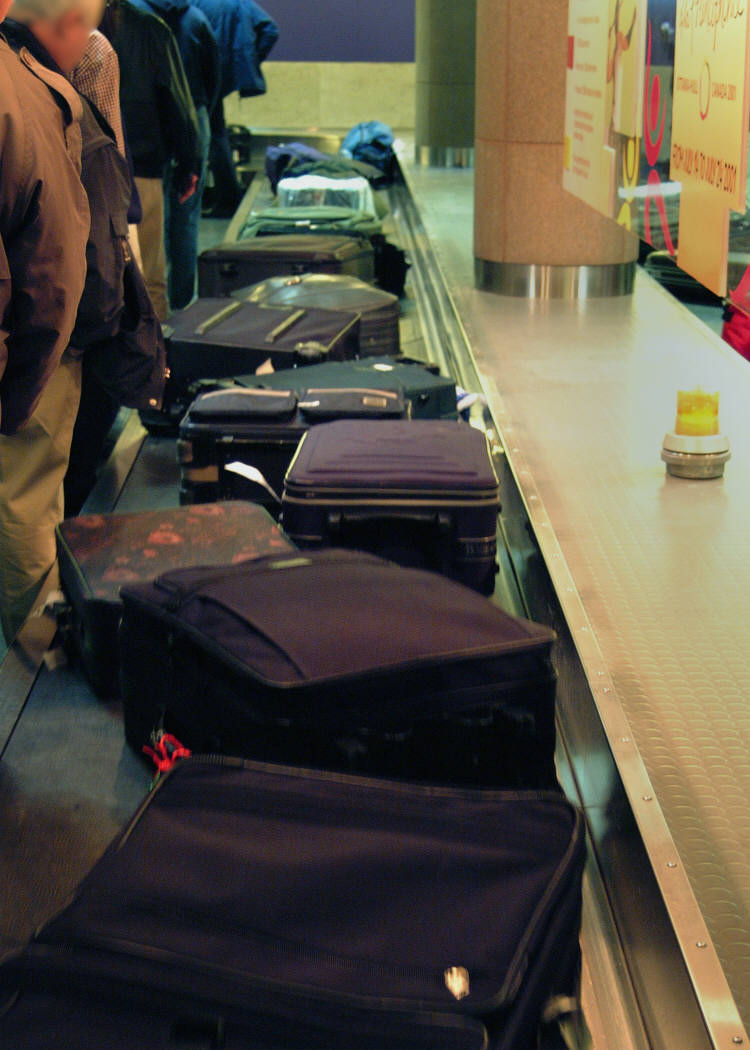
But hold luggage - which may take a little longer to deliver but at least is loaded by someone who won't delay the flight (unless they go on strike, of course) - is surely a good thing. And what will O'Leary fill the empty holds of his 737s if they don't have baggage - people?
Taking a pop at Ryanair's business model is both easy and tiresome. Easy, because it goes out of its way to annoy anyone dumb enough to care. Like me. And tiresome, because its belligerence knows no bounds.
If you go into business running an airline, most of the premise is providing a customer service or, as marketing people increasingly like to say, an "experience". I don't mind anyone making money on it, and if you believe in the free market, you pay your money and make your choice.
I just object to paying money for something which is supposed to be cheap, only to get a worse service than if I was paying a premium. Which is why I'm happy to pay for an airline that treats you as a customer buying a service, rather than a piece of cargo given the privilege of riding in a seat.
Sunday, December 2, 2012
Dignity restored?
Many years ago, when he was a stand-up comedian and not creating musicals about Queen, Ben Elton performed a brilliant routine about our small-mindedness when travelling on public transport.
In particular, he drew attention to how we become utter gits when trying to avoid spending a train journey sat next to anyone, and especially anyone undesirable, you know, moron with tinny music seeping from his headphones, musty old person chain-sucking Worthers Originals, any member of parliament.
Thus, Elton surmised, we wait at the platform gate with "Double seat, double seat, gotta get a double seat," riffing away in our heads because, let's face it - when it is clearly better to arrive than to travel, because the latter is usually purgatory - having that single space next to you on a train is public transport nirvana.
When sharing your travels with others, space - and especially personal space - is a premium. Like prisoners sharing overcrowded cells, any square inch you can call your own is a square inch of dignity maintained. This - and Elton's 'Double Seat' bit - reared up in my consciousness this week when European budget air travel pioneer easyJet announced that it was "phasing in" allocated seating. In other words, phasing out the dignity-stripping experience of you, your travelling companions and the little luggage you can take on board, legging it across a rain-strafed apron to be up the plane steps to bag yourself a window seat or a row of three.
Like Elton's granny-bashing charge to acquire dual-perch rail comfort, the queue for an unallocated seat with airlines like easyJet brings out the very worst in people. Everyone is considered an adversary, no matter how benign their appearance. You stand there in the queue, shuffling inch-by-inch as it hunches closer to the thin strip of elasticated tape that is the only thing keeping you herded in like sheep, waiting for your boarding group to move.
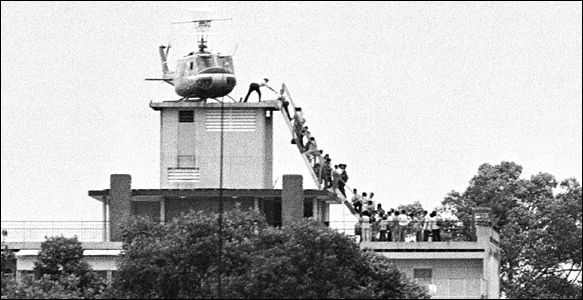
If you've paid for 'Speedy Boarding', you smugly look upon those without, knowing that your 50 metre dash to the aircraft door will reward you with an entire jet plane to choose your seat from. You momentarily think of those poor suckers in their 'ordinary' groups who'll just have to take their chances like refugees fleeing a war-torn country. Yes, I'm not proud, but I, too, have compared those passengers in the final boarding group to those desperate Vietnamese trying to board the last American Huey out of Saigon.
When the airport's most powerful person - the airline employee whose swipe card opens the departure gate exit - finally declares its time to go, normally decent people are unleashed on each other in feral competition. You couldn't imagine Cary Grant traveling this way.
So, following a trial early this year, easyJet has decided to join the grown-ups of air travel and is introducing allocated seating. This, trills their press release, "because passenger research showed that the boarding process could be a source of stress for some customers and in some case, a barrier to them flying with easyJet." No shit, Sherlock.
"Offering allocated seating on all of our flights is the single, biggest change the airline has undertaken in its history and an example of easyJet trying to do all it can to make travel easy and affordable for our passengers," explained the airline's UK director, Paul Simmons, stating that passengers had told them that allocated seating "was important to them", presumably because that's how it has worked throughout the modern history of commercial aviation, where you would at least be offered "window or isle", and in the bad old days of flying like a beagle in a perfume laboratory, "smoking or non-smoking?".
I know it's naughty of me to chide easyJet alone: flying Southwest Airlines in America - the airline on whose business model was largely copied by easyJet and the other low-cost carriers - is an exercise in tactical gamesmanship that wouldn't go amiss on the sports field.
As someone who used to fly Southwest frequently out of Silicon Valley's gateway airport, San Jose, I got to recognise the lengths fellow passengers went to ensure they were in 'Boarding Group A', and avoid the badge of condemnation that was 'Boarding Group D'.
There was a technique to getting into Group A, but it required dedication. Getting to the gate by 6.30am for a 7.30 flight to San Diego was rarely enough when you'd arrive to discover a small troop of hardened road warriors camped out in front of the desk, having been their since 3am the day before, as if queuing outside the Apple store for the latest iPhone. Madness. Just to get a window seat.
Budget air travel may have brought us closer the destination, but certainly not the experience. In giving us affordable access to exotic city destinations, or in Ryanair's case, airports 100km from exotic city destinations, our inner gits have been unleashed cheaply on the world.
This is a far cry from the era when jetting off for a weekend in Biarritz meant wearing a suit and smoking a pipe while stewardesses - as they could be called then - served martinis at 30,000 feet. Now, you have to be dressed for hand-to-hand combat at the gate.
That said, 9/11 took much of the blazers-and-pearls glamour out of air travel. In America, where prior to that atrocity getting on and off planes was somewhat akin to catching a bus, flying by plane became a shoe-removing, belt-undoing, strip-searching ordeal, replicated everywhere else. Before you'd even started struggling with that packet of in-flight nibbles, you were exhausted by the sheer D-Day landing craft crapshoot of getting on to the plane itself.
While the nightmare of airport security may be something we all have to endure - regardless of the class of travel - the notion of elitism between travel classes has never been a major problem.
However, the idea that, by paying an extra £7.50 for easyJet's former Speedy Boarding option gives you a decidedly unegalitarian edge over your fellow passengers, who will sit in the same seats, with the same class of service, and the same menu of extortionately-priced sandwiches and soft drinks, makes it all the more absurd.
I made it a personal policy not to fly with the budget airlines some time ago. For a start, I discovered their savings were rarely that. Once you add up all the extras, fees and spurious charges, you more or less pay the same with a 'scheduled' carrier as with a low-cost flyer. And why should you have to be put through the grief of paying for your ticket, paying extra for your boarding card, extra for a bag slightly larger than a pencil case, a 400% mark-up on refreshments? It doesn't make much sense at all.
However, easyJet's abandonment of the free-for-all hasn't been at the expense of extra charges. You will still be charged £3 if you want a specific seat, £12 for a seat in the front row or £8 if you want sit in rows 2 to 5. Bizarrely, if your preference is an exit row, which will have a little more knee room than the rest of the plane, easyJet will take £12 off you. It's worth noting that on most easyJet flights - which operate Airbus planes - the mid-plane exits are over the wings. Which are also the planes fuel tanks. Not that ideal a location in the event of a crash. Just sayin'.
Ryanair, the market leaders in finding new ways to screw money out of the passenger, have also introduced preference-paid seating. However, in charging £10 for an exit row seat, reports started appearing that their aircraft were taking off without anyone sat next to an emergency exit, a legal requirement under many aviation regulators - and which prompted the Irish Aviation Authority to investigate.
Still, easyJet maintain that it's us, this is all about. "This is an example of easyJet trying to do all it can to make travel easy and affordable for our passengers," said Carolyn McCall, easyJet's chief executive.
"Our customers asked us to trial allocated seating and we are really pleased with the positive passenger feedback during the trial". As should McCall's shareholders. The new system means that easyJet will now be able to make money from all seats on a plane rather than the 30 they reserved for Speedy Boarding passengers.
Travel does broaden the mind, and unleash our fantasies. Who doesn't feel like James Bond when first entering a hotel room, opening and closing wardrobes just to ensure trouble isn't lurking. But the experience of getting there comes at a cost.
In particular, he drew attention to how we become utter gits when trying to avoid spending a train journey sat next to anyone, and especially anyone undesirable, you know, moron with tinny music seeping from his headphones, musty old person chain-sucking Worthers Originals, any member of parliament.
Thus, Elton surmised, we wait at the platform gate with "Double seat, double seat, gotta get a double seat," riffing away in our heads because, let's face it - when it is clearly better to arrive than to travel, because the latter is usually purgatory - having that single space next to you on a train is public transport nirvana.
When sharing your travels with others, space - and especially personal space - is a premium. Like prisoners sharing overcrowded cells, any square inch you can call your own is a square inch of dignity maintained. This - and Elton's 'Double Seat' bit - reared up in my consciousness this week when European budget air travel pioneer easyJet announced that it was "phasing in" allocated seating. In other words, phasing out the dignity-stripping experience of you, your travelling companions and the little luggage you can take on board, legging it across a rain-strafed apron to be up the plane steps to bag yourself a window seat or a row of three.
Like Elton's granny-bashing charge to acquire dual-perch rail comfort, the queue for an unallocated seat with airlines like easyJet brings out the very worst in people. Everyone is considered an adversary, no matter how benign their appearance. You stand there in the queue, shuffling inch-by-inch as it hunches closer to the thin strip of elasticated tape that is the only thing keeping you herded in like sheep, waiting for your boarding group to move.
If you've paid for 'Speedy Boarding', you smugly look upon those without, knowing that your 50 metre dash to the aircraft door will reward you with an entire jet plane to choose your seat from. You momentarily think of those poor suckers in their 'ordinary' groups who'll just have to take their chances like refugees fleeing a war-torn country. Yes, I'm not proud, but I, too, have compared those passengers in the final boarding group to those desperate Vietnamese trying to board the last American Huey out of Saigon.
So, following a trial early this year, easyJet has decided to join the grown-ups of air travel and is introducing allocated seating. This, trills their press release, "because passenger research showed that the boarding process could be a source of stress for some customers and in some case, a barrier to them flying with easyJet." No shit, Sherlock.
"Offering allocated seating on all of our flights is the single, biggest change the airline has undertaken in its history and an example of easyJet trying to do all it can to make travel easy and affordable for our passengers," explained the airline's UK director, Paul Simmons, stating that passengers had told them that allocated seating "was important to them", presumably because that's how it has worked throughout the modern history of commercial aviation, where you would at least be offered "window or isle", and in the bad old days of flying like a beagle in a perfume laboratory, "smoking or non-smoking?".
I know it's naughty of me to chide easyJet alone: flying Southwest Airlines in America - the airline on whose business model was largely copied by easyJet and the other low-cost carriers - is an exercise in tactical gamesmanship that wouldn't go amiss on the sports field.
As someone who used to fly Southwest frequently out of Silicon Valley's gateway airport, San Jose, I got to recognise the lengths fellow passengers went to ensure they were in 'Boarding Group A', and avoid the badge of condemnation that was 'Boarding Group D'.
There was a technique to getting into Group A, but it required dedication. Getting to the gate by 6.30am for a 7.30 flight to San Diego was rarely enough when you'd arrive to discover a small troop of hardened road warriors camped out in front of the desk, having been their since 3am the day before, as if queuing outside the Apple store for the latest iPhone. Madness. Just to get a window seat.
Budget air travel may have brought us closer the destination, but certainly not the experience. In giving us affordable access to exotic city destinations, or in Ryanair's case, airports 100km from exotic city destinations, our inner gits have been unleashed cheaply on the world.
This is a far cry from the era when jetting off for a weekend in Biarritz meant wearing a suit and smoking a pipe while stewardesses - as they could be called then - served martinis at 30,000 feet. Now, you have to be dressed for hand-to-hand combat at the gate.
That said, 9/11 took much of the blazers-and-pearls glamour out of air travel. In America, where prior to that atrocity getting on and off planes was somewhat akin to catching a bus, flying by plane became a shoe-removing, belt-undoing, strip-searching ordeal, replicated everywhere else. Before you'd even started struggling with that packet of in-flight nibbles, you were exhausted by the sheer D-Day landing craft crapshoot of getting on to the plane itself.
While the nightmare of airport security may be something we all have to endure - regardless of the class of travel - the notion of elitism between travel classes has never been a major problem.
However, the idea that, by paying an extra £7.50 for easyJet's former Speedy Boarding option gives you a decidedly unegalitarian edge over your fellow passengers, who will sit in the same seats, with the same class of service, and the same menu of extortionately-priced sandwiches and soft drinks, makes it all the more absurd.
I made it a personal policy not to fly with the budget airlines some time ago. For a start, I discovered their savings were rarely that. Once you add up all the extras, fees and spurious charges, you more or less pay the same with a 'scheduled' carrier as with a low-cost flyer. And why should you have to be put through the grief of paying for your ticket, paying extra for your boarding card, extra for a bag slightly larger than a pencil case, a 400% mark-up on refreshments? It doesn't make much sense at all.
However, easyJet's abandonment of the free-for-all hasn't been at the expense of extra charges. You will still be charged £3 if you want a specific seat, £12 for a seat in the front row or £8 if you want sit in rows 2 to 5. Bizarrely, if your preference is an exit row, which will have a little more knee room than the rest of the plane, easyJet will take £12 off you. It's worth noting that on most easyJet flights - which operate Airbus planes - the mid-plane exits are over the wings. Which are also the planes fuel tanks. Not that ideal a location in the event of a crash. Just sayin'.
Ryanair, the market leaders in finding new ways to screw money out of the passenger, have also introduced preference-paid seating. However, in charging £10 for an exit row seat, reports started appearing that their aircraft were taking off without anyone sat next to an emergency exit, a legal requirement under many aviation regulators - and which prompted the Irish Aviation Authority to investigate.
Still, easyJet maintain that it's us, this is all about. "This is an example of easyJet trying to do all it can to make travel easy and affordable for our passengers," said Carolyn McCall, easyJet's chief executive.
"Our customers asked us to trial allocated seating and we are really pleased with the positive passenger feedback during the trial". As should McCall's shareholders. The new system means that easyJet will now be able to make money from all seats on a plane rather than the 30 they reserved for Speedy Boarding passengers.
Travel does broaden the mind, and unleash our fantasies. Who doesn't feel like James Bond when first entering a hotel room, opening and closing wardrobes just to ensure trouble isn't lurking. But the experience of getting there comes at a cost.
Thursday, July 15, 2010
A Class Act
If there is any one company in Europe which creates more heat and steam than The Flying Scotsman at full pelt, it is Ryanair. Indeed, the Mamba-strength venom reserved for this airline seems to have been eclipsed recently only by that for BP.So today Ryanair's reputation took another punch up the bracket when the airline's searingly obnoxious CEO Michael O'Leary apologised "unreservedly" to easyJet founder Sir Stelios Haji-Ioannou for running ads depicting him as Pinocchio.
Ryanair compounded its attack on easyJet by fibbing about the British rival's timekeeping. When Sir Stelios protested, Ryanair ran more ads, suggesting the issue be settled by a bout of sumo wrestling and, classily, branding Stelios a "chicken."
Whether or not this was personally instigated, or personally executed by O'Leary is not known. What is known is that O'Leary consistently challenges the notion of corporate reputation management. Indeed, he has turned 'anti-reputation' into an art form - even prompting a book, Plane Speaking: The Wit and Wisdom of Michael O'Leary, to compile his indifference towards reputation.
All this flies in the face of modern corporate wisdom, especially the belief, expressed by American industrialist Warren Buffet that: "It takes twenty years to build a reputation and five minutes to ruin it." Think of what has happened this year to Toyota and BP.
Ryanair, of course, cannot be compared to Toyota or BP: the only disaster, or perceived disaster, Ryanair can own up to is that their jumped-up CEO revels in controversy and, into the bargain, gets the attention he so obviously craves. And the business: in the year to June, Ryanair increased its profits by 204%, coining in an eye-popping Eur 319 million (even without charging a quid for an in-flight pee).
Back on the ground, Ryanair polarises opinion: it has plenty of detractors - indeed a huge community of websites, blogs and Twitter campaigns has emerged to vent about the airline. But for all those who consider them price-gouging crooks, there are those who are pretty pleased with an airline that will ship them from A-to-B on the cheap.Well I say A-to-B, but B is rarely where you actually need to be: if you fly Ryanair to Brussels you actually land at Charleroi, which is closer to Paris than the Belgian capital. Eindhoven in the Netherlands is even positioned by Ryanair as convenient for Amsterdam. Trust me, it isn't. Which means that "Europe's Greenest airline", as Ryanair likes to call itself, really isn't. You still need a car or a bus to reach further away destinations or departure points. The difference is, it's your car and your carbon emissions, not the airline's, all of which looks good for the corporate sustainability rating of the airline.
It's true you get what you pay for with Ryanair. What's also true is that if you don't like them you know what you can do. And I'm sure Michael O'Leary has one or two suggestions...
Subscribe to:
Posts (Atom)