Showing posts with label Paris. Show all posts

Monday, September 23, 2013

Anger management: Roger Waters - The Wall at Stade de France

© Simon Poulter 2013
To see the English at their most English, after you've read this post, of course, slide on over to YouTube for a priceless excerpt of Anglo-Saxon awkwardness, featuring Roger Waters and his onetime Pink Floyd cohort David Gilmour.

In a 110-second clip from 2006, you will see these once bitterest of bandmates meeting in the car park of Bray Film Studios where, by pure coincidence, Gilmour was rehearsing for his On An Island tour in Studio 1, and Waters was rehearsing for his tour in Studio 2.

Given the years of post-Floyd animosity between the Floyd's own Mick and Keith, the meeting is understandably edgy.

Rarely raising their eyes up from the car park's ashphalt, they appear to small talk about this and that. Waters kisses Gilmour's wife, the writer Polly Samson, Gilmour and Waters awkwardly hug, and they return to their respective sound-stages.

The lack of eye contact adds depth to a history of repressed rage, buried recrimination and still-simmering resentment. "Hanging on in quiet desperation is the English way," you could say. Thankfully, the detergent powers of therapy have helped thaw the relationship between the two.

The Wall, the Pink Floyd album Waters largely devised and wrote amid crumbling relationships with the rest of the band (Gilmour in particular, as the two vied for creative control), was an outlet for his rage. Rage against the fame that had increasingly encroached on him in the wake of Dark Side Of The Moon's global success; rage against the injustice of having lost his father, Eric Fletcher Waters, to the brutality of World War Two when Roger was still a baby; and rage against totalitarianism, capitalism, communism, fundamentalism, fanaticism, consumerism - any 'ism you like.

© Simon Poulter 2013
Waters turned 70 earlier this month. And he's still angry. Like an ageing activist at Speaker's Corner, he continues to rail against a long list of the world's 'isms and, for the last three years has used a truly epic restaging of The Wall live show as a platform to make his  point(s).

Of course, with the Floyd going their separate ways, reuniting only for a terse performance at Live 8 in 2005, the patrons who filled the Stade de France in Paris on Saturday night may have been there expecting a Pink Floyd show more than a 'solo' performance by one disproportionate quadrant of the band. Whatever they were there for, they got their money's worth. And then some.

Some will say The Wall was overblown, overwrought, self-indulgent rock bombast. And from some angles, it was. But others will say - quite rightly - that it was a double album on a totally different scale of narrative ambition to anything then - and certainly anything since.

Released on the cusp of the 1980s, The Wall's epic, theatrical expanse appeared, thematically, to mark the end of the rock era, an era that had seen similar concept projects, be it Sgt. Pepper or the The Who's Tommy, which explored a similar thesis.

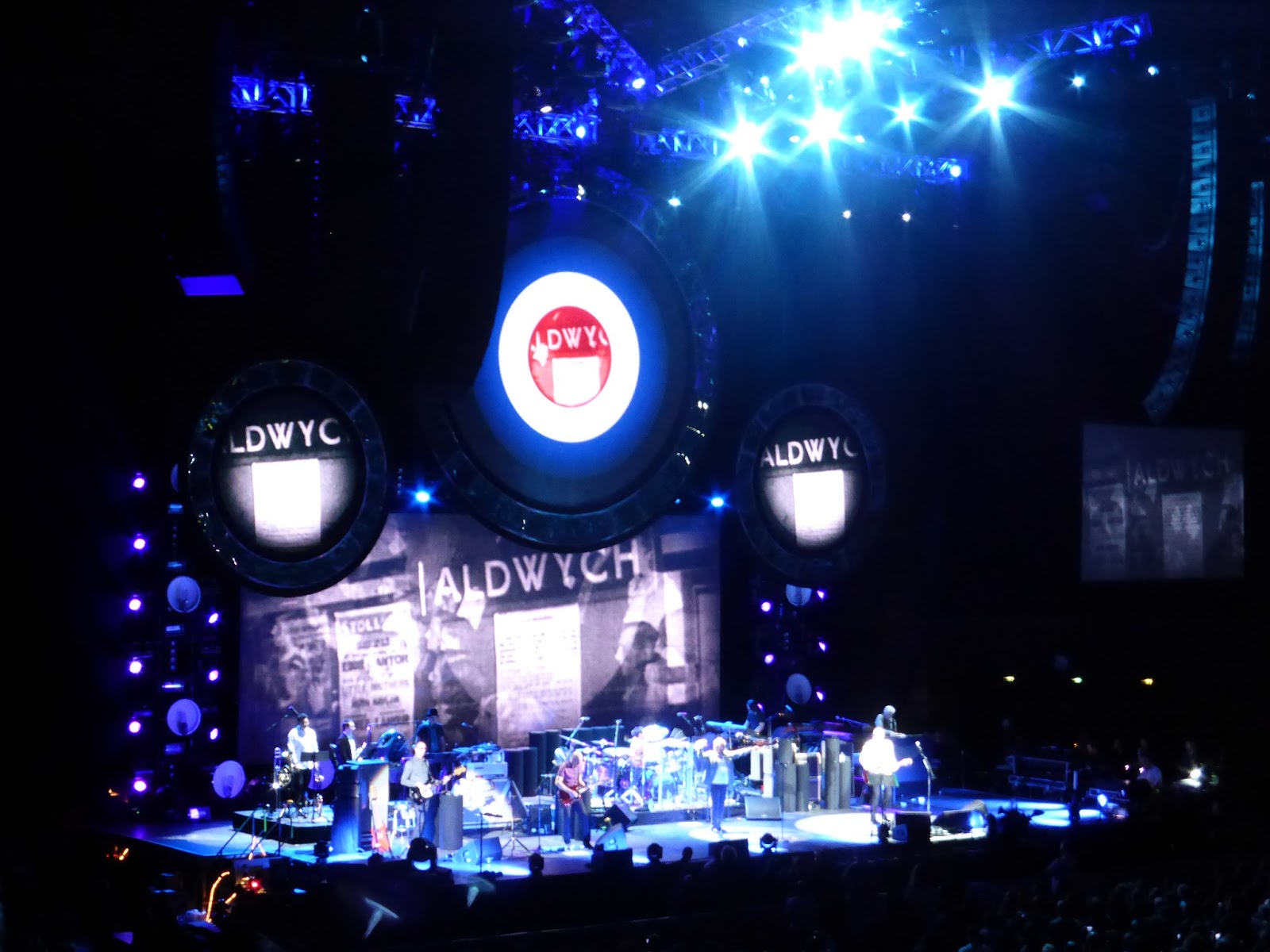
In 1980 the Floyd took The Wall on the road as an elaborate arena stage show for 29 dates. Part rock concert, part rock opera, part theatrical outlet for the neuroses Waters had written about, it opened with a 'fake' Pink Floyd wearing face masks of the real band, featured a giant wall across stage with the real Floyd initially performing behind it, and made liberal use of Gerald Scarfe's clearly Nazi-inspired animations of marching hammers.


© Simon Poulter 2013
Updated with the latest staging technology, including an enormous wall spanning the entire stadium width and high definition projection, the updated Wall show is a breathtaking spectacle.

Given the number of acts now touring classic albums as tidy pension contributions, it would be easy to accuse Waters of also plundering the pot. But that would be a great disservice to this who. And, as he explained in 2010 when announcing the three-year tour, there was another motive for restaging The Wall show now: "30 years ago when I wrote The Wall I was a frightened young man," Waters explained on his website.

"In the intervening years," he added, "it has occurred to me that maybe the story of my fear and loss with it’s concomitant inevitable residue of ridicule, shame and punishment, provides an allegory for broader concerns.: Nationalism, racism, sexism, religion, Whatever! All these issues and ‘isms are driven by the same fears that drove my young life".

© Simon Poulter 2013
"This new production of The Wall is an attempt to draw some comparisons, to illuminate our current predicament, and is dedicated to all the innocent lost in the intervening years," Waters explained.


Thus, in this reimagining of The Wall stage show, he tackles the war on terror and war in general. From the very beginning, with its pyrotechnics punctuating In The Flesh? and a miniature Stuka flying the length of the stadium before crashing in flames, Waters remains without compromise.

Another Brick In The Wall, Part 2 - being the album's fifth track - provides an early highlight to the evening, and its first singalong moment. On the album it was a breezy, faux-disco 4/4 novelty. Released as a single in November 1979, it became the final No.1 of the 1970s in 17 countries - a Christmas No.1 taking a swipe at Thatcher's Britain and school brutality, with a chorus of London schoolchildren declaring "we don't need no educashun"!

Here, it is updated with a newly-written coda: an animated London Underground train arrives on the wall, muzzle flashes are seen, pistol shots are heard, and Waters launches into The Ballad of Jean Charles de Menezes, about the Brazilian mistakenly killed by police at Stockwell tube station in the aftermath of the July 2005 terror attacks. It ends with Waters enunciating the caustic final lines: "Just one man dead and nothing is gained, nothing at all. And Jean Charles de Menezes remains just another brick in the wall". On the day of the Nairobi atrocity, it adds a moment of poignant reflection.


Picture courtesy of Guino Patrice
http://rockerparis.blogspot.fr/
Waters' attempts to raise the mood a little by introducing Mother, playing acoustic guitar and ambitiously syncing his vocal to footage of him performing the song at Earls Court in 1980 (the "fucked up Roger", he declares, self-depreciatingly).

Coming halfway through the show's first half, Mother starts to unlock The Wall's undercurrent menace, a gentle foothill to the onslaught to come as it tells the story of the fatherless Pink character as mollycoddled recipient of an overbearing mother trying to keep "baby cosy and warm", building a protective wall around him and sealing in his alienation.

Bluesy, even gospel-infused, Mother is another early peak in the show, coming before The Wall crawls further to the dark side with Goodbye, Blue Sky. Controversially, Waters uses the impressive HD projection system to full the stage wall with an animated collage of B-52s drop bombs of corporate logos, swastikas, hammer and sickles, the Star of David and other icons of those 'isms' he gets worked up about.

At the interval - The Wall was a four-sided vinyl album after all - images of people who've lost their lives to war are projected on the wall, another reminder of what inspired the record to begin with. Waters' father was a schoolteacher, Labour Party activist, devout Christian who, at the outbreak of World War 2, was a conscientious objector. As the war dragged on, he changed position and joined up, becoming an officer in the Fusiliers. In the battle for Anzio in 1944, Eric Waters was killed. His son Roger was only a few months old. His death would resonate for the rest of Roger Waters' life and career, drawing on his father's beliefs, fuelled by his father's slaughter.

Picture courtesy of Guino Patrice
http://rockerparis.blogspot.fr/

Opening with another Floyd classic, Hey You - an anthem of bricked-in repression - the band are hidden completely behind the wall. Only the continuing stage lighting gives away the fact someone's back there, and that Waters and his sizeable ensemble are still in the dressing room quaffing eau gazeuse and cheesy nibbles.

© Simon Poulter 2013

The Wall's profound theatrically is exploited to the full during the second half, as it makes sinister progress through the story with Nobody Home, the nostalgic Vera and the choral Bring The Boys Back Home, before piling in to the opening power chord of Comfortably Numb. a song that has taken on the mantle of Pink Floyd's opus, a highlight of both Waters and Gilmour solo shows, and even part of the Scissor Sisters' camp schtick.

On the album Comfortably Numb was a cut-and-shunt of a song by Waters and another by Gilmour (the former providing the manic vocals of the verses, Gilmour adding his gentler voice and 12-string guitar to the countering chorus). Compromising entente it may have been, but it produced one of rock's greatest epics - and greatest guitar solos.

Performed with longtime Waters sideman Snowy White recreating Gilmour's original fretwork with such vigorous attack you'd hardly believe he'd been playing it night after night for three years, it provides a solid reminder of just how well written The Wall was. For a concept album, producing even one hit single was an anomaly. Producing so many outstanding contributions to the Floyd legacy was an even bigger achievement.

Picture courtesy of Guino Patrice
http://rockerparis.blogspot.fr/
Of course, the second half of The Wall is also well known for the emergence of the Pink character as a fascist nutjob. Waters, sporting de rigeur dictator Aviators, leather greatcoat and the marching hammers armband drawing obvious visual reference to the Nuremberg rally of 1938, struts about declaring The Show Must Go On.

As his fascist ranting in In The Flesh (never to be confused with the opening track, In The Flesh?....) gets underway, a giant inflatable pig is released into the crowd. It's a moment that causes thousands of smartphones, which had previously been trained on the stage to such effect that the Stade de France floor looked like a twinkling carpet of LCD screens, point upwards, catching sight of a gimmick that has been causing quite a stir. Especially in Israel.

For alongside a crucifix, the dollar sign, a hammer and sickle and other graphics, is the Star Of David. Waters has, as a result, been accused of being anti-Semitic, a stance not helped by his previous criticism of Israel over its treatment of Palestinians, nor by his clear commentary on the war on terror in the Muslim world. Waters has defended the pig as "satire", but has added that it would be wrong "to pretend these problems in the Middle East don't exist".

For, I suspect, much of the audience, it's a moment of light relief. The political symbolism is lost in a Saturday night stadium party. And, as the inflatable pig is gradually lowered into the crowd, where it appears to undergo some form of inflatable porcinecide, Waters continues to strut about, the jangly familiarity of Run Like Hell building the backdrop of autocratic mayhem as he screams "If they catch you in the back seat trying to pick her locks/They're gonna send you back to Mother in a cardboard box - you'd better run!".


The Trial, with its orchestral backing, was, on the album, something between a Gilbert and Sullivan operetta and Lionel Bart show tune. Live, Waters retains this camp theatricality and embellishes it with more of cartoonist Gerald Scarfe's vivid imagery, as used by Alan Parker in his so-so film adaptation of The Wall.

Waters is now in his element, seemingly effortlessly pushing his 70-year-old voice to deliver the show's most demanding number, one that takes you even further away from your notion of being at a rock concert, as it builds to a crescendo and the collapse of the wall.

Few rock shows, few rock albums for that matter, have or ever will end this way. Traditional rock concerts end with a finale, an encore of hits (plus the annoying unknown new one). But this is no rock concert. It ends with Outside The Wall, Waters playing a lament on his trumpet, the accompanying band assembling around him with rustic instrumentation - mandolins, acoustic guitars, accordion and vocal harmonies to - as they bring this epic to an end.

For all the rage, for all the anger, Waters declares that this is probably the last time he will ever stage The Wall. He's got another solo album to finish and then...and then we'll see. He's the last member of rock's great circus I'd ever give over to sentimentalism, but there are tears on his cheek and a crack in his throat as he brings the invisible curtain down on his three-year adventure.

"And when they've given you their all," that final song had chimed, "Some stagger and fall, after all it's  not easy - banging your heart against some mad bugger's wall." Indeed.

Friday, August 2, 2013

Baggage handling strike


And so we make it to August. Suits are being replaced by shorts, Paris is clearing out faster than a torpedoed bathtub, and the British press are so desperate for front page shockers that Simon Cowell fathering a child by another man's wife warrants the full splash treatment. All in all, a good time to go on holiday and, preferably like the French, not return until September's dappled sunlight begins to form longer shadows.

The Great Getaway also means that all the main motorways to southern France are choked by northern Europeans in copiously packed estate cars. The French themselves are recognisable by the plumes of cigarette smoke spewing from half-cracked windows; the Belgians by the fact they will be tailgating the car in front so closely its driver will be able to perform a full retinal scan on Brer Belg using just his rear-view mirror; the Dutch will be identified by the enormous tent-bearing roof box as they head for the great outdoors, rather than anything with indoor plumbing and a lift; the Germans? Well there are no Germans heading south as they're on the Dutch and Spanish beaches already; which just leaves the Brits, who will be smugly cruising in their Jags, heading for Tuscany with a straw fedora perched pretentiously on the rear parcel shelf.

Everyone else will be travelling by plane. Sensible people will be flying with a reputable airline that delivers them on time to the city they are intending to travel to. Less sensible people will be flying with Ryanair. Ryanair will, by reputation, also deliver them on time, but not necessarily to the airport most closely associated with the destination. It's along the lines of being dropped off on Jupiter and then having to catch a bus to Saturn.

This, as we know from boorish proclamations, is because Ryanair believes in delivering "value" to the traveller. It will fly you to Paris, like everyone else, but will land you at "Paris-Beauvais", which is in fact 98km from the centre of Paris, requiring you to take a €100 taxi. And when you add on things like €30 for an infant and €20 for an infant car seat or cot, €15 to reserve a seat or €10 to board first, €3 for a portion of microwaved chips, €4.50 for a "premium sandwich" and €2.50 for a 250ml can of Pepsi, that "€19" flight to Paris (that actually became €70 when you booked both legs...) starts to look like a very bad deal indeed, when compared to flying 'full fare' with, say, Air France (Heathrow-Charles De Gaulle return, €109 with a €16 return fare to and from the airport by train).


Of course, buying a drink or getting the seat of your choice are all options. But paying extra for an infant who would otherwise be strapped in with a parent? That's just gouging. Ryanair even, somewhat patronisingly, offers tips on "How Do I Avoid Paying Optional Fees?", which includes such suggestions as "Checked Baggage Fee -  is avoidable by simply travelling with no checked baggage". Brilliant.

This brings me to the latest declaration from the airline's loathsome CEO, Michael O'Leary: in addition, this week, to apparently asking pilots to fly slower to conserve fuel, the Irishman has declared war on luggage.

O'Leary has had a thing about luggage for a while, regarding bags as simply a burden on profit margins due to the fact they burn more fuel, and by the fact processing baggage adds time (and money) to the turnaround time of aircraft that could otherwise be in the air with fare-paying passengers.


This summer, Ryanair has raised its charges for putting bags in the holds of its Boeing 737s by a further €20, a move O'Leary justified by saying: "We don't want the bags. We will keep increasing charges until we get rid of [hold] bags."

Well excuse me. But unless you are in a hurry to flee a war zone, most people like to pack a suitcase for a trip abroad so that they have, you know, clothes, shoes, underwear, toothbrushes and all the other items you can't leave several hundred miles away at home.

Even for a weekend, I'd prefer not to go out for dinner in the clothes I'd been wearing since the taxi arrived at dawn. I get it that some people can make do with the same T-shirt and bikini for an entire month of backpacking through Thailand, but the beauty of civilisation is that hotels function much the same as your home, and even "informal" restaurants appreciate it when their patrons bathe and wear relatively recently laundered clothing.

Restricting carry-on luggage, on the other hand, is, in my view a good thing: travel, in my opinion, generally brings out the worst in people. Which is why, when queuing to board a flight these days, your queue will include a small fleet of wheeled suitcases gripped by fellow passengers who believe they have as much right to fill up an overhead locker as you have (and slow down the boarding process along the way).

But hold luggage - which may take a little longer to deliver but at least is loaded by someone who won't delay the flight (unless they go on strike, of course) - is surely a good thing. And what will O'Leary fill the empty holds of his 737s if they don't have baggage - people?

Taking a pop at Ryanair's business model is both easy and tiresome. Easy, because it goes out of its way to annoy anyone dumb enough to care. Like me. And tiresome, because its belligerence knows no bounds.

If you go into business running an airline, most of the premise is providing a customer service or, as marketing people increasingly like to say, an "experience". I don't mind anyone making money on it, and if you believe in the free market, you pay your money and make your choice.

I just object to paying money for something which is supposed to be cheap, only to get a worse service than if I was paying a premium. Which is why I'm happy to pay for an airline that treats you as a customer buying a service, rather than a piece of cargo given the privilege of riding in a seat.


Monday, July 15, 2013

The Great Summer Of Shows™ - what we have learned


Way back at the end of May, What Would David Bowie Do? came to the stark realisation that it was going to be an amazing summer of live music, kicking off with Eric Clapton at his surrogate home, London's Royal Albert Hall, before setting up camp in Paris with the Stone Roses, Rodriguez, Depeche Mode, Mark Knopfler, The Who, Bruce Springsteen and Hugh Laurie, ending at the Montreux Jazz Festival with Prince.

Though we're only at the midpoint of July, it is safe to say that it has been a Great Summer Of Shows™. It has also been an education. Here's what we have learned:

The Merchandise Stand

Just because, when you first walk in, you see a caged-off 'shop' of sorts selling merchandise doesn't mean you have to cause a minor riot for your "exclusive" all-black XL tour T-shirt, which your other half will eventually purge from your collection. Nor does it mean wearing the thing over the clothes you came out for the evening in (especially if you just came straight from the office) or draping round your shoulders like you've just looted it from a branch of Top Man during a riot. This thing called the Internet has just been invented and you can use it to buy stuff from bands and their "websites"

Banned Items

Patrons of stadium gigs should refrain from bringing in the following items:
  1. Binoculars (because you don't want to look a total prat), 
  2. Inflatable beach toys (because they're designed for the beach, not for annoying 50,000 irritable people who've been drinking in the sun since lunchtime)
  3. Bra-less girlfriends who want to be carried on your shoulders (because they will be ogled at as soon as they appear on the big screen and you will end up taking the week off work due to your back giving out).
Picture  © Simon Poulter 2013

The Mexican Wave

If you are at a stadium gig it is seriously not cool to start a Mexican Wave. It was amusing once, during the 1986 World Cup, which was held in Mexico. It is not amusing in the 21st century at a football stadium in the north of England.

The Support Act

The support act may be completely unknown to you, they may have a weedy voice and a total lack of charisma, but that doesn't mean you should talk all the way through their act. The person you've really come to see believes in this frail singer-songwriter/angst-ridden balladeer/quirky-looking pretty boy your girlfriend suddenly takes interest in and it's just damn rude to yack away during their 30-minute set. Bugger off to the bar instead.

Learn How It Works #1

The act you've come to see will get on stage when they're good and ready. No measure of slow-hand clapping, whistling or stamping of feet will advance the situation.

Picture  © Simon Poulter 2013

You're Not HBO

If you must video the show, first buy a television station or DVD company, negotiate with the artist for video rights, and then record the event using professional cameras and the ubiquitous Louma crane. Do not spend the entire night holding your iPhone in the air to the annoyance of all standing behind you.

Singing

If you feel compelled to sing along to the hits, take a few singing lessons first. Nobody wants to deal with the band not properly lip-synced with the video screen and your drastically off-key caterwauling. Especially if your breath stinks of Hades because you decided to have a cheeky curry before the show.

Recognise That You're Not In The Photographers' Pit

If you must take photographs, learn how to use your camera or smartphone first. Some poor drone at the consumer electronics company who made your fantastic new compact super-zoom spent time and effort translating the Japanese instruction manual into your native language. At least have the courtesy to learn how to switch off the annoying BEEP-BEEP that will drive your fellow punters to kill if it happens every time there's a quiet bit. 

Picture  © Simon Poulter 2013

The Stage Lighting Is There For A Reason

And while you're at it, learn how flash guns work on compact cameras. If you have the flash on, all you will be doing is illuminating the row of bald heads immediately in front of you, not the stage which - by the way - is already lit up by lots of lovely coloured lights. So you don't have to.

Sit Down, Dickhead #1

If you do take photographs, take only a few as souvenirs. Recognise that there are people behind you who weren't so successful in getting seats near the stage, and will not appreciate spending all that money to watch Mr. or Ms. Big Time through the LCD screen of your camera.

Sit Down, Dickhead #2

If I see that iPad appear above your head one more time...

Sit Down, Dickhead #3

Yes, we know it's cool that your lifelong idol is just in front of you, in the flesh, and close enough to touch, should you actually be that close, but that's no reason to stand up like a giddy child forcing every single person in every single row behind you to do the same. There are people who've paid good money for a seat, and are ruddy-well going to use it without having your lard arse block the view.

Picture  © Simon Poulter 2013


Stop Tweeting

Yes, it's cool for your followers to know you're at a concert, but do you need to give a running commentary? Do you need to miss the show because you're hunched over your Facebook page giving song-by-song updates? Do we need to see your face lit up like Indiana Jones in front of the Lost Ark because you're trying to redefine the zeitgeist in 140 characters or less?

Avoid The Clap

Everyone likes to clap. Pop concerts are the one venue outside gospel churches where communal rhythmic clapping in public is acceptable. Except that in a gospel church it will be rhythmic. And in time. Unlike your uncoordinated attempt to catch a particularly agile fly.

Learn How It Works #2

The act will go off towards the end, your less informed fellow punters will clap/whistle/stomp, the act will reappear for an encore. When they're good and ready.

Give It A Whistle

Actually, don't. The bluesman Blind Willie McTell may have started the practice of whistling during concerts as a means of getting audiences to join in with him, but he did not intend for ear drums to suffer permanent damage because the middle-aged adolescent next to you is trying to show off by sticking two fingers between his teeth and blowing. Not big. Not clever. Just painful.

Picture  © Simon Poulter 2013

Lighters Aloft

In the era when people smoked at concerts (and I mean regular cigarettes as well as those sweet-smelling roll-ups people still think it subversively cool to take a puff on), it was considered to be an appropriate indication of togetherness to hold a cigarette lighter in the air during an emotionally-wrought song to create the "ooh-aah" effect of hundreds of flickering flames. Where this practice began, no-one quite knows. Some say it was at Woodstock, when such hippy soppiness would have been contextually acceptable. Others claim it was at a Neil Diamond concert in the early '70s, and happened by random accident. Either way, it should have stopped by now, and certainly should not have been succeeded by cretins who have amusingly loaded a flickering lighter app on to their iPhone and are now holding it aloft during the 'slow one', right in front of you.

Learn How It Works #3

When 'the big lights' come up, that's your cue to head for the door. By the time you've stopped clapping/whistling/stomping the band will already be in a limo heading for the, erm, 'aftershow refreshment'. Go home. Or go home with someone. Or go next door to the pub. Or what-ev-ah. Those fat blokes on stage in Iron Maiden T-shirts coiling up microphone cables are roadies packing up Mr/Ms. Big Time's gear for the next gig, where all the above rituals will be played out once more.


Thursday, July 11, 2013

Let the good times roll: Hugh Laurie live at Le Grand Rex, Paris


With all this faux folk at the moment - in which you can't walk into a muddy festival field without encountering a group of posh boys with asymmetrical haircuts, wielding mandolins and thumping out celtic-tinged good times - it makes a change to encounter a somewhat posh (Eton, Cambridge) actor with thinning grey hair thumping out early 20th century blues.

For Hugh Laurie and The Copper Bottom Band are, if nothing else, a jolly good time. There is, though, little point trying to deny you're in the audience for anything other than one of two reasons: 1) you're British and know Laurie best for a 30-year career in TV comedy (collaborations with Stephen Fry, goggle-eyed Blackadder characters etc); and 2) you're French and know him mostly from "Doctor 'ouse".

Looking around Le Grand Rex, the exquisitely art deco Paris theatre, I am in the clear minority as a Brit. Therefore it is quite prudent to assume that shouting out references to lost socks or the more Wodehousean "Tally-ho, pip-pip and Bernard's your uncle" will be lost.

Plus, there is little need. Laurie bursts on stage as if still president of the Cambridge Footlights Revue. "I used to be an actor," he introduces himself, purposely, like an addict declaring in 12-step session "Hi, my name is Hugh and I'm an alcoholic' to supportive applause.

To the many, somewhat scary Laurie devotees in the audience, including a group of ladies wearing T-shirts with "I Love House" and his picture on the front (Kathy Bates in Misery does come to mind...), such a statement might be an issue. Laurie has said previously, that House's success became a "gilded cage" and that he "had some pretty bleak times, dark days when it seemed like there was no escape from the attention".

But here he is, clamouring for it. With a second album - Didn't It Rain - to promote ("I can't believe I've just said 'this is from my first album' he aw-shucks later in the set), Laurie, a very accomplished musician, has brought his love of early blues and jazz to Paris along with highly competent band. With it, a full-on display of the self-effacement and comic foppishness that the English upper middle class do so well. Well, we English in general, actually.


There is something more than a hobby about Laurie's show: it is more musical theatre than, say, a band doing a gig, but that has more to do with Laurie's own entertainingly vaudevillian delivery.

This isn't, however, a travelling version of Jersey Boys. Laurie and his Copper Bottom Band are, as they say in rock circles, a tight act, universally enjoying the repertoire of songs by historic blues figures like W.C. Handy, Bessie Smith and Kansas Joe McCoy. Nor is this a vanity project - the idea of recording an album was presented to him by a record executive who'd seen him demonstrate his chops in an episode of House.

Englishmen from relatively comfortable backgrounds have been performing blues songs since the 1960s, of course. They have never claimed affinity with the music's originators, simply a love of a musical form that, when it gets you, it gets you. But whereas most have trawled the Mississippi Delta for the sort of bottleneck blues that got Beale Street jumping in the Depression, Laurie's authentic passion spreads across a wider range of American roots music.

Thus we run from the New Orleans standard Iko Iko and the much-covered Let The Good Times Roll (man alive, even Joe Strummer did a version of it), to Ray Charles' What Kind Of Man Are You, Lead Belly's infectious You Don't Know My Mind and even Mystery Train, made famous by Elvis Presley, despite being a 1955 B-side (Laurie, once more, self-effacingly apologises for performing a song by "the most famous man to ever walk the planet" without any need, as it's actually done very well).

Indeed they're all done well. Laurie needn't have remained in character so much. As a performer he's a better pianist than singer (he produces an excellent rendition of Nina Simone's I Wish I Knew How It Would Feel - best known to British TV viewers as the theme to the BBC's Barry Norman/Jonathan Ross weekly 'Film...' programme).

What Laurie lacks as a singer is made up for by the two starkly contrasting vocalists the Copper Bottom Band has in its midst: 'Sister' Jean McClain - who sometimes goes by the name of Pepper Mashay - is a journeywoman backing singer, with the kind of gospel voice that pins the lugholes back without apology. Taking lead vocal on Send Me To The Electric Chair, she soon has the audience swayin' and hollerin' as if attending Sunday morning chapel.

While much of the evening follows the course of the Mississippi from Chicago to New Orleans, Laurie and band head even further south with Kiss Of Fire, an Argentinian tango that brings young Guatemalan backing vocalist Gaby Moreno to center stage for a breathless rendition of the turn-of-century pot boiler, once covered by Louis Armstrong. Here, Moreno applies a noirish vibrato to her vocal parts, sung in Spanish, while Laurie contributes the counter melody in English.

We have, at this point, landed firmly in the territory of West End period musical. For a more conventional blues act, it would have been an eccentric choice at best, but with Laurie rarely stepping out of character, it merely adds to the Good Old Days variety of the show.

Laurie may never shake off the actor tag. To some, he may forever be Gregory House or Bertie Wooster. His persistent, very English self-effacement throughout the show certainly won't rid him of the latter association. But you cannot fault his earnestness. His knowledge of this music being played is encyclopedic, and his lifelong passion for it comes through with every song - all the way through to the finale.

Changes - the Alan Price song I always associate with an 1980s TV commercial for the Abbey National bank - is played with full-on New Orleans trad jazz gusto, a ripe trombone leading out a Mardis Gras procession in full flow before abandoning the Crescent City for Chicago and Chuck Berry's You Never Can Tell. Well known for its 'role' in Pulp Fiction, Laurie's 12-bar piano boogie and brisk accompaniment from the seven musicians brings the encore to a sprightly conclusion.

I could have probably left it there. But there is a crowd-pleasing coda to the evening: the Disney Jungle Book singalong I Wanna Be Like You. Having started the evening with Iko Iko, and wandered our way through the hinterlands of blues and traditional jazz, we end with a song from the collective childhood of almost everyone in the theatre.

This finale may have an air of self-indulgence about it. It was an enjoyable novelty when I used to hear it on Junior Choice on a Saturday morning, for Laurie a light-hearted piece of big band fun. Clearly, he's enjoying himself. How very unlike a certain doctor I could mention.

Thursday, July 4, 2013

Modz still rool: The Who, Palais Ominsports de Paris Bercy

© Simon Poulter 2013
Remember the concept album? There was a time when you couldn't walk into a record shop without tripping over the latest elaborately illustrated, double gatefold-sleeved musical opus spread over four sides of vinyl.

Frank Sinatra is claimed to have started it with In The Wee Small Hours, The Beach Boys took it further with Pet Sounds and then The Beatles perfected it with Sgt. Pepper. From then on in everyone was at it - The Kinks, Bowie, the Floyd, Jethro Tull, Genesis...even the Stones' Exile On Main Street is built loosely around a concept, though good luck asking Keith Richards what it was.

Today, however, the idea of a concept album by a mainstream artist is unimaginable. For a start, today's musical tastes cater, it would seem, to people with the attention span of a goldfish with ADHD, which means getting anyone to listen to a single side of an album in one go is enough of a challenge, let alone asking them to follow a story spanning more than 80 minutes of music.

For The Who, this was never an issue. In 1966 Pete Townshend penned their "mini opera" A Quick One, While He's Away. Three years later he came along with the band's full-blown "rock opera" Tommy, before writing the aborted Lifehouse story that would eventually provide the thread to Who's Next in 1971.

In 1973 Townshend produced The Who's most ambitious concept, Quadrophenia. "It's not a story, more a series of impressions of memories," he told the NME's Charles Shaar Murray in November 1973. It's also an album of subtly dark recesses - it's title partly referring to the-then new-fangled quadraphonic audio and partly to the quartet of characters who made up The Who in 1973, but also to the schizophrenic personalities of the story's central figure, Jimmy.

From a writing standpoint it was and is Townshend's favourite Who album, but with a checkered live history. When the band first took it on the road, the live show was beset with problems as they tried to synchronise their performance with tapes, a four-piece band trying to replicate an album with extensive brass and synthesiser orchestration. Given that Keith Moon once took an elephant tranquilizer before a show and required an adrenalin shot administered by a roadie to get him back in time again, this approach was always going to be difficult.

© Simon Poulter 2013

Now, sadly The Who are just two - Townshend and Roger Daltrey. Always an odd couple, a more fractious fraternity than Mick and Keef, the diminutive singer Acton street fighter alongside the stroppy cerebral one from Chiswick. With Keith Moon lost to his own devices in 1978, and John Entwhistle lost to his vices in a Las Vegas hotel room in 2002, Daltrey and Townshend have been keeping The Who's flame flickering ever since, touring Tommy, their greatest hits and Quadrophenia, long before it became fashionable to perform a classic album in its entirety on the heritage trail.

Trotted out for its 40th anniversary, Daltrey - as the show's creative director - and Townshend have clearly breathed new life into the album. For a band whose surviving principal members are at the tail end of their 60s (Daltrey turns 70 next March, Townshend is now 68), there is energy in this performance, augmented by an excellent video show that, at various moments through the story, depicts scenes of recent British history that must prove baffling to a foreign audience like this one.

But then the biggest challenge in front of any audience is satisfying the inevitable expectation of mining the entire back catalogue. With a performing heritage just a year shy of the Rolling Stones and The Beatles, The Who have plenty of singles in their history to pull off an evening of hits: in performing an entire double album, with 17 tracks of varying topography like Quadrophenia, it takes something to retain the interest of an audience that might only be there to hear My Generation one last time. But, from I Am the Sea all the way through to Love, Reign O'er Me, the ensemble brilliantly maintains the original album's breadth and depth.

© Simon Poulter 2013
There is, though, little doubt that this is a Daltrey/Townshend show we've come to see.

But then there is still so much to see. Daltrey's voice is still strong, despite various health issues in recent years with his throat.

He is still one of rock's most enduring front men, still capable of swinging his microphone this way and that, like a circus performer instinctively hitting his mark each and every time.

© Simon Poulter 2013
And of Townshend, the sometimes troubled, angry young mod, who often gives the impression of sharp intellect conflicting with inner demons, he is still windmilling his way through elaborate guitar work of an intricacy few of his contemporaries have or will ever be able to match.

There is a noticeable softening of their relationship onstage. Their camaraderie, even their brotherly love - despite years of off/on differences - comes through as should schoolfriends of such lengthy acquaintance.

For all their genuine partnership, it's still difficult not to feel their loss of Moon, in 1978, and Entwhistle 11 years ago. As an impressive coda to 5.15, stand-in drummer Scott Devours (replacing the injured Zak Starkey, Ringo's boy) pounds the skins along to a video of The Ox performing the mazy bass runs he made his signature. In another band, this might be one of those head-to-the-bar moments - a drum and bass duet.

The sight of Entwhistle, often an unrecognised part of The Who, is genuinely moving. As, too, is the ghost of Keith Moon, resurrected via audio tapes played during Bell Boy, the song he sang on the album and, during the original tour, looned his way through each night. One of rock's greatest tragedies, Moonie was also one its greatest characters, as the hilariously manic photo montage of him demonstrated.

With Quadrophenia's finale, Love, Reign O'er Me, the show reaches a majestic, triumphal end. Every sinew in Daltrey's vocal apparatus is strained, Townshend's descending guitar riff played with visible passion  - or visible anger - representing the suicidal conundrum faced by the character of Jimmy in Quadrophenia's arc. It is a breathtaking end to a breathtaking performance.

© Simon Poulter 2013

However, we're not quite done: the chugga-chugga synth of Who Are You? - made universally famous by the CSI TV franchise - introduces a semi-surprise add-on to the evening, and a chance for Daltrey to apply more of that street swagger as gets to shout "Who the fuck are YOU!" in the chorus. Baba O'Reilly brings the audience to its feet, that bassy riff waking up a few air drummers in the audience, and the incongruous sound of 17,000 mostly late middle-aged punters singing "Teenage wasteland - it's only teenage wasteland".

Without any introduction needed, Townshend strums a guitar intro rivalled only by the Stones' Satisfaction - as Pinball Wizard sends Bercy into a flailing mass of invisible guitar playing. It is intoxicatingly good fun. As, of course, is Won't Get Fooled Again. I don't know who is currently retained as Roger Daltrey's throat doctor, but as the singer lets out that famous primal scream at the end of it, you imagined that one of Harley Street's finest must be being paid handsomely.

© Simon Poulter 2013
There is, though, no My Generation. Perhaps it has become something of a millstone around Daltrey and Townshend's necks to have a song released 48 years ago containing the line "Hope I die before I get old" still in the repertoire. Instead, with the band having evacuated the stage, it is left to the two old West London mods. the pugilist behind blue eyes and his loftier mate, to sing Tea And Theatre, the touching, bittersweet closing song on The Who's final concept album Endless Wire.

As Townshend picks out the song's chords on an acoustic guitar, Daltrey, theatrically holding a tea mug, concludes the evening with the age-catching-up reflection of "All of us sad/All of us free/Before we walk from the stage/Two of us/Will you have some tea?/Will you have some tea/At the theatre with me?".

You just about hear the collective 'gulp' underneath the applause. This may be a melancholy end to a performance by a band who were once rock's angriest young men. The anger may have faded, the volume may have been turned down, but The Who are still capable of giving it maximum R'n'B.


Monday, July 1, 2013

All for show: Bruce Springsteen at the Stade de France, Paris

© Simon Poulter 2013
The French have gone from being one of Europe's most contented nationalities to one of its gloomiest. A recent survey of the nation française revealed the national spirit is at an all-time low, gloom has set it amongst the Galls. Though not all of them.

The 75,000 who piled into the Stade de France on Saturday night screaming "Brooooooooooooce!!!" were clearly in the mood to have a good time. And a royally good time they had.

This was a night of consumate showmanship on both sides of the English Channel, a contrasting tale of two cities - one made of light, the other built of tents. 

In Paris, Bruce Springsteen and the E Street Band were giving the sort of industrious performance for which they've become reknown, an exhaustive 42-year compendium of the American heartland, of cars, Saturday night sweethearts, screen doors and auto shop grease, all to an infectious stomp that barely stopped from start to finish.

442 kilometres away (or 275 miles, if you care about such things), in an unexpectedly dry Somerset field, The Greatest Rock And Roll Band In The World™ were working their way through a half-century repertoire of interpreted Chicago Blues, music steeped just as equally in American toil, but which had worked its way up the Mississippi River from the sweat-riven cotton fields of the South.

The Stones are, still, a force to be reckoned with. In Mick Jagger - who turns 70 in four weeks' time - they have a leader who prepared for Glastonbury with, according to The Times, a "gruelling" fitness regime of running, kickboxing, cycling, gym work and ballet. And in Keith Richards, the beating heart of what it is to be a Rolling Stone, they have a guitarist whose Glasto preparations were "making sure all my lighters have been filled".

At just 63, Bruce Springsteen is still the young pretender, but if the Rolling Stones have, over 50 years, set the bar high, Springsteen is clearly capable of leaping even higher over it. "Le Boss" gave a masterclass in entertainment on the largest of scales. Three hours and 20 minutes of it, to be precise. Springsteen and his stage-filling, 17-strong 'family' providing an utterly compelling demonstration of how to do this stadium thing properly - straight-forward, old-fashioned rock performance at its very best.

© Simon Poulter 2013

A band of seasoned performers, who have been touring the globe since 1972 like a giant circus troupe, each member with their own distinctive act. You had Stevie van Zandt, who'd just flown back from James Gandolfini's funeral, a semi-comedic Richards to Springsteen's Jagger, with his manic Keith Moon eyebrows and protruding bottom lip amusingly out of sync with the video screen to the extent that he actually looked like the The Sopranos' dream sequence fish. 

And in Nils Lofgren we had an equally gifted guitarist, whose extended sideburns, diminutive stature and stunted stovepipe hat gave him the appearance of a rock'n'roll leprechaun. At the back behind the drumkit for almost the show's entirety was Max Weinburg, looking more like a New York lawyer rocking out as a weekend hobby, but barely raising a sweat as he held everything together, much like his English countpart Charlie Watts over at Glastonbury.

The E Street Band are a tight crew. The deaths, in 2008 of keyboard player Danny Federici and, in 2011, of legendary saxophonist Clarence Clemons, have perhaps made them tighter, as they would any family, and especially a travelling family such as this. Thus, the sight of Clemons' nephew, Jake on saxophone raised as big a cheer as any of the other leading members of the band. 

© Simon Poulter 2013
This was my first ever experience of Springsteen live. I knew of his reputation, of stamina-testing shows and of superlative stagecraft, but nothing could have prepared me for the non-stop enjoyment. Anyone mad enough to have been watching me rather than the show would have seen the same stupid grin from start to finish. It was so good I just couldn't stop smiling. Or stamping my right foot.

Opening with Badlands from Darkness On The Edge Of Town, the crowd may have been at risk of peaking their excitement early. The River's Out In The Street followed, prompting the first outbreak of mass participation (there would be many more), before the ensemble on stage snapped into an energetic cover of Little Richard's Lucille - the first number of the night to be selected by Springsteen from hand-written requests held aloft on bits of cardboard by hardcore fans down the front.

On Wrecking Ball Springsteen convulsed through his latest album's title track and its commentary on the times: "I was raised out of steel here in the swamps of Jersey, some misty years ago. Through the mud and the beer, and the blood and the cheers, I've seen champions come and go", before adding the album's vitriolic Death to My Hometown to the evening, his face contorted like Schwarzenegger's in the Martian scenes of Total Recall as he rasped out the song's sharp commentary on American heartland decay.

© Simon Poulter 2013

After restoring the party spirit somewhat with a rousing Cadillac Ranch, Springsteen then announced - in, apparently, perfect French - that the band would work its way through the Born In The USA album in its entirety. 

Plenty of bands on the heritage trail have done this, sort of thing of course, but for the Paris crowd it was an unheralded surprise. It was, Bruce told them, 28 years to the day that he'd brought the original Born In The USA tour to Paris and that the band wanted to commemorate that special night in 1985. 

Even after this many years of being hijacked by idiotically misinformed politicans, the vituperative anger of "BARN in the yoo-ess-ay" still cracks like a pounding wound as Springsteen unleashed the first verse and those lines: "The first kick I took was when I hit the ground/You end up like a dog that's been beat too much/Till you spend half your life just covering up". The mood shifted with a positively beautiful I’m On Fire, a darkly passionate love song that just shouldnt have rendered a concrete bagel like the Stade de France to silence, but it did. 

More they followed - No Surrender, Bobby Jean, the singalongaspringsteen Glory Days, and then Dancing in the Dark. Last week I heard it given the bluegrass treatment by Ruth Moody, Mark Knopfler's support act, so it was odd so soon to hear the original performed by its originator. We all know it to be a song with a questionable history - that video, with a young Courteney Cox being plucked from the audience by a jiving Springsteen - being generally regarded as one of the horrors of the MTV era. Here it turns the stadium expanse into a giant high school prom, Bruce inevitably picking incredulous fans from the front row to frug with him onstage.

After that, we all needed a rest. My Hometown, the moodily bittersweet recollection of a segregated '60s America cut poignancy through the perfect summer's evening in Paris, a dark azure falling over the floodlit stadium as Springsteen intoned to an imagined son: "take a good look around - this is your hometown".


The emergence of Mumford & Sons and The Lumineers, and their cod Celtic jiggery has raised the duster of critics who find it all a bit faux 'Oirish. There's no denying that such music, when cranked up, can be dangerously infectious, however, but the Mumfords and their lind are, alas, late to this particular céilidh. Listen to Springsteen'swonderful  Live In Dublin album from 2007 and you'll hear it all done properly, by a New Jersey native of Dutch, Irish and Italian heritage. 

© Simon Poulter 2013

And thus, on the last day of June, Paris turned into the 17th day of March, as Pay Me My Money Down and Shackled and Drawn prompted arms to be linked and strangers to dance merrily about. It was as entertaining a spectacle to watch as, I suspect, it was to participate on the pitch below.

By this stage we were still only two-thirds of the way through the show - 21 songs in, to be precise. It was at this point that Springsteen refocused attention on an event that changed the world forever, an event that impacted the very people of his own New Jersey community, his neighbours and his schoolfriends: 9/11. 

Springsteen was in the midst of writing the album that would eventually become The Rising when New York was attacked, just across the Hudson from his Jersey Shore home. He recalls seeing the pall of smoke coming from the site of the Twin Towers.

As such, Waiting On A Sunny Day wasn't actually written about the attacks, but like the rest of the album, it took on a different meaning in their wake, it's bouncy hook speaking of the simpler world we all enjoyed before the dreadfiul events in 2001. To underline the pre-9/11 innocence a young girl is pulled out of the crowd and handed a microphone to sing the chorus which she does, totally unfazed by  the Enormodome audience before her.  Call it a hammy moment if you want, brand it ever-so-slightly corny, but the collective "Ahhhhh.......!" from the audience tellingly informed that in a beleaguered world that might otherwise find such a moment cynical, there is still enough humanity left regard it genuinely cute.

© Simon Poulter 2013
From the potentially sachrine to the actually moving: The Rising. With planes taking off behind Stade De France from Charles De Gaulle Airport - a powerful metaphor for that horrendous Tuesday morning more than a decade ago - a song about a fireman fatefully heading back up one of the towers.

The Rising has become an emotionally charged, but resiliently uplifting anthem, no less for Springsteen himself who pumped his Telecaster like an angry blacksmith hammering away at molten iron.

Three hours in it is time for that love it/hate it moment of pantomime where the band goes off for "light refreshment" to retun to a foot-stomping, wolf-whistling, frantically clapping audience for one last hurrah. In the case of the E Street Band, their departure is both understandable - given the hour - but brief: after what must have the most momentary of towel-downs, back out they came to the appropriatelty-titled We Are Alive, Wrecking Ball's homage to those who gave their lives in the construction of America.

Then, with barely a second for anyone - especially the audience - to catch its breath, the massed guitars of the E Street Band are thunking out the opening riff of Born To Run, the song from the album that transformed Springsteen from scruffy struggler to producer Jon Landau's claim that he'd seen "rock'n'roll's future - and it's name is Bruce Springsteen." 

There isore poignancy as Jake Clemons blasts out his uncle's sax solo with relish before Springsteen recovers the baton to scream: "The highway's jammed with broken heroes on a last-chance power drive". Never before has stadium rock sounded so big or so appropriately staged. And somewhere in the middle of it all, New York-born, Paris-dwelling rocker Elliott Murphy makes an appearance, much to the locals' delight.

© Simon Poulter 2013
Ramrod, next, gives Springsteen's comic theatricality a joyous outlet, as he and Van Zandt goof around, mugging for the cameras like a Three Stooges tribute act missing a critical third. However, if there was any doubt about it, it's clear that all 18 people on stage are having as much fun as the audience.

The party storms on with Tenth Avenue Freeze-Out, the story of how the E Street Band formed in the first place, the LED video screens fittingly filling with the huge image of the band's deceased sax player, just as Springsteen delivers the line "...the Big Man joined the band", to rapturous (and even tearful) applause.

© Simon Poulter 2013
It almost seems too much. It isn't, of course. Like a party you leave not realising how late it is because you were having that good a time, Bruce Springsteen and the E Street Band finish up, fittingly on the Saturday before July 4, with American Land. It's the unashamed Stars-and-Stripes-waving Wrecking Ball track which reminds us that, for all its ills, America has not only drawn all and sundry to its shores, but has welcomed them.

"They come across the water," Springsteen sings, "a thousand miles from home, with nothing in their bellies but the fire down below". It is one last opportunity of the night for the crowd to jig about, link arms with strangers and soak up the spirit of "There's treasure for the taking, for any hard-working man...". 

At its close, one hard-working American man applauds his band off stage, one-by-one slapping them on the back as they disappear down a tunnel after a truly awe-inspiring spectacle, one I'd imagined, even expected, but had little real understanding of without experiencing it first hand.

With the E Street Band gone, it is left to Springsteen, alone, to strap on an acoustic guitar and affix a harmonica brace around his neck. There have been goose-pimple moments, but not quite like this one. He strums, he breathes into the harmonica, and then.... "And the screen door slams, Mary's dress sways. Like a vision she dances, across the porch." Yes, Thunder Road. 

This is the America of romantic ideal, which may or not have existed for real, and may or may not exist still today. This is Springsteen's America, of sweethearts in the moonlight and the skeletons of burned-out Chevrolets. And it is a moment to savour.

The end is palpable. As if we have both - artist and audience - arrived at the same conclusion. Exhausted but elated, as if we've all been on an epic journey of our own, from Badlands to Thunder Road, highway heroes all, on a last-chance power drive.

Incredible.

© Simon Poulter 2013

Monday, June 17, 2013

Never Let Me Down. Again: Depeche Mode live in Paris

Picture courtesy of Depeche Mode/Facebook

If you know your Bowie you'll know that the second half of the 1980s wasn't exactly a bright spot for The Dame. I'm being polite here, of course, because as most Bowie fans know, the creative highs of the 1970s, and the commercial vibrancy of Let's Dance were unceremoniously reversed by the albums Tonight and the presciently-titled Never Let Me Down, and it's supporting horror, the Glass Spider Tour.

Many shudder still at the premise of these shows, yours truly included. It was an artistic implosion, intended to be part rock show, part theatre (though it would inspire plenty to do similar. Yes, Pet Shop Boys, I mean you), and preposterously overblown (viz. Toni Basil-choregraphed performance dance, excruciatingly long Pete Frampton guitar solos, and precious little material from before 1983).

My mate Danny and I went to the second of the two Glass Spider shows staged at Wembley Stadium, unprepared for any of this. Princess Diana was in the audience that day, notably sans Charles. As a devotee of the fine arts, she probably got it. We didn't.

What we did get was the British summertime outdoor concert experience of torrential rain. Now, here was where we thought we had the edge, as I'd brought with me - and, miraculously, was allowed into Wembley with it - a large golf umbrella. Don't ask me what I was doing with a golf umbrella when I didn't then and haven't since played golf, but as the heavens opened, it became a highly practical accessory. And a magnet for two comely young ladies who asked if they could shelter underneath with us. Of course they could. And then one of them threw up copiously over my brand new, now-formerly bright red All Stars. At least it bought us an exclusion zone on the Bakerloo Line ride home.

Which brings me to Depeche Mode at the Stade de France, the clear Parisian equivalent of Wembley and, like all other concert-hosting stadia, about as useful for the enjoyment of music as installing an expensive sound system in a car with a gigantic, permanently open sunroof. Except that Depeche Mode are actually quite good at filling the enormous concrete doughnut.


And there, ladies and gentlemen, is my first shock of the night. Although my 74,999 fellow punters know it already, and from the off make it clear, Basildon's Dave Gahan, Martin Gore and Andy Fletcher are here to deliver an infectious fusion of dance and rock via the racks of synthesisers (albeit now they're dinky little MIDI keyboards) that have been their hallmark, and an industrious, Bonhamesque German drummer by the name of Christian Eigner.

Opening with Welcome To My World and Angel from the excellent Delta Machine album, released in March, Ver Mode are here to trade off the adoration of a largely 40-plus crowd who are simply happy to see them, somewhere in the distance, obviously. The Stade de France stage is vast (just as well as Springsteen and the E-Street Band will be there at month's end), dominated by elaborate screens at the back showing arty Anton Corbijn videos.

Gahan is an energetic whippet of a performer. Not quite Freddie Mercury, but not far off, shimmying about the stage, wiggling his arse at every opportunity and twirling his microphone stand around like a cross between Rod Stewart and a drum majorette. This is a man who has died twice, technically speaking. That's how much of a showman he is.

Depeche Mode/Facebook
Next up is the moderate 1993 hit Walking In My Shoes, which brings the second shock of the night: Gore walking on stage with a vintage Gretsch guitar strapped around his neck.

For the rest of the night he changes guitars with every song, presenting an impressive array of six-string classics as if Richard Hawley was backstage handing over his personal connection.

The more concentrated, muso of the band, Gore is, of course, still the very essence of 1980s electronica, replete with silver skirt, bright blue nail varnish and matching eye shadow (get over it - this is nothing worse than Twister Sister or Mötley Crüe used to wear).

He is no axe hero, mind, but for the unreconstructed like me who still think of Depeche Mode as fey Essex boys stabbing one-fingered at synths on Top Of The Pops, seeing Gore stride the stage, pumping power chords into the crowd, brought previously restricted appreciation for a band who clearly are a lot more than my preconception dictated.

Since the opening song, the audience - including the wheezy types with the notes from Matron on the sides - are on their feet and bopping away. Bravely, this is no hits jukebox. Delta Machine provides the framework for the set, contributing seven tracks that intermingle with four from Violator, two each from Ultra and Playing The Angel, and four off Songs Of Faith And Devotion (including the Gore-fronted Judas and Heaven, in which he demonstrates a strong singing voice that, for artistic quality, is better than Gahan's throatier rawk'n'roll croon).

The lack of big hits rarely diminishes the audience frug, which only intensifies with the twanged guitar riff (I still can't believe I'm using those words…) of Personal Jesus, and a large number of marketing types in the audience mistakenly sing "Reach out, touch base" during its chorus.

After Delta Machine's Goodbye, the stage inevitably empties, allowing the band a quick reviver out of sight, and the audience an opportunity to try out their concert whistles. Gore reappears to sing the always haunting Home, leading the audience on an extended segment of communal singing which, for all its good-nature, makes you thankful that the drummer wasn't allowed a solo. If nothing else, it warms up 80,000 voices for Halo, which brings a moment akin to Queen's orchestration of massed hand clapping at Wembley for Radio Gaga.

Depeche Mode/Facebook
And then we're transported back to the very beginning, to the debut album Speak And Spell, 32 years ago, and I Just Can't Get Enough. Currently being used to sell Volkswagens (which may explain its choice tonight), it is a merry flashback to teenage years and awkwardly-dressed school discos.

For a song that appeared the same year as The Specials' Ghost Town was highlighting the social blight of Thatcher's Britain, this song by a band from Basildon, one of the Essex communities that would later be cited as being the shining example of Thatcher's revolution, delivered a contrast of chinking, beeping, thunking synth froth. And it still does.

Concert encores are highly unpredictable. Some bands drift back on to do one or two hits (unless they have a tantrum and don't reappear at all), whereas others persevere with more tracks off the new album, just in case anyone's forgotten the real reason they're out on tour. For Depeche Mode, their transition to full-blown stadium rock band is complete as their five-song encore moves on to I Feel You, which crunches engagingly away in a manner that proves U2 aren't alone at this game.

There is a circular irony to the final song of the night, 26 years, almost to the day, after my horrendous experience at Wembley for the Bowie tour to support his Never Let Me Down album, Depeche Mode dig into Music For The Masses for Never Let Me Down Again. It is as grandiose, as sweeping and as epic as any unholy alliance of dance music and stadium rock should be, synth chords and rhythm combined, and audience whipped into a pants-swinging frenzy.

And with that, they're off. And so are we. Back to brave the horrors of the RER back to Paris. 74,999 devotees and one convert. Who at least, this time, doesn't have the congealed contents of a stranger's stomach to ruin the evening's memory.