Showing posts with label Stone Roses. Show all posts

Tuesday, December 31, 2013

2013 - The Year In Music

I'll be honest. 2013 peaked too soon. The return of His Dameness on January 8 set the bar preposterously high for anything and everyone else.

David Bowie's brilliant, enigmatic reappearance early that Tuesday morning - his 65th birthday - with social networks spluttering noisily to life like old-fashioned newswire printers, announced to the world that he was anything but dead. And to prove it he gave us the beautiful, melancholic, nostalgic Where Are We Now, setting the keynote for my year in music.

Now, to set things straight, just because this steaming carcass of a blog features Bowie in its title doesn't make it his unwavering lapdog. But there was, I'm glad to say, universal welcome to Bowie's first single in nearly 10 years.

That welcome extended itself at the beginning of March when The Next Day, the album Bowie had been working on in unfathomable secret for the Web age, appeared to relief and delight. Relief that Bowie hadn't taken the route of so many of his contemporaries and cheaply knocked off a covers album for his comeback, or a lazily compiled reworking of old hits. And delight that it was actual Bowie, proper Bowie, original Bowie, doing what everyone who's had the faintest degree appreciation for him would recognise as being what they have liked about his material since forever.


So in order to get it out of the way, let me declare The Next Day What Would David Bowie Do?'s Album of the Year, 2013, suck up the brickbats, and move on to the rest of what made this a year in music to remember.

While I'm at it, let me also declare Bowie Artist Of The Year, purely for orchestrating pop's most compelling and well executed comeback. Even the Victoria & Albert Museum's stunningly curated retrospective, David Bowie Is, appeared with equal enigma (was he behind it or not?), uniquely turning out to be both one of the year's cultural highlights and tourist draws (Eurostar have even cited it as a reason for their record passenger numbers this year).

In this vein of transparency, I must also confess another proprietary interest. My friend Steven Wilson - who has been writing and recording since he was teenager, for goodness sake - took his burgeoning solo career a massive step further with his third solo album The Raven That Refused To Sing (and other stories).

Recorded the previous summer with Dark Side Of The Moon engineer Allan Parsons in assistance, The Raven... provided a healthy outlet for Steven's love of the macabre, combining Poe-ish ghost stories and tales of the supernatural with a broadening fusion of melodic rock and jazz sensibilities.

In the title track (and Jess Cope and Simon Cartwright's stunning video) along with the ballad Drive Home, Steven delivered two of my musical highlights in one album. And, in gigs in Paris and at London's Royal Albert Hall, two of the live moments of the year as well.

The 1980s, when my musical interest really engaged gear, gave plenty to condemn. All that over-production, chorused guitars and drums with the gated reverb turned up to 11. But as in every era the wheat is easy to separate from the chaff, with the decade producing some of my favourite and most enduring pop acts, some of whom made welcome returns in 2013.

Lloyd Cole is one. After years as a Massachusetts-based folk singer, the 52-year-old former jingle-jangle bedsit mainstay emerged with Standards, a crowd-sourced album staffed by hand-picked sessioneers that produced a motherlode strike at Cole's rich seam of melodic and lyrical dexterity, resulting in gems like California Earthquake, Women's Studies, Myrtle and Rose and Silver Lake.

Robyn Hitchcock, another constantly overlooked national musical treasure, also produced one of his strongest post-Egyptians albums to date, Love From London.

As a self-confessed devotee of Syd Barrett's form of surrealism and occasional swirls of Lewis Carroll-like whimsy, in Love From London Hitchcock marked the arrival of his 60th year with an angrier fist shake at the modern age, launching fuzzboxed barbs at bankers and the financial crisis they caused, along with a laundry list of other modern social ills. A compelling record.

Edwyn Collins, once of Orange Juice, continued the rehabilitation from the massive brain haemorrhage that nearly killed him in 2005 with the highly rated Understated. For someone who, just a few years ago was rendered unable to say more than four words, Understated is a typically eloquent   example of Collins' ability to pack a lot of meaning into generous dollops of guitar pop, his signature croon only partially impaired by his condition.

Once of Barking, now of England's southern coastal shires, Billy Bragg has continued to plough a sturdy but lone farrow of Pete Seegerish folk infused with his trademark singing voice which, to be polite, will never be the sweetest, but is at least sincere. And in some respects, it's what made Bragg's Tooth & Nail such an enjoyment, showing all the bluegrass newcomers and wannabes clogging up summer festival fields how to be 100% English and still be authentically country without resorting to rhinestone underwear.
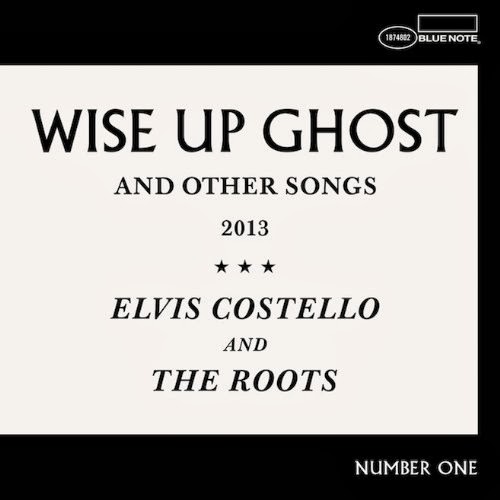
But for all the 80s acts to emerge or reappear this year, pride of place must go to Elvis Costello for his stunning collaboration with The Roots, Wise Up Ghost And Other Songs. No one - not even the mercurial, shape-shifting Peter Gabriel - has managed to cover as breadth in their careers as Costello. From angry young member of the Stiff Records vanguard of New Wave to a musician of unique diversity, every new Costello release - and they come thick and fast - continues to deserve attention. Wise Up Ghost could have been a disaster - riled-up English singer-songwriter meets hip New York rap outfit? - but it wasn't. Relevant and dynamic in equal measure, Wise Up Ghost comes closer to The Next Day as album of the year than any other.

The principle joy of being a music consumer is not always the satisfaction of buying something on spec and knowing you were right, but buying something on spec and being pleasantly surprised. Laura Marling delivered just such an outcome this year. Impervious as I am to hype - indeed Superman has been corrupted with greater ease than I've given in to excessive popular opinion - I'd remained indifferent to all the fuss about Marling. But then one throwaway comparison to John Martyn in a review of Once I Was An Eagle, and my interest was purchased. A fourth album at just 23, Eagle rings of emboldened maturity, recounting a doomed love with the sort of aching intimacy that was indeed Martyn's trademark.

Speaking of which, and though this should, in principle, be a roundup of the year's best new music, an honorary mention must go to Martyn's 17-CD opus The Island Years. Probably the most lovingly collated collection of original studio albums (all for the Island label), live recordings, outtakes and miscellany, it also takes the prize for the heaviest music release of the year, requiring the lavishly packaged collection to be brought back from the post office atop my right shoulder like a brick hod.

Marling's polymath producer, Ethan Johns (son of legendary producer Glyn, nephew of another legendary producer Andy, who passed away in April) also wandered into the darker world of roots music with his superb If Not Now Then When?, proving that you can be too talented and not have it become either a millstone or a detriment. Exploring a corridor of the many shades of Americana and a darker shade of blues, Johns produced one of the year's outstanding mood setters. Amazing he had the time to fit it in, quite frankly.

On a stubbornly wet, drizzly Sunday drive from London back to Paris, just a few weeks ago, I came across the next two badge winners in the year's best. A brace of albums bought on past reputation alone, and to my pleasant surprise, exceeding expectation in large amounts.

Goldfrapp's Tales Of Us found Allison Goldfrapp and Will Gregory exploring a more ethereal line than their previous 80s glitterball efforts. Now I know that saying an album is perfect for a Sunday excursion sounds like the musical equivalent of string-backed driving gloves, but here was a joyous return to their earlier dabbles in ambient EDM, creating a warming, autumnal blanket of a delightfully dour nature.

Ejecting Tales Of Us from the CD deck, I managed to single-handedly wrestle Stereophonics' Graffiti On A Train from its packaging. The effort, and clear case of driving without due care and attention, was worth it. The Welshmen continue to sit in an awkward-to-place position in the pantheon of maturing Britpop acts. And yet for all the plaudits Noel Gallagher deservedly earns for his continued ability to lead audiences on football terrace singalong rock, the Phonics' Kelly Jones consistently misses out on attention. Despite some indifferent reviews, Graffiti On A Train - their eighth studio album - elegantly lifts the Stereophonics into an older plane, one of ponderous blues and a darker mood without abandoning Jones' gift for melody and hook, and their respectful nods towards guitar rock of decades past.

The transition from critical acclaim, and being a unique addition to pop's great universe, to establishment and the conveyor belt of commercial progress is a rubicon that only the few cross with ease. There are, even now, (very) old heads who complain that Dylan lost it when he went electric. But in this age when album consumption is, it seems, only for those with patience and the attention span to endure sitting and listening to a record from start to finish, The Arctic Monkeys' passage from choppy Northern guitar rockers to Glastonbury-headlining A-listers was confirmed with their stunning AM. For a start, Alex Turner and gang conspicuously avoided the safe and the predictable with it, combining Beatlesque melody with hip-hop, scratchy guitars with thundering riffs. Their fifth, their best.

Earlier in this review I mentioned my deep anathema towards hype. Sometimes, however, it is warranted. One such example - and the final selection of WWDBD?'s Albums Of The Year - is Daft Punk's Random Access Memories.

The cynic in me was fully prepared to dismiss it as derivative irony, like a camp, 70s theme night at a provincial pub, all puffball skirts and men who should know better dressed as The Simpsons' Disco Stu. And, yes, to some extent, it is that, but with so, so much more intelligence and knowing.

Hiring Nile Rodgers and Pharell was a masterstroke. Bringing in Georgio Moroder to reminisce like Dark Side Of The Moon's Roger The Hat was a brazen piece of musical nerd-dom. You can intellectualise - or groan - as much as you like about Random Access Memories, but there are times when trying to get too deep about a record really isn't worth the energy. This is an album that can simply be enjoyed from start to finish. And if open car windows are still blaring Get Lucky at high volume as they cruise your street next summer, so be it. At least it means a change from Will Smith's Summertime...

I Am Kloot at close quarters © Simon Poulter 2013
I couldn't conclude this tiptoe through the tuneful tulips of 2013 without giving some thought to the extraordinary number of gigs I've packed in to the calendar. Ticket stubs have been retained for the mighty Popa Chubby, I Am Kloot (whose Let It All In deserves a mention in dispatches in the year's best albums) and Roger Waters, with his final tour of The Wall show.

The Stone Roses came to Paris and the insane intimacy of a small theatre packed to the gills with pogoing, adidas and Carhartt-clad ex-pats in their mid-40s. In equally close-quartered experience, Prince induced foot and calf cramps with his exhausting but utterly mesmerising show in Montreux, while Depeche Mode surprised me with their rock chops at the Stade De France. The Eagles told their story at New York's Madison Square Garden while The Who pitched up in Paris with Quadrophenia pristinely reproduced with a degree of passion that belied the advancing years of its surviving founders, Daltrey and Townshend.

© Simon Poulter 2013
But, by a country mile, the accolade of What Would David Bowie Do?'s Gig Of The Year must go to Bruce Springsteen.

From every angle you regard his July 2 show in Paris, Springsteen demonstrated that no one - not even U2 - can hold a candle, a cigarette lighter held aloft, or an iPhone's torch app, to him as the most engrossing and infectious live performer in the business today.

Of course, any self-respecting music fan shouldn't have any truck for a stadium show, least of all one performed in the elephantine arena that is the Stade De France.

But Springsteen - as his reputation dictates - turned a 81,000-strong mostly French audience into a Messianic gathering, holding them all in the palm of his hand for almost four hours with a comprehensive barrage of American music at its very best. If anyone is likely to come close in 2014, let me know now. The calendar is wide open.

Monday, July 15, 2013

The Great Summer Of Shows™ - what we have learned


Way back at the end of May, What Would David Bowie Do? came to the stark realisation that it was going to be an amazing summer of live music, kicking off with Eric Clapton at his surrogate home, London's Royal Albert Hall, before setting up camp in Paris with the Stone Roses, Rodriguez, Depeche Mode, Mark Knopfler, The Who, Bruce Springsteen and Hugh Laurie, ending at the Montreux Jazz Festival with Prince.

Though we're only at the midpoint of July, it is safe to say that it has been a Great Summer Of Shows™. It has also been an education. Here's what we have learned:

The Merchandise Stand

Just because, when you first walk in, you see a caged-off 'shop' of sorts selling merchandise doesn't mean you have to cause a minor riot for your "exclusive" all-black XL tour T-shirt, which your other half will eventually purge from your collection. Nor does it mean wearing the thing over the clothes you came out for the evening in (especially if you just came straight from the office) or draping round your shoulders like you've just looted it from a branch of Top Man during a riot. This thing called the Internet has just been invented and you can use it to buy stuff from bands and their "websites"

Banned Items

Patrons of stadium gigs should refrain from bringing in the following items:
  1. Binoculars (because you don't want to look a total prat), 
  2. Inflatable beach toys (because they're designed for the beach, not for annoying 50,000 irritable people who've been drinking in the sun since lunchtime)
  3. Bra-less girlfriends who want to be carried on your shoulders (because they will be ogled at as soon as they appear on the big screen and you will end up taking the week off work due to your back giving out).
Picture  © Simon Poulter 2013

The Mexican Wave

If you are at a stadium gig it is seriously not cool to start a Mexican Wave. It was amusing once, during the 1986 World Cup, which was held in Mexico. It is not amusing in the 21st century at a football stadium in the north of England.

The Support Act

The support act may be completely unknown to you, they may have a weedy voice and a total lack of charisma, but that doesn't mean you should talk all the way through their act. The person you've really come to see believes in this frail singer-songwriter/angst-ridden balladeer/quirky-looking pretty boy your girlfriend suddenly takes interest in and it's just damn rude to yack away during their 30-minute set. Bugger off to the bar instead.

Learn How It Works #1

The act you've come to see will get on stage when they're good and ready. No measure of slow-hand clapping, whistling or stamping of feet will advance the situation.

Picture  © Simon Poulter 2013

You're Not HBO

If you must video the show, first buy a television station or DVD company, negotiate with the artist for video rights, and then record the event using professional cameras and the ubiquitous Louma crane. Do not spend the entire night holding your iPhone in the air to the annoyance of all standing behind you.

Singing

If you feel compelled to sing along to the hits, take a few singing lessons first. Nobody wants to deal with the band not properly lip-synced with the video screen and your drastically off-key caterwauling. Especially if your breath stinks of Hades because you decided to have a cheeky curry before the show.

Recognise That You're Not In The Photographers' Pit

If you must take photographs, learn how to use your camera or smartphone first. Some poor drone at the consumer electronics company who made your fantastic new compact super-zoom spent time and effort translating the Japanese instruction manual into your native language. At least have the courtesy to learn how to switch off the annoying BEEP-BEEP that will drive your fellow punters to kill if it happens every time there's a quiet bit. 

Picture  © Simon Poulter 2013

The Stage Lighting Is There For A Reason

And while you're at it, learn how flash guns work on compact cameras. If you have the flash on, all you will be doing is illuminating the row of bald heads immediately in front of you, not the stage which - by the way - is already lit up by lots of lovely coloured lights. So you don't have to.

Sit Down, Dickhead #1

If you do take photographs, take only a few as souvenirs. Recognise that there are people behind you who weren't so successful in getting seats near the stage, and will not appreciate spending all that money to watch Mr. or Ms. Big Time through the LCD screen of your camera.

Sit Down, Dickhead #2

If I see that iPad appear above your head one more time...

Sit Down, Dickhead #3

Yes, we know it's cool that your lifelong idol is just in front of you, in the flesh, and close enough to touch, should you actually be that close, but that's no reason to stand up like a giddy child forcing every single person in every single row behind you to do the same. There are people who've paid good money for a seat, and are ruddy-well going to use it without having your lard arse block the view.

Picture  © Simon Poulter 2013


Stop Tweeting

Yes, it's cool for your followers to know you're at a concert, but do you need to give a running commentary? Do you need to miss the show because you're hunched over your Facebook page giving song-by-song updates? Do we need to see your face lit up like Indiana Jones in front of the Lost Ark because you're trying to redefine the zeitgeist in 140 characters or less?

Avoid The Clap

Everyone likes to clap. Pop concerts are the one venue outside gospel churches where communal rhythmic clapping in public is acceptable. Except that in a gospel church it will be rhythmic. And in time. Unlike your uncoordinated attempt to catch a particularly agile fly.

Learn How It Works #2

The act will go off towards the end, your less informed fellow punters will clap/whistle/stomp, the act will reappear for an encore. When they're good and ready.

Give It A Whistle

Actually, don't. The bluesman Blind Willie McTell may have started the practice of whistling during concerts as a means of getting audiences to join in with him, but he did not intend for ear drums to suffer permanent damage because the middle-aged adolescent next to you is trying to show off by sticking two fingers between his teeth and blowing. Not big. Not clever. Just painful.

Picture  © Simon Poulter 2013

Lighters Aloft

In the era when people smoked at concerts (and I mean regular cigarettes as well as those sweet-smelling roll-ups people still think it subversively cool to take a puff on), it was considered to be an appropriate indication of togetherness to hold a cigarette lighter in the air during an emotionally-wrought song to create the "ooh-aah" effect of hundreds of flickering flames. Where this practice began, no-one quite knows. Some say it was at Woodstock, when such hippy soppiness would have been contextually acceptable. Others claim it was at a Neil Diamond concert in the early '70s, and happened by random accident. Either way, it should have stopped by now, and certainly should not have been succeeded by cretins who have amusingly loaded a flickering lighter app on to their iPhone and are now holding it aloft during the 'slow one', right in front of you.

Learn How It Works #3

When 'the big lights' come up, that's your cue to head for the door. By the time you've stopped clapping/whistling/stomping the band will already be in a limo heading for the, erm, 'aftershow refreshment'. Go home. Or go home with someone. Or go next door to the pub. Or what-ev-ah. Those fat blokes on stage in Iron Maiden T-shirts coiling up microphone cables are roadies packing up Mr/Ms. Big Time's gear for the next gig, where all the above rituals will be played out once more.


Tuesday, June 4, 2013

Roses grow on you: the Stone Roses, live at La Cigale, Paris


They came from the north, they came from the south. They came for the day by Eurostar, they came for the evening by Metro.

Their hair may have been greying, their kids may have been at home, doing homework under the au pair's supervision, they may have been squeezed into adidas tops, they may have been mostly the same nationality, but they were all disciples convening to celebrate the resurrected, if you will, to jog on the spot, primate-style, to one of the greatest British rock bands ever to produce just two albums before disintegrating.

The Stone Roses, for it is they, are on the heritage trail, pure and simple. With no new material to promote (though John Squire has hinted at "three or four" new tracks in the works), this congregation of disciples at La Cigale in Paris is a continuation of what began in 2011 with their unexpected but much savoured reformation.

For a band that collapsed amid catastrophic acrimony following the tour for only their second album, the Roses were greeted in Paris last night as if they'd been going solidly for the last two decades. To be fair, they do perform as if they've been going as long.

The music is built around the little-altered formula held together by Mani's subtly intricate bass work and Reni's cleverly understated drumming, John Squire's guitar - a contribution comparable to Johnny Marr's in The Smiths - and Ian Brown's mainly flat vocals (some things will never change, it would appear).

In total, it's an infectious chug that keeps the calf muscles properly exercised for the better part of 90 minutes. And it is wildly appreciated by the 1000-strong crowd, noticeably Anglo-French in its composition, but with a significant bias towards the Brits - local expats and day trippers alike.

Fools Gold, I Am The Resurrection, Waterfall, She Bangs, Made of Stone, Adored, Ten Storey Love - like artillery shells on a battlefield they thud into the wildly receptive crowd, one after another, with little fanfare from the band.

Brown's stage presence is a curious one. Clearly the prototype for Liam Gallagher, albeit without the ridiculous school playground thug demeanour, Brown seems to studiously avoid overstating his role as the band's lyrical and vocal outlet. When not singing, he's conducting the crowd with a pair of shakers, as if a sorcerer waving a pair of wands to command even more wild frugging from the floor.

The interaction between bandmates, too, is minimal. Perhaps this is nothing more than the unspoken respect four very old friends have for each other, or the possibility that a fragility remains even now in their relationships after so much discord.

Whatever is keeping it intact is doing so well. In principle it's rock - with Squire's numerous flushes of Jimmy Page-like strutting spotlighting how good a rock guitarist he is - and sometimes its just hard-edged dance music.

Whatever it is and whatever it was last night, it was something ragged and perfectly formed at the same time. The Roses may have set the bar high for their generation with the famous Spike Island concert, and their Manchester homecomings last year at Heaton Park reignited the flames of adulation that had licked at the Roses' boots for the latter 80s and early 90s. Squeezed into the pocket confines of La Cigale, what the Roses lose from not having a tens of thousands massed before them is more than made up for by the 1000 loving every single minute of it.