Showing posts with label Ethan Johns. Show all posts

Tuesday, December 31, 2013

2013 - The Year In Music

I'll be honest. 2013 peaked too soon. The return of His Dameness on January 8 set the bar preposterously high for anything and everyone else.

David Bowie's brilliant, enigmatic reappearance early that Tuesday morning - his 65th birthday - with social networks spluttering noisily to life like old-fashioned newswire printers, announced to the world that he was anything but dead. And to prove it he gave us the beautiful, melancholic, nostalgic Where Are We Now, setting the keynote for my year in music.

Now, to set things straight, just because this steaming carcass of a blog features Bowie in its title doesn't make it his unwavering lapdog. But there was, I'm glad to say, universal welcome to Bowie's first single in nearly 10 years.

That welcome extended itself at the beginning of March when The Next Day, the album Bowie had been working on in unfathomable secret for the Web age, appeared to relief and delight. Relief that Bowie hadn't taken the route of so many of his contemporaries and cheaply knocked off a covers album for his comeback, or a lazily compiled reworking of old hits. And delight that it was actual Bowie, proper Bowie, original Bowie, doing what everyone who's had the faintest degree appreciation for him would recognise as being what they have liked about his material since forever.


So in order to get it out of the way, let me declare The Next Day What Would David Bowie Do?'s Album of the Year, 2013, suck up the brickbats, and move on to the rest of what made this a year in music to remember.

While I'm at it, let me also declare Bowie Artist Of The Year, purely for orchestrating pop's most compelling and well executed comeback. Even the Victoria & Albert Museum's stunningly curated retrospective, David Bowie Is, appeared with equal enigma (was he behind it or not?), uniquely turning out to be both one of the year's cultural highlights and tourist draws (Eurostar have even cited it as a reason for their record passenger numbers this year).

In this vein of transparency, I must also confess another proprietary interest. My friend Steven Wilson - who has been writing and recording since he was teenager, for goodness sake - took his burgeoning solo career a massive step further with his third solo album The Raven That Refused To Sing (and other stories).

Recorded the previous summer with Dark Side Of The Moon engineer Allan Parsons in assistance, The Raven... provided a healthy outlet for Steven's love of the macabre, combining Poe-ish ghost stories and tales of the supernatural with a broadening fusion of melodic rock and jazz sensibilities.

In the title track (and Jess Cope and Simon Cartwright's stunning video) along with the ballad Drive Home, Steven delivered two of my musical highlights in one album. And, in gigs in Paris and at London's Royal Albert Hall, two of the live moments of the year as well.

The 1980s, when my musical interest really engaged gear, gave plenty to condemn. All that over-production, chorused guitars and drums with the gated reverb turned up to 11. But as in every era the wheat is easy to separate from the chaff, with the decade producing some of my favourite and most enduring pop acts, some of whom made welcome returns in 2013.

Lloyd Cole is one. After years as a Massachusetts-based folk singer, the 52-year-old former jingle-jangle bedsit mainstay emerged with Standards, a crowd-sourced album staffed by hand-picked sessioneers that produced a motherlode strike at Cole's rich seam of melodic and lyrical dexterity, resulting in gems like California Earthquake, Women's Studies, Myrtle and Rose and Silver Lake.

Robyn Hitchcock, another constantly overlooked national musical treasure, also produced one of his strongest post-Egyptians albums to date, Love From London.

As a self-confessed devotee of Syd Barrett's form of surrealism and occasional swirls of Lewis Carroll-like whimsy, in Love From London Hitchcock marked the arrival of his 60th year with an angrier fist shake at the modern age, launching fuzzboxed barbs at bankers and the financial crisis they caused, along with a laundry list of other modern social ills. A compelling record.

Edwyn Collins, once of Orange Juice, continued the rehabilitation from the massive brain haemorrhage that nearly killed him in 2005 with the highly rated Understated. For someone who, just a few years ago was rendered unable to say more than four words, Understated is a typically eloquent   example of Collins' ability to pack a lot of meaning into generous dollops of guitar pop, his signature croon only partially impaired by his condition.

Once of Barking, now of England's southern coastal shires, Billy Bragg has continued to plough a sturdy but lone farrow of Pete Seegerish folk infused with his trademark singing voice which, to be polite, will never be the sweetest, but is at least sincere. And in some respects, it's what made Bragg's Tooth & Nail such an enjoyment, showing all the bluegrass newcomers and wannabes clogging up summer festival fields how to be 100% English and still be authentically country without resorting to rhinestone underwear.
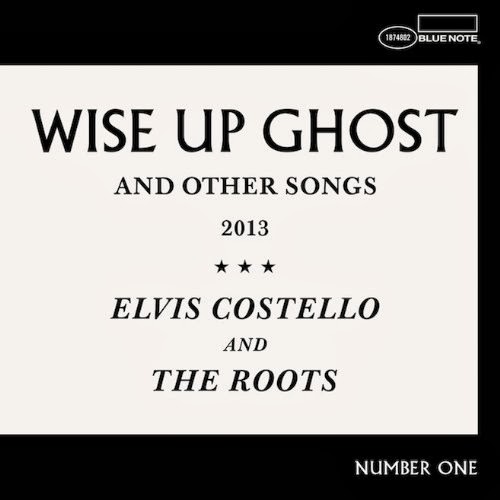
But for all the 80s acts to emerge or reappear this year, pride of place must go to Elvis Costello for his stunning collaboration with The Roots, Wise Up Ghost And Other Songs. No one - not even the mercurial, shape-shifting Peter Gabriel - has managed to cover as breadth in their careers as Costello. From angry young member of the Stiff Records vanguard of New Wave to a musician of unique diversity, every new Costello release - and they come thick and fast - continues to deserve attention. Wise Up Ghost could have been a disaster - riled-up English singer-songwriter meets hip New York rap outfit? - but it wasn't. Relevant and dynamic in equal measure, Wise Up Ghost comes closer to The Next Day as album of the year than any other.

The principle joy of being a music consumer is not always the satisfaction of buying something on spec and knowing you were right, but buying something on spec and being pleasantly surprised. Laura Marling delivered just such an outcome this year. Impervious as I am to hype - indeed Superman has been corrupted with greater ease than I've given in to excessive popular opinion - I'd remained indifferent to all the fuss about Marling. But then one throwaway comparison to John Martyn in a review of Once I Was An Eagle, and my interest was purchased. A fourth album at just 23, Eagle rings of emboldened maturity, recounting a doomed love with the sort of aching intimacy that was indeed Martyn's trademark.

Speaking of which, and though this should, in principle, be a roundup of the year's best new music, an honorary mention must go to Martyn's 17-CD opus The Island Years. Probably the most lovingly collated collection of original studio albums (all for the Island label), live recordings, outtakes and miscellany, it also takes the prize for the heaviest music release of the year, requiring the lavishly packaged collection to be brought back from the post office atop my right shoulder like a brick hod.

Marling's polymath producer, Ethan Johns (son of legendary producer Glyn, nephew of another legendary producer Andy, who passed away in April) also wandered into the darker world of roots music with his superb If Not Now Then When?, proving that you can be too talented and not have it become either a millstone or a detriment. Exploring a corridor of the many shades of Americana and a darker shade of blues, Johns produced one of the year's outstanding mood setters. Amazing he had the time to fit it in, quite frankly.

On a stubbornly wet, drizzly Sunday drive from London back to Paris, just a few weeks ago, I came across the next two badge winners in the year's best. A brace of albums bought on past reputation alone, and to my pleasant surprise, exceeding expectation in large amounts.

Goldfrapp's Tales Of Us found Allison Goldfrapp and Will Gregory exploring a more ethereal line than their previous 80s glitterball efforts. Now I know that saying an album is perfect for a Sunday excursion sounds like the musical equivalent of string-backed driving gloves, but here was a joyous return to their earlier dabbles in ambient EDM, creating a warming, autumnal blanket of a delightfully dour nature.

Ejecting Tales Of Us from the CD deck, I managed to single-handedly wrestle Stereophonics' Graffiti On A Train from its packaging. The effort, and clear case of driving without due care and attention, was worth it. The Welshmen continue to sit in an awkward-to-place position in the pantheon of maturing Britpop acts. And yet for all the plaudits Noel Gallagher deservedly earns for his continued ability to lead audiences on football terrace singalong rock, the Phonics' Kelly Jones consistently misses out on attention. Despite some indifferent reviews, Graffiti On A Train - their eighth studio album - elegantly lifts the Stereophonics into an older plane, one of ponderous blues and a darker mood without abandoning Jones' gift for melody and hook, and their respectful nods towards guitar rock of decades past.

The transition from critical acclaim, and being a unique addition to pop's great universe, to establishment and the conveyor belt of commercial progress is a rubicon that only the few cross with ease. There are, even now, (very) old heads who complain that Dylan lost it when he went electric. But in this age when album consumption is, it seems, only for those with patience and the attention span to endure sitting and listening to a record from start to finish, The Arctic Monkeys' passage from choppy Northern guitar rockers to Glastonbury-headlining A-listers was confirmed with their stunning AM. For a start, Alex Turner and gang conspicuously avoided the safe and the predictable with it, combining Beatlesque melody with hip-hop, scratchy guitars with thundering riffs. Their fifth, their best.

Earlier in this review I mentioned my deep anathema towards hype. Sometimes, however, it is warranted. One such example - and the final selection of WWDBD?'s Albums Of The Year - is Daft Punk's Random Access Memories.

The cynic in me was fully prepared to dismiss it as derivative irony, like a camp, 70s theme night at a provincial pub, all puffball skirts and men who should know better dressed as The Simpsons' Disco Stu. And, yes, to some extent, it is that, but with so, so much more intelligence and knowing.

Hiring Nile Rodgers and Pharell was a masterstroke. Bringing in Georgio Moroder to reminisce like Dark Side Of The Moon's Roger The Hat was a brazen piece of musical nerd-dom. You can intellectualise - or groan - as much as you like about Random Access Memories, but there are times when trying to get too deep about a record really isn't worth the energy. This is an album that can simply be enjoyed from start to finish. And if open car windows are still blaring Get Lucky at high volume as they cruise your street next summer, so be it. At least it means a change from Will Smith's Summertime...

I Am Kloot at close quarters © Simon Poulter 2013
I couldn't conclude this tiptoe through the tuneful tulips of 2013 without giving some thought to the extraordinary number of gigs I've packed in to the calendar. Ticket stubs have been retained for the mighty Popa Chubby, I Am Kloot (whose Let It All In deserves a mention in dispatches in the year's best albums) and Roger Waters, with his final tour of The Wall show.

The Stone Roses came to Paris and the insane intimacy of a small theatre packed to the gills with pogoing, adidas and Carhartt-clad ex-pats in their mid-40s. In equally close-quartered experience, Prince induced foot and calf cramps with his exhausting but utterly mesmerising show in Montreux, while Depeche Mode surprised me with their rock chops at the Stade De France. The Eagles told their story at New York's Madison Square Garden while The Who pitched up in Paris with Quadrophenia pristinely reproduced with a degree of passion that belied the advancing years of its surviving founders, Daltrey and Townshend.

© Simon Poulter 2013
But, by a country mile, the accolade of What Would David Bowie Do?'s Gig Of The Year must go to Bruce Springsteen.

From every angle you regard his July 2 show in Paris, Springsteen demonstrated that no one - not even U2 - can hold a candle, a cigarette lighter held aloft, or an iPhone's torch app, to him as the most engrossing and infectious live performer in the business today.

Of course, any self-respecting music fan shouldn't have any truck for a stadium show, least of all one performed in the elephantine arena that is the Stade De France.

But Springsteen - as his reputation dictates - turned a 81,000-strong mostly French audience into a Messianic gathering, holding them all in the palm of his hand for almost four hours with a comprehensive barrage of American music at its very best. If anyone is likely to come close in 2014, let me know now. The calendar is wide open.

Tuesday, October 15, 2013

Sorry kids, but Uncle Macca's still got it: Paul McCartney - New

In the barmy world that was Smash Hits magazine, pop stars who were, in the 1980s, considered venerable then, were given nicknames of affection. 

Thus, David Bowie became 'The Dame' (a handle that has universally pursued him ever since), Freddie Mercury was known as 'Lord Frederick of Mercury' (and, on occasion, 'Lord Lucan of Mercury' on account of his resemblance to the absconding, moustachioed nobleman), and Kate Bush was regularly referred to as Kate 'Hello Trees, Hello Sky' Bush. Because she was nuts.

Paul McCartney, on the other hand - and before he was appropriately knighted by HRH - was simply Paul 'Sir Wacky Macca Thumbs Aloft' McCartney, thanks to his noticeable habit of raising one or both of his preaxial digits every time a camera came into proximity. Strangely, Ringo Starr, who has his own 'double peace sign' signature affectation, never received the honour of a Hits nickname. I mean, what could you do to a name like Ringo?

The point of all this was that back in the 80s, to a Smash Hits audience, SWMTA was already considered a tad on the crusty side, if you get my drift. To be in his 40s was beyond the comprehension of a readership who considered their 18th birthday the ultimate milestone in life.

On June 18 this year, Paul McCartney turned 71. A month later Mick Jagger celebrated his 70th birthday. On paper, you have to question what either of them are still doing being rock stars. But the truth of the matter is that, on recent evidence, they're both doing it quite well. You could even claim they're doing it better than much of the talent a quarter of their ages. OK, that's a dangerously middle-aged thing to say, but on the evidence of both the Stones' shows in the last 12 months, and McCartney continuing to tour more now than he ever did as a grown-up Beatle, there is certainly a case to answer that these national treasures are still putting the hours in.


Still, though, the cynics maintain that such artists are no longer relevant, that despite Jagger's annoyingly lithe frame, and despite McCartney's continued passion for making new music - as evidenced by the release this week of New - there's something of the embarrassing uncle about both of them. Indeed, most of the 60s and early 70s-era performers who are still performing - be they Beatles, Stones, Kinks, Daltrey and Townshend, Stewart, Plant, Page - are frequent targets of "give it up mate" trollery.

Odd, then, that BB King (88) and Chuck Berry (86) don't suffer such snarkiness, nor Britain's original rock stars, Sir Cliff Richard (known to Smash Hits readers as...er..."Sir" Cliff Richard, and 73) and Tommy Steele (76).

The Beatles are long gone. In the context of human history, they were a blink of the eye. 1957 - McCartney meets Lennon at Woolton village fĂȘte; 1963 - Love Me Do; 1966 - Revolver; 1967 - - Sgt. Pepper; 1969 - Abbey Road; 1970 - McCartney quits. 13 years between a teenage skiffle group and cynical, bearded, warring bandmates. Having, in between, turned the world - no exaggeration - on its head.


McCartney has been tilting at windmills ever since. Lennon was the radical, but cool, maverick; Ringo remained the jester; Harrison the serious and ever so slightly dull muso, right up until his death. But Macca?

Recent reissues of McCartney's Ram and Wings' Band On The Run have reminded us that post-Fabs, McCartney didn't lose any of his natural gift for writing brain-burrowing melodies, he just took it in different directions. 

Ignore the supposed follies of The Frog Chorus or Give My Regards To Broad Street, forget the winsome Mull Of Kintyre or the cheesy Say, Say, Say duet with "Jacko" (yes, the Hits again). When he walked out on The Beatles in 1970, aged 32, McCartney needn't have picked up a guitar or sat down at a piano ever again.

But to get back to the point of this rant, he's released an album at the age of 71 which is as vibrant and as enjoyable as anything he's put out in decades. And I mean that. His last four - Driving Rain, Chaos And Creation In The Backyard, Memory Almost Full and last year's standards covers album Kisses on the Bottom - have all been OK, but not thrilling. And while, of course, nothing could ever compare with anything he did with The You-Know-Whos, New is different. Plenty different. So new that it had to be called New, which I presume wasn't a holding title for something better.


There may also be some significance in the fact McCartney has gone from his 60s to his 70s in the period between an album called Memory Almost Full and an album called New, the 70s being the new 50s, or whatever ageist guff the Daily Mail has come up with recently. 

And while it could be tempting to suggest that, with a history of working with 'name' producers in the past, his choice of Mark Ronson, Ethan Johns, Paul Epworth and Giles (son of George) Martin for New is an attempt at hedging his bets with credibility, the foundation of any Paul McCartney album is going to be its songwriting. Which, on New, is easily his best in more than 30 years.

The album stomps to life with Save Us, an angry protest (well, as angry as Macca will ever get) which draws some comparison to the fuzzbox guitar of the Fabs' Revolution. Being A) a former Beatle and B) Paul McCartney, such comparisons with that little rock'n'roll band from Liverpool are inevitable. McCartney, however, has never tried shying away from his past, but not wishing to be ironic or cute, he embraces his heritage, even using it as a platform for broader reflection. Thus Early Days seeks to reset perceptions of who did what in the L&M partnership, both lyrically and melodically through the kind of acoustic balladry that made Fool On The Hill and Blackbird such fragrant entries to the Beatle body of work. 

It's here you become acutely aware that Paul McCartney may be the only living, working musician who can justifiably carry the tag Beatlesque' (sorry Liam), but that doesn't mean he feels compelled to slavishly follow the formula. True, Queenie Eye walks into the The Beatles' whimsy, and its rhythm track bears more than a passing resemblance to the Starr/McCartney forerunner of drum'n'bass, but here the listener starts thinking: "Am I listening to a Paul McCartney song that references The Beatles, or am I listening to a Paul McCartney song that I expect to reference The Beatles?"


Overall, there is a compelling energy about New, and none more so than on its title track, which dances through a pop sensibility that straddles both the old (Swinging Sixties) and the new (the not-so swinging...erm...whatever decade we're in now). Appreciate is a brave stab at modernity that might not work quite so well, but it is still a more present McCartney than some of the doe-eyed family-friendly fare of his recent musical history.

It can't be easy being Paul McCartney. It can't be easy being a living legend, a national treasure and one of the most famous human beings in the 20th century or indeed any century rolled into one. He is, or at least appears to be, normal, and if that is just act - as his critics have said it is - he's managed to maintain it for more than 50 years. He will maintain that it is down to his working class Liverpudlian roots, that he's just carrying on doing what he does because that's all he's known, and all he's known is to carry on doing what he does best. And while the earnest intent hasn't always been matched by the output, on New, it's there in spades.

Friday, February 22, 2013

Now would do nicely


It is, perhaps, not surprising that the 43-year-old Ethan Johns maintains a foot or even all ten toes in the era of music his father played such an instrumental, if not obvious, role in.

As the son of Glyn Johns, producer of such seminal rock-era albums as Who's Next, The Faces' A Nod's As Good As A Wink To A Blind Horse and Eric Clapton's Slowhand, Ethan has had some extraordinary influences around him. And just for good measure, his uncle, Andy, engineered Led Zeppelin's entire studio canon, along with the Rolling Stones' output during the early '70s.

Quite some pedigree. But today, Johns Jr. is, in his own right, a much-respected musical polymath, producing, mixing, engineering, writing and master of numerous instruments, with an amazing list of credits including work with Kings of Leon, Laura Marling, Rufus Wainwright, Ryan Adams, Crowded House and Crosby, Stills and Nash, and the Best British Producer award at last year's Brits.

You could claim that such is the quality of Johns' behind-the-scenes work that coming front-of-cloth might be considered a tad greedy. But such is the sheer richness of his debut solo album, If Not Now Then When, there should be no complaints at all.

For a lad born in the London Borough of Merton, Johns has the canyons and valleys of Los Angeles in his veins. If Not Now Then When is an ear-warming channeling of the era of easy-going folk rock, a time when singer-songwriter albums came about through mandatory beard growing, wearing head-to-toe denim, and gatherings of like-minded heads in secluded cottages somewhere between LA's Laurel Canyon and Mulholland Drive.

The result is a gentle, stroll through folk, blues and acoustic rock, steered by father Glyn at the mixing desk, and with encouragement in the early stages from Marling.

Initial tracks were written and tested while Johns was touring with Ray LaMontagne: "I just thought, 'Well, wow, maybe these things don't have to live on the shelf at my studio anymore," Johns explains. "Maybe I can roll these out. Because it's so much fun.'"

The outcome is a mellow melange of folk, rock, folk-rock and blues - or combinations thereof - that opens with the line "Goodbye cruel world, hello sunshine..." above the sparse entrance of the opening track, which builds from gentle acoustic to electric guitar, single to multi-track vocal, and from a tight intimacy to a cinematic roadtrip.

Morning Blues is a noirish swamp stomp, with much of the stomp provided by powerhouse drummer Jeremy Stacey (the Droog-attired go-to sticksman I last saw pounding the skins for Noel Gallagher). As Seasick Steve has proven, the beauty of blues music is often its simplicity. Likewise Red Rooster Blue, with its sunny and strummable bluegrass disposition, digging roots-deep into the folksy origin of music Americana.

If I were to describe Elijah as "Beatley" I would be committing one of the cardinal sins of music reviews. It is one of the most overworked descriptions of all, especially given that it refers to a band that began as greased-up rockers and ended as midwives to prog rock. But as a descriptor of anything with a melodic familiarity that your granny could hum or your four-year-old can wail along to from the backseat of the car, Beatley covers most of the Neil Finn oeuvre, that of Jeff Lynn (almost by default) and. now, John's Elijah, standing out for its delightful, perfectly formed Abbey Road-era piano, Ringo drum fills, and a vocal that could easily have found its way onto Let It Be.

This is an album of expressed freedom. If that sounds a little hippy-dippy, then it probably is. John's low, close-to-the-mic vocal (similar to that of Mark 'E' Everett of Eels) pulls you into his stripped-down domain, all acoustic guitars and bare feet on the floorboards. Thus the likes of Willow offer a personal, soul-bearing charm while The Turning finds a reflective Johns considering the march of time, something we all get to sooner or later after our 40th summer.

Mixed by dad Glyn, and with other collaborations from Danny Thompson (John Martyn's legendary bassist and - literally - sparring partner), Marling and Adams - all of whom turn up on the gloriously mellow Whip-Poor-Will, If Not Now Then When is a delight, a record you feel you've been listening to for years, but with more than enough about it to feel new. Yes, it harks back to a Californian lifestyle from over 40 years ago, but there's enough here to warm the most complicated of modern days.

Indeed, having recently spent a couple of days enjoying the top-down joys of that stretch of Pacific Coast Highway between Santa Monica and Malibu, this is the album I would like to have had while driving. Gentle, introspective, intimate and soulful all at once and individually.