His mother frugged regularly to Queen, Duran Duran and George Michael, while his father talked to plants. And, during the 1980s no mid-summer Wembley Stadium concert by any of rock's royalty seemed complete without the Prince and Princess of Wales waving somewhat awkwardly from the Royal Box.
So we should not be too shocked to see HRH The Prince William, Duke of Cambridge and second in line to the throne of the United Kingdom, rocking out with Jon Bon Jovi and someone called Taylor Swift this week at the first karaoke party of the Christmas season. Actually, it was a charity concert at Kensington Palace, but same difference.
As you might imagine, it all looked a tad awkward: a future monarch, suited-and-booted in a crisp by-royal appointment tux, leaning in on the diminutive JBJ and giving it the full "Take one's hand, we'll make it I swear...." as they belted out that Cheese-o-Rama classic, Livin' On A Prayer.
What did David Bowie do....?
In one go, Wills nailed his street smarts to the wall: eldest son of the People's Princess joining in on a solidly blue collar song about the working folk of New Jersey making it through a downturn. And ending it with a high five. Well, at least the evening' charity cause was the homeless.
William's performance, we are informed by royal lickspittles, was entirely "off the cuff". But as anyone who has ever joined an office outing to a karaoke bar knows, there's always one shrew-like colleague who, given the spotlight and an open microphone will burst forth with lungs like an industrial-strength Dyson vacuum cleaner, catching everyone off-guard with their rendition of I Will Survive.
Tuesday evening wasn't the first time William has done this, either. He is known to have given a solo performance of the Bon Jovi hit at the 2011 wedding of his cousin Zara Phillips to rugbyist Mike Tindall.
But fair play to JBJ for putting up with his stage interloper this time, being one of the most pleasantly down to earth rock stars I've ever met (even if he did once say of his album New Jersey: "New Jersey isn't a place, it's an attitude").
And let's not get too snotty about Wills, either. Together with his, let's face it, cooler brother, and his posh but pleasantly normal wife, he is the top-selling line of a new hip(ish), sub-brand of the House of Windsor. When not steadying RAF search helicopters over the Irish Sea (so he could have chosen the Stones' Emotional Rescue then), William is taking the GLW out to the pictures on a Friday night, 'disguised' in a baseball hat.
As a threesome, they were the combined face of last year's London Olympics. And with Harry living the dream, flying attack helicopters and hanging out at Las Vegas pool parties, you couldn't get a better branding of the next generation of British royals.
So, if I was the PR department of either Sony's PlayStation or Microsoft's Xbox, and was in an enterprising frame of mind, I'd be shipping one of their latest PlayBoxes and the hottest karaoke game round to Ken Palace in time for Christmas. Because I'm sure there's nothing young Prince George will enjoy more on Christmas morning than his dad and Uncle H cranking up the sound system with a megamix of festive karaoke staples. "So 'ere it is Merry Christmas, everybody's 'avin' fun...!".
When Britpop was in its prime, midway through the final decade of the last millennium, a thrusting young buck called Tony Blair came bounding down from the north-east of England to become Prime Minister of This Sceptred Isle™. Britain was, at the time, undergoing a purple patch of creative endeavour not seen since the 60s.
Indeed, such was the success of the 60s that Britain decided to recreate them in the 90s. For the Swinging Sixites, read the Loaded generation. There were artists pickling marine life (for David Bailey, read Damien Hirst) and London's Primrose Hill was fit to bursting with the cream of young British celebrity (for Caine, Stamp and Christie, read Law, Frost and Moss). Elsewhere, the country was draped, somewhat ironically, in red, white and blue. Britannia was Cool.
For a nation of natural cynics, which cherishes its heritage and loves the royals but regards all that America The Beautiful nonsense of our cousins over there a little bit, well, OTT, Britain was enjoying itself. To be seen wearing the Union Flag across your bosom (Geri Spice) or beneath the strings of your electric guitar (Gallagher, Noel) was not a misplaced and ever-so slightly gauche act of nationalism, but semi-ironic recognition that this little island of ours isn't that bad and, when you think about it, has contributed more good things to the world than the bad of its imperial past.
Today you can't go anywhere without seeing Union Flag-emblazoned sofas in furniture shops and the wartime legend KEEP CALM AND CARRY ON plastered on any printable surface. And I'm not just talking about London or anywhere else in the British Isles: Brit-chic is everywhere - even in Paris - where soft furnishings featuring the Jack are in vogue in the trendiest of home decoration boutiques.
Britannia is cool - again - or so it would appear. It has a charming new royal couple, a cheeky scamp of a prince who dates blondes, flies attack helicopters and hangs out in nightclubs, while the collective "Firm" of the House of Windsor has reanimated the world's love affair with it by celebrating Her Majesty's 60-years of majesty. And, as a neat coda to all that pomp, ceremony and ice cream, even the England football team is obliging us with a run in Euro 2012. For now.
If the world hasn't had enough of London flypasts and flagwaving for one year, 36 days from now the Olympic torch will arrive in the capital for what has been promised - by Boris Johnson, largely, so blame him if it doesn't work out - to be the greatest celebration of Britain in living memory: the 2012 Summer Olympic Games - the Games of the XXX Olympiad.
Such is the excitement about London 2012 that the BBC has moved to Salford, which is near Manchester and therefore not in London, and London cab drivers will universally - and gladly - tell you that they'll be spending the entire games on a beach - Canvey Island, Magaluf, Margate, doesn't matter, just anywhere that doesn't involve driving through a choked city. If you're coming to London, bring walking shoes or curb your claustrophobia by using the Underground.
Snarkiness aside, the world has been promised a party, and a party they will get. Again, blame Boris - the cunning politician masquerading as a blond buffoon - if that doesn't work out, but it was he who, amid Jimmy Page, David Beckham and a Routemaster bus in Beijing, vowed a celebration.
As with any decent party, someone has made a mix tape. And like any playlist it will delight, divide, baffle and broach conflict in equal measure. Earlier this week, someone "leaked" this planned soundtrack for the opening ceremony of the Games, which is being compiled by the ceremony's co-musical directors, Underworld's Karl Hyde and Rick Smith.
On first inspection the playlist looks like a combination of the obvious and the in-joke, but that would be a harsh assessment of a program designed to last three hours and offer something for everyone - visitor and incumbent.
So what will we get, as we watch fireworks and garishly-clad athletes parading around the half-a-billion-pound stadium?
If the leaked playlist is correct, Hyde and Smith's sense of irony is certainly intact, kicking off the shindig with Drummond's Eton Boating Song, followed by the always rousing Land Of Hope And Glory, before letting The Jam loose with Going Underground, as bold a tribute to kitchen sink Britain as anything to come out of the post-punk era.
Later on, the Sex Pistols' God Save The Queen and Pretty Vacant (yes, we get it - and Lydon's now advertising butter...) and, perhaps, the most obvious inclusion of all - London Calling.
From the themes to EastEnders and Coronation Street to the chimes of Big Ben, the opening of London 2012 will leave no musical reference to the dear old lady of London untouched.
Prog rock - Floyd's Eclipse ("All that you...touch/see/taste/feel/love/hate/distrust/save/give/deal/buy/steal/create/destroy/do/say/eat") and two tracks from Muse (Map Of The Problematique and Uprising) - lies alongside with Elgar, Handel, Jerusalem and the always-spine tingling Cup Final anthem, Abide With Me.
There will be cinematic pomp - The Dambusters March (which I'm sure will go down well with Germany), 80s synth pop - OMD's Enola Gay (which I'm sure will go down well with the Japanese squad, especially as it will apparently precede the Sugababes' Push The Button...), West End musicals (Food, Glorious Food from Oliver!) and saucy English seaside postcard smut (The Stripper).
The more you look at the list, the more you come to think that Hyde and Smith have been handed the gig of the year in compiling it. Forget Danny Boyle with his Bond-themed opening film, the real fun, I suspect, was in drawing up the usual suspects, and then augmenting them with a ribald twist.
The obvious - a liberal sprinkling of The Beatles (She Loves You, The End and Hey Jude), the Rolling Stones (Satisfaction, inevitably), The Kinks (All Day And All Of The Night), The 'Oo (My Generation) and Bowie's Heroes - mix with the less obvious: Trampled Under Foot by Led Zeppelin (Stairway To Heaven would probably have been just a little too, you-know..., but why not Whole Lotta Love as Jimmy Page played in Beijing?).
As proud as we Brits should be for our classic rock heritage, the playlist denotes generous time to more contemporary London fare, such as Tinie Tempah's Pass Out and Random Antics by Kano & Mikey J. British dance culture is also properly represented by The Chemical Brothers (Galvanise), Prodigy's Firestarter (just to please Health & Safety...) and, of course, Underworld with their own Born Slippy, which will hopefully not turn up during the aquatic events.
Thematically, there will be Chariots Of Fire by Vangelis, who is Greek and will probably welcome the royalties, while Queen and the Dame's Under Pressure reflects the reputation of London's organisational skills as much as the demands about to be placed on the atheletes.
The decades that British music has given to the global soundtrack are equally reflected, though strange to see nothing before 1962. Surely Peter Sellers' Any Old Iron or Lonnie Donegan's Rock Island Line - the skiffle song that launched the careers of most British rock stars born in the '50s, could have been found a place amongst the TV theme tunes and other ecoterica?
But that's the fun of a playlist: it's a provocation to good-natured argument, as Nick Hornby captured so well in High Fidelity (the book...). It is why athletes who have spent the last four - even eight - gruelling years preparing for these games, will be swooned by a lovey-dovey tune about a bloke who's had a few too many and is asking his better half to drive him home. Yep, I'm not entirely sure what you're supposed to do to Eric Clapton's Wonderful Tonight while walking around a running track either. Eric is a national hero, one of the greatest guitarists of all time, and I'm proud to be from (sort of) his neck of the woods, but is WT the best representation of his canon and the British blues boom he helped fuel? Surely Cream's Crossroads would have been better - a distinctly British interpretation of a song foundered in the heat of Mississippi.
And then there is Billie Jean by Michael Jackson. Why? On one hand, a good party song, but unless it is some obscure reference to the famously saphic, six-times Wimbledon Ladies Champion, I can't understand its inclusion, thematically or otherwise. I do have a theory, however: Jacko was, once, bizarrely paraded at Fulham FC's Craven Cottage ground during half time of a fixture with West Ham, whose fans sing I'm Forever Blowing Bubbles (also on the list). It is said that the entire crowd welcomed Jacko by singing this song...only with a markedly different purpose altogether...
So, progressing through the 1970s, Mud'sTiger Feet (an absolutely fantastic inclusion) and more Bowie (Starman) remind us of how much music injected colour to the otherwise drab British landscape of the decade, which was spent mostly on strike. For the 1980s - the decade that began with Thatcher, recession and war in the Falklands before erupting in a many-hued puffball skirt of party exuberence - we'll have Duran Duran, The Eurythmics, New Order, Frankie Goes To Hollywood (Relax - my, how we've moved on as a nation...) and Soul II Soul.
And then we reach the 1990s. The circle of the 60s is turned fully with Wonderwall, an acknowledgement of Noel Gallagher's songwriting simplicity, a feature shared with Paul McCartney. Strange, though not to see one or two of the Oasis crowdpleasers - say Cigarettes And Alcohol, for a laugh, or Roll With It. Instead, The Hindu Times is on the list - a hit, but hardly a signature hit.
Blur, on the other hand, are represented by Song 2 - a no brainer, some might say, even if it's overuse by American "sports" broadcasters has started to render it a tad annoying. Radiohead feature with Creep, presumably a reference to the speed with which London's traffic will progress for the Games' duration. Strangely, though, there's no room for Pulp, despite Lord Jarvis of Cocker hawking the Eurostar service on television adverts encouraging France to come and see what London took away from Paris. Ouch.
Looking back over the last 50 years of music represented by this list, it does warm the cockles to see just how good British music has been, and continues to be. The Arctic Monkeys' I Bet You Look Good On The Dancefloor is a fitting tribute to Alex Turner's gnarled pop senisibility, not to mention his prolific endeavour, while the good times will roll with the Kaisers' I Predict A Riot (ha-ha, ho-ho, he-he...) and Franz Ferdinand's Take Me Out.
For a contrast in fortunes, Amy Winehouse's zoot-suited version of Valerie will be heard in quick succession with Coldplay's Viva La Vida (not Clocks?) and then Adele's Rolling In The Deep. The Tottenham Tenor couldn't or shouldn't be ignored for an event like this, especially as she is single-handedly maintaining the UK's GDP with sales of 19 and 21, which between them now represent Britain's biggest export industry, ahead of Japanese cars made in Sunderland and Swindon, and the port wing of Airbus airliners made in Wales (don't you just love European collaboration?).
Can we derive any Britishness from all this? Will this three-hour mix tape have us reaching for the Union Jack boxer shorts? Hard to say: Olympic ceremonies are hardly my cup of tea, but if this leaked list is the real deal, it would be fair to say that Karl Hyde and Rick Smith will pull off one of the more remarkable feats of London 2012 - drawing up a playlist that represents the good, the bad and the ugly of Britain and British music, from the serious to the silly, and - such asRon Grainer's Doctor Who theme and Monty Python's The Liberty Bell - the humour that defines us Brits, and which probably only we will get.
Plenty of things get up us Brits' noses. For a start, we're islanders, which means a predisposition to dislike foreign food. And foreigners who don't respect queuing. And foreigners.
Secondly, we get easily upset when you mess with our music television.
When Top Of The Pops was shipped off to a Dignitas clinic after 42 years of poor miming, a faux party atmosphere and the inexplicable contractual provision of work to 'zany' Radio 1 DJs, there was national outcry.
It was, nonetheless, a mercy killing, but it was received publicly as if Auntie Beeb had slipped something lethal into an elderly relative's mug of tea.
It had been a long time since "The Pops" had been 'destination TV', to use the terrible American marketing term. Conceived in 1964, just as The Beatles and the Rolling Stones were getting up steam, two, even three generations grew up with the show.
In its heyday, BBC1 at 7 o'clock on a Thursday evening meant Bryan Ferry's creepily shrill vibrato and Alvin Stardust, dressed head-to-toe in leather with a gloved index finger pointing straight down the lens; The Sweet camping around to Blockbuster and Mud (with their culottes-wearing bass player, whose mum worked in my local Sainsbury's) jiving around to Tiger Feet;Ron Mael of Sparks spooking everyone out with his his mad stare and Hitler moustache, and Pan's People creating the first stirrings of pre-pubescent awkwardness by as they pranced about to a T-Rex backing track because the bookers couldn't actually secure Bolan's presence in in the studio.
TOTP survived punk and the invention of the pop video. It's only real competition - if you wanted to see pop stars in the flesh on TV - was Saturday morning kids' TV (a choice between Noel Edmonds' highly sanitised Swap Shop or ITV's more anarchic TISWAS) or the grown-up Old Grey Whistle Test, over on late night BBC2. Whistle Test, in any case, catered for bearded musos to "catch" live performances by the likes of the Edgar Winter Band or daft Dutch prog combo Focus. And it was also presented by bona fide music journalists like Richard Williams, not Tony Blackburn and Dave Lee Travis, like its BBC1 cousin.
Given all this, Friday, November 5, 1982 brought about a minor revolution that would have unnerved even Guy Fawkes himself. Because that was the day The Tube arrived.
Broadcast for an hour and a half every Friday evening live from Newcastle, it reflected everything the brand new Channel 4 was about, and everything the BBC and even ITV wasn't. The Tube was brash, it was chaotic and it was at times so rough around the edges you wondered whether you were watching a rehearsal.
The Tube's debut was an aftershock of a larger temblor that had taken place in British broadcasting just three days previously: in the 20 years before Channel 4 arrived on November 2, Britain had got by with just three national TV channels. When you consider that, today, there are more than 30 channels on Sky devoted exclusively to music, a new music show on a new channel was a seismic event.
It's presenters were relative unknowns: Jools Holland had been the keyboard player in Squeeze, and won his gig on The Tube after being noticed larking about in a documentary about The Police, with whom he'd been on tour.
Paula Yates was born into an entertainment family (Jess Yates was supposed to be her father until she learned otherwise...) and was plucked from the showbiz desk of the Daily Mirror.
There was also a never-ending stream of new second-string presenters, such as the punkish Scot punk Muriel Gray, actress Leslie Ash (post-Quadrophenia and pre-Men Behaving Badly), and Nick Laird-Clowes, once of The Dream Academy, famous for the hit Life In A Northern Town.
The interviews were hammy at best: Holland wasn't - and still isn't - an interviewer of any depth, and Yates, who at least had some journalistic chops about her, tended towards grotesque flirtation in most of her interviews (meeting the zenith of her craft with Michael Hutchence...).
From time-to-time The Tube included magazine elements and filmed features, along with "alternative" poetry from Mark Miwurdz and comedy bits featuring Jim Moir - later to become Vic Reeves - various members of The Comic Strip gang (then Channel 4 darlings) and Rowland Rivron, a drummer friend of Holland's.
However, you didn't tune in to The Tube for variety, or to hear Holland losing his thread mid-question, Gray being sarky, or Yates fluttering her eyelids at some snake-hipped rock god. It was about music. But not as TV viewers knew it.
"It infuriates me," The Tube's executive producer Malcolm Gerrie told me in 1987 in an interview for LM magazine, "that we have to be compared with Top Of The Pops. Because when you broadcast pop music you are merged into a market, one area. If Channel 4 or ITV had asked to compete with Top Of The Pops you'd have seen a very different Tube."
As a platform for live music during its five-year run, The Tube provided storming early TV appearances for Madonna, R.E.M., Bon Jovi, Frankie Goes To Hollywood and a little four-piece from Dublin called U2. The Proclaimers can even point to their debut appearance on the show as the moment they took off with Letter From America.
The mainstream of the day was also well represented, with Duran Duran, Culture Club, Simple Minds, Alison Moyet, Elvis Costello, Paul Young, The Style Council, Tina Turner and Whitney Houston amongst hundreds more all performing live in an eclectic mixture that Jools Holland has continued today with his ...Later show. On any given week, Cliff Richard might be on with The Art of Noise, Bon Jovi, and the Cocteau Twins.
What made this all the more remarkable was the fact that The Tube was produced 300 miles north of where most bands, their managers and record companies were all based. It's possible that until The Tube came along, the last Londoner to head up to Newcastle had been Michael Caine as Jack Carter.
Music biz people thought Channel 4 and Tyne-Tees Television were mad trying to persuade bands to fly up to Tyneside for a TV show on a Friday evening. But that's exactly what Gerrie - a proud Geordie then - managed to pull off. "I think that if it came from anywhere else," he told me 25 years ago, "it would be a totally different program. There's an energy and freshness up here that seems a tradition in the rock bands from this area - from Bryan Ferry, Sting, Dire Straits and David Coverdale to even Hank Marvin!"
The Tube also helped put Newcastle on bands' tour schedules, as well as drawing attention to the north-east's own music scene - acts like The Kane Gang, for example, ("Before The Tube it used to be bloody difficult to even get an A&R ['artist and repertoire'] man up here", Gerrie at the time).
As the show gained in prominence, credibility and notoriety, it became required weekly viewing. Just as some radio DJs had become outlets for exclusive first listens, The Tube soon became the show to premiere new music.
On March 6, 1987 The Tube was given a world exclusive: the first play of the video of a new song by U2 - With Or Without You. Whatever your opinion of U2 now, this was A Moment, and the moment in particular that tipped them from simply "interesting" Irish rockers into global superstars.
I was lucky to be up at The Tube that particular Friday. It was the day of the Zeebrugge ferry disaster - I recall watching live news coverage of it in the reception area of Tyne-Tees TV.
By chance, it was the week that Holland returned from suspension, the result of 'accidentally' mentioning the phrase "ungroovy fuckers" in a live trailer that went out just before 5pm. Even for 'Channel Filth', as the Daily Mail branded it, this was a little bit too strong for kids' teatime TV.
Yates introduced the new U2 song and, as its first bars of synth pad progressed, the video faded from black to reveal Bono singing "See the stone set in your eyes, see the thorn twist in your side". Hairs on the back of every neck crammed into the control room of Studio 5 - including mine - were raised in unison. No one then in that studio knew what With Or Without You and its parent album, The Joshua Tree would go on to do.
One thing, however, that everyone working on The Tube that Friday did know was that the show was coming to an end. For months there had been rumblings: concern about the programming by the Independent Broadcasting Authority, the resignation of a high-profile Channel 4 executive because of it, and then Holland's faux pas which resulted in the boogie-woogieist being suspended for six weeks, and the show itself being blacked out for three.
At the end of its 1987 run, The Tube came to halt. 25 years ago this week. Axed in its prime. All had not been right for a while, and the Holland affair merely accelerated the show's exit. There were murmurings from within the production team that the show had changed too much in five years, that it had lost its cutting edge and had started to become diluted. The end, it was suggested, was inevitable.
On Friday April 24, 1987, The Tube went out with a bang. Duran Duran, seen largely as poster boys for 80s glam pop and global warming (Smash Hits used to run regular features referring to the band's copious use of ozone-depleting hair spray), produced a storming live set which went on long after transmission had ended. It enhanced their reputation, no end, and perfectly underlined the strength of The Tube, that getting even pop's most pop bands to come on and plug in, they could showcase their musical credibility as much as their should pads.
Afterwards the production team, the presenters, the bands from the final show - and, I'm proud to say, yours truly - slipped off to a nightclub in Newcastle's Bigg Market for a rousing end-of-show wake. It was a glorious evening, one - which I'm also proud to say - went on long into the morning, as a somewhat inebriated What Would David Bowie Do? and comedian Rowland Rivron staggered through Newcastle in search of Central Station and our train back to London.
Some might say - and, indeed, did - that The Tube was an experiment that went on too long. "To be given the brief that The Tube has," Malcolm Gerrie told me all those years ago, "and to do that at 5.30 on a Friday evening is really difficult." He would have preferred a later show, one which would have been edgier by nature. But even now, credit must be given for a getting away with something which dared to be different, and didn't go for popularity or ratings. Its legacy wasn't the anarchy, or the chaos, or the other rough edges that attracted the tabloid attention. It was its sheer love of live music.
"It'd be the simplest thing in the world to pack the show with videos or Madonna or Springsteen or whatever meganames you want," said Gerrie. "But part of the brief was to showcase new bands. I'd rather have the penalty of lower ratings and have the freedom we've had on Channel 4."
Perhaps that freedom went to far, but today, please raise a hat to a show which, in the pantheon of television, may now, 25 years on, be just another entry, but which raised the bar high for British music television.
What Did David Bowie Do on The Tube - the Dame discusses Let's Dance with Jools Holland
Once or twice in a generation, pop music generates a rivalry that has the press gnawing upon it until they get bored and move on. The fact that the rivalry was, probably, their creation in the first place is neither here or there, the scamps.
In the 1960s we had The Beatles and The Stones; 20 years later, it was Duran Duran in a battle of hairspray with Spandau Ballet. They were followed after the intermission by Simple Minds and U2, a bout clearly won by the latter who went on to meet Coldplay in an exchange of ideas about fair trade coffee.
Thankfully, with the exception of Tupac and Notorious B.I.G., few have ever turned really nasty (although there were rumours of an ugly backstage spat between Mozart and that pipsqueak Beethoven at Glasto '90. 1790.)
It is, though, unusual that a member of pop's great firmament should find themselves absorbed by not one but two rivalries in the course of their career. Lily Allen came close by issuing the pop princess equivalent of the closing time "come on then!" to Courtney Love and Katy Perry, but to my knowledge, only Noel Gallagher has been embroiled in a full-on, no-holds-barred rock'n'roll dust-up twice.
The first came to a head on August 14, 1995 when, through either disruptive thinking or unbelievable stupidity, Blur's Country House was released on the same day as Oasis appropriately brought out Roll With It. Being the height of the silly season the event was marked by being the lead story on a host of organisations customarily indifferent to such triviality. It even made the BBC’s 10 O'Clock News, with summer stand-in presenter John Humphries harrumphing with unease as he introduced that evening's 'fancy that?' piece on the affair.
Planted, not particularly deeply, within the Blur-Oasis rough-and-tumble was the British class obsession: Blur's lower/upper-middle class art college background was pitched into the contretemps, with Oasis - hailing from Manchester's hardened streets - a journalistic gift. For a year or so it made for mildy amusing copy, but the true outcome of the handbags between Blur and Oasis (which saw Liam Gallagher turning his wannabe school playground bully persona up to 11) was to mask the simmering sibling rivalry within Oasis itself.
Part of me wishes it had ended like that. It would’ve made a great headline: ‘Plum throws plum'.
The sparring between the brothers Gallagher maintained the band's reputation from the moment they first emerged in the early 90s until its bitter end in 2009. For a while you could be forgiven for thinking it was part of their schtick.
Fast-forwarding through more than a decade-and-a-half of simmering fraternal discord, the eventual separation of Noel and Liam Gallagher, the spiritual heart of Oasis, came as no surprise to anyone. The denouement unfolded backstage at the Rock en Seine festival in Paris when a row about the junior Gallagher's Pretty Green clothing label led to him threatening his elder brother with, first a guitar, and then a piece of fruit.
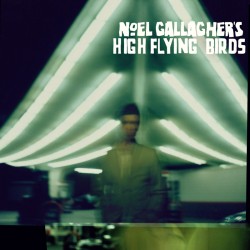
"On the way out he picked up a plum and threw it across the dressing room and it smashed against the wall," Gallagher Senior recounted at a press conference last July to announce his debut solo album, Noel Gallagher's High Flying Birds. "Part of me wishes it had ended like that. It would’ve made a great headline: ‘Plum throws plum',"
So, with Noel walking out of Oasis on the basis that he'd had enough of Liam being a twat (not necessarily his words, but not unlikely either), and his brother regrouping Oasis as Beady Eye, ("Shitbag" is all the monobrowed one could muster on Twitter) we have been presented with that hen's tooth of the pop world - a second great rivalry.
Musically, neither Gallagher has moved on with their respective projects. Beady Eye's Different Gear, Still Speeding and ...High Flying Birds could easily have been named Oasis: What Happened Next. Both Gallaghers remain rooted in the Beatles/Kinks/Steve Marriott-60s-vibe-with-psychadelic-hints that became the stock-in-trade of Oasis, and continues to be Paul Weller's muse to this day.
Solo albums invariably represent freedom and a chance to explore music that wouldn't have worked, or been accepted in a group environment. Some are pure self indulgence, some offer a cathartic release valve.
Noel Gallagher's High Flying Birds is neither indulgent or cathartic as it's perfectly clear the 44-year-old Gallagher really couldn't care less about what anyone, least of all his brother, thinks of him. It might not offer any dramatic directional surprises, but it is certainly the album of a supreme and natural songwriter, confidently enjoying his job.
Scanning the track listing, titles such as The Death Of You And Me and If I Had A Gun might fool the lazy journalist into thinking this is an album about Our Kid. It isn't. The Death Of You And Me, the album's first single release, is a Ray Davies-esque jaunt which includes a riotously carefree New Orleans trad jazz accompaniment created, apparently, by the various members of the production team impersonating brass instruments.
If I Had A Gun is just an unashamed love song built around Gallagher's favourite F#m7 chord (think Wonderwall, viewers) and more Mellotron and grungy Gibson to keep things from getting too sloppy. The happy-go-lucky, hippy-dippy 60s sentiment continues with Dream On, picking up the Oasis template for such throwback fluff with a song Gallagher himself brands "pop for pop's sake - a tune so good maybe people won't listen to the words".
Where Gallagher does let loose with his creative spirit, and shakes off his clear affection for The Kinks Are The Village Green Preservation Society, you get something that would make you put down the dishmop. AKA...What A Life! is such a track. With its chugging piano rhythm - reminiscent of Al Stewart's On The Border, or perhaps On The Border covered by the Scissor Sisters - it pounds along with a thudding big sound that defies the fact it was recorded by Gallagher in a tiny studio with the teaboy providing the piano sample (fact).
In the olden days, a great album was marked by a bold opening track, something intriguing to end Side 1 and keep up interest to turn over, a lively commencement to Side 2, and a memorable closer with, ideally, a lengthy guitar solo to take you into the album's outro. Stop The Clocks has that. Written by Gallagher ten years ago while in Thailand, had it have been recorded then it may have been just another Champagne Supernova. Without the Manchester scally act, it takes on a much more interesting dynamic, as rich and as curious as anything on Paul Weller's 22 Dreams, layered with more prog-ish coatings of Mellotron, acoustic guitar and organ, and closing with a storming piece of guitar work from Paul 'Strangeboy' Stacey, a former Oasis session player who brings Noel Gallagher's High Flying Birds to an end with fretwork that would leave the sky black with hats if it had Johnny Greenwood's name attached to it.
Noel Gallagher is, by his own admission, neither a great guitarist nor a gifted technical musician, but he gives what you and I want, sometimes, more than anything else in a record - a good time. Something to make the morning commute more bearable, something to tune the world out, to make washing up or other household chores pass by with vim, vigour and other brands of household cleaning products.
While ...High Flying Birds will never be a solo album to have the world shouting, in unison, "I never knew he had that in him", for all its resolute rooting in territory Oasis rarely - if ever - strayed from, it reeks of unbridled enjoyment. That of its originator, as well as that of us listeners.