When Britpop was in its prime, midway through the final decade of the last millennium, a thrusting young buck called Tony Blair came bounding down from the north-east of England to become Prime Minister of This Sceptred Isle™. Britain was, at the time, undergoing a purple patch of creative endeavour not seen since the 60s.
Indeed, such was the success of the 60s that Britain decided to recreate them in the 90s. For the Swinging Sixites, read the Loaded generation. There were artists pickling marine life (for David Bailey, read Damien Hirst) and London's Primrose Hill was fit to bursting with the cream of young British celebrity (for Caine, Stamp and Christie, read Law, Frost and Moss). Elsewhere, the country was draped, somewhat ironically, in red, white and blue. Britannia was Cool.
For a nation of natural cynics, which cherishes its heritage and loves the royals but regards all that America The Beautiful nonsense of our cousins over there a little bit, well, OTT, Britain was enjoying itself. To be seen wearing the Union Flag across your bosom (Geri Spice) or beneath the strings of your electric guitar (Gallagher, Noel) was not a misplaced and ever-so slightly gauche act of nationalism, but semi-ironic recognition that this little island of ours isn't that bad and, when you think about it, has contributed more good things to the world than the bad of its imperial past.
Today you can't go anywhere without seeing Union Flag-emblazoned sofas in furniture shops and the wartime legend KEEP CALM AND CARRY ON plastered on any printable surface. And I'm not just talking about London or anywhere else in the British Isles: Brit-chic is everywhere - even in Paris - where soft furnishings featuring the Jack are in vogue in the trendiest of home decoration boutiques.
Britannia is cool - again - or so it would appear. It has a charming new royal couple, a cheeky scamp of a prince who dates blondes, flies attack helicopters and hangs out in nightclubs, while the collective "Firm" of the House of Windsor has reanimated the world's love affair with it by celebrating Her Majesty's 60-years of majesty. And, as a neat coda to all that pomp, ceremony and ice cream, even the England football team is obliging us with a run in Euro 2012. For now.
If the world hasn't had enough of London flypasts and flagwaving for one year, 36 days from now the Olympic torch will arrive in the capital for what has been promised - by Boris Johnson, largely, so blame him if it doesn't work out - to be the greatest celebration of Britain in living memory: the 2012 Summer Olympic Games - the Games of the XXX Olympiad.
Such is the excitement about London 2012 that the BBC has moved to Salford, which is near Manchester and therefore not in London, and London cab drivers will universally - and gladly - tell you that they'll be spending the entire games on a beach - Canvey Island, Magaluf, Margate, doesn't matter, just anywhere that doesn't involve driving through a choked city. If you're coming to London, bring walking shoes or curb your claustrophobia by using the Underground.
Snarkiness aside, the world has been promised a party, and a party they will get. Again, blame Boris - the cunning politician masquerading as a blond buffoon - if that doesn't work out, but it was he who, amid Jimmy Page, David Beckham and a Routemaster bus in Beijing, vowed a celebration.
As with any decent party, someone has made a mix tape. And like any playlist it will delight, divide, baffle and broach conflict in equal measure. Earlier this week, someone "leaked" this planned soundtrack for the opening ceremony of the Games, which is being compiled by the ceremony's co-musical directors, Underworld's Karl Hyde and Rick Smith.
On first inspection the playlist looks like a combination of the obvious and the in-joke, but that would be a harsh assessment of a program designed to last three hours and offer something for everyone - visitor and incumbent.
So what will we get, as we watch fireworks and garishly-clad athletes parading around the half-a-billion-pound stadium?
If the leaked playlist is correct, Hyde and Smith's sense of irony is certainly intact, kicking off the shindig with Drummond's Eton Boating Song, followed by the always rousing Land Of Hope And Glory, before letting The Jam loose with Going Underground, as bold a tribute to kitchen sink Britain as anything to come out of the post-punk era.
Later on, the Sex Pistols' God Save The Queen and Pretty Vacant (yes, we get it - and Lydon's now advertising butter...) and, perhaps, the most obvious inclusion of all - London Calling.
From the themes to EastEnders and Coronation Street to the chimes of Big Ben, the opening of London 2012 will leave no musical reference to the dear old lady of London untouched.
Prog rock - Floyd's Eclipse ("All that you...touch/see/taste/feel/love/hate/distrust/save/give/deal/buy/steal/create/destroy/do/say/eat") and two tracks from Muse (Map Of The Problematique and Uprising) - lies alongside with Elgar, Handel, Jerusalem and the always-spine tingling Cup Final anthem, Abide With Me.
There will be cinematic pomp - The Dambusters March (which I'm sure will go down well with Germany), 80s synth pop - OMD's Enola Gay (which I'm sure will go down well with the Japanese squad, especially as it will apparently precede the Sugababes' Push The Button...), West End musicals (Food, Glorious Food from Oliver!) and saucy English seaside postcard smut (The Stripper).
The more you look at the list, the more you come to think that Hyde and Smith have been handed the gig of the year in compiling it. Forget Danny Boyle with his Bond-themed opening film, the real fun, I suspect, was in drawing up the usual suspects, and then augmenting them with a ribald twist.
The obvious - a liberal sprinkling of The Beatles (She Loves You, The End and Hey Jude), the Rolling Stones (Satisfaction, inevitably), The Kinks (All Day And All Of The Night), The 'Oo (My Generation) and Bowie's Heroes - mix with the less obvious: Trampled Under Foot by Led Zeppelin (Stairway To Heaven would probably have been just a little too, you-know..., but why not Whole Lotta Love as Jimmy Page played in Beijing?).
As proud as we Brits should be for our classic rock heritage, the playlist denotes generous time to more contemporary London fare, such as Tinie Tempah's Pass Out and Random Antics by Kano & Mikey J. British dance culture is also properly represented by The Chemical Brothers (Galvanise), Prodigy's Firestarter (just to please Health & Safety...) and, of course, Underworld with their own Born Slippy, which will hopefully not turn up during the aquatic events.
Thematically, there will be Chariots Of Fire by Vangelis, who is Greek and will probably welcome the royalties, while Queen and the Dame's Under Pressure reflects the reputation of London's organisational skills as much as the demands about to be placed on the atheletes.
The decades that British music has given to the global soundtrack are equally reflected, though strange to see nothing before 1962. Surely Peter Sellers' Any Old Iron or Lonnie Donegan's Rock Island Line - the skiffle song that launched the careers of most British rock stars born in the '50s, could have been found a place amongst the TV theme tunes and other ecoterica?
But that's the fun of a playlist: it's a provocation to good-natured argument, as Nick Hornby captured so well in High Fidelity (the book...). It is why athletes who have spent the last four - even eight - gruelling years preparing for these games, will be swooned by a lovey-dovey tune about a bloke who's had a few too many and is asking his better half to drive him home. Yep, I'm not entirely sure what you're supposed to do to Eric Clapton's Wonderful Tonight while walking around a running track either. Eric is a national hero, one of the greatest guitarists of all time, and I'm proud to be from (sort of) his neck of the woods, but is WT the best representation of his canon and the British blues boom he helped fuel? Surely Cream's Crossroads would have been better - a distinctly British interpretation of a song foundered in the heat of Mississippi.
And then there is Billie Jean by Michael Jackson. Why? On one hand, a good party song, but unless it is some obscure reference to the famously saphic, six-times Wimbledon Ladies Champion, I can't understand its inclusion, thematically or otherwise. I do have a theory, however: Jacko was, once, bizarrely paraded at Fulham FC's Craven Cottage ground during half time of a fixture with West Ham, whose fans sing I'm Forever Blowing Bubbles (also on the list). It is said that the entire crowd welcomed Jacko by singing this song...only with a markedly different purpose altogether...
So, progressing through the 1970s, Mud's Tiger Feet (an absolutely fantastic inclusion) and more Bowie (Starman) remind us of how much music injected colour to the otherwise drab British landscape of the decade, which was spent mostly on strike. For the 1980s - the decade that began with Thatcher, recession and war in the Falklands before erupting in a many-hued puffball skirt of party exuberence - we'll have Duran Duran, The Eurythmics, New Order, Frankie Goes To Hollywood (Relax - my, how we've moved on as a nation...) and Soul II Soul.
And then we reach the 1990s. The circle of the 60s is turned fully with Wonderwall, an acknowledgement of Noel Gallagher's songwriting simplicity, a feature shared with Paul McCartney. Strange, though not to see one or two of the Oasis crowdpleasers - say Cigarettes And Alcohol, for a laugh, or Roll With It. Instead, The Hindu Times is on the list - a hit, but hardly a signature hit.
Blur, on the other hand, are represented by Song 2 - a no brainer, some might say, even if it's overuse by American "sports" broadcasters has started to render it a tad annoying. Radiohead feature with Creep, presumably a reference to the speed with which London's traffic will progress for the Games' duration. Strangely, though, there's no room for Pulp, despite Lord Jarvis of Cocker hawking the Eurostar service on television adverts encouraging France to come and see what London took away from Paris. Ouch.
Looking back over the last 50 years of music represented by this list, it does warm the cockles to see just how good British music has been, and continues to be. The Arctic Monkeys' I Bet You Look Good On The Dancefloor is a fitting tribute to Alex Turner's gnarled pop senisibility, not to mention his prolific endeavour, while the good times will roll with the Kaisers' I Predict A Riot (ha-ha, ho-ho, he-he...) and Franz Ferdinand's Take Me Out.
For a contrast in fortunes, Amy Winehouse's zoot-suited version of Valerie will be heard in quick succession with Coldplay's Viva La Vida (not Clocks?) and then Adele's Rolling In The Deep. The Tottenham Tenor couldn't or shouldn't be ignored for an event like this, especially as she is single-handedly maintaining the UK's GDP with sales of 19 and 21, which between them now represent Britain's biggest export industry, ahead of Japanese cars made in Sunderland and Swindon, and the port wing of Airbus airliners made in Wales (don't you just love European collaboration?).
Can we derive any Britishness from all this? Will this three-hour mix tape have us reaching for the Union Jack boxer shorts? Hard to say: Olympic ceremonies are hardly my cup of tea, but if this leaked list is the real deal, it would be fair to say that Karl Hyde and Rick Smith will pull off one of the more remarkable feats of London 2012 - drawing up a playlist that represents the good, the bad and the ugly of Britain and British music, from the serious to the silly, and - such as Ron Grainer's Doctor Who theme and Monty Python's The Liberty Bell - the humour that defines us Brits, and which probably only we will get.
Showing posts with label Oasis. Show all posts
Thursday, June 21, 2012
London Calling
Labels:
Blur,
Boris Johnson,
Britpop,
Damien Hirst,
David Bowie,
Duran Duran,
Led Zeppelin,
London 2012,
New Order,
Oasis,
The Beatles,
The Clash,
The Jam,
The Kinks,
the Rolling Stones,
the Sex Pistols,
The Who,
Tony Blair
Tuesday, April 3, 2012
Going (Back) To California
The mountains and the canyons started to tremble and shake
As the children of the sun began to awake.
(Jimmy Page & Robert Plant; Superhype Publishing, Inc. All rights administered by WB Music Corp., ASCAP.)
California has long been the musician's muse. There are more songs about the Golden State than all the other locations enshrined in song put together. Its southern stretches of seaside sand inspired The Beach Boys and its desert wilderness inspired U2; the 'NoCal' coastal towns of Santa Cruz and Big Sur inspired an entire album by The Thrills; both the Chili Peppers and Tom Petty sang of the pitfalls that can bring the Californian dream to an end; San Francisco provided Tony Bennett with his signature piece, while the genius that is Randy Newman wedged tongue firmly in cheek to extoll the virtues of the state's chaotic love-it/hate-it focal point, Los Angeles.
On the City of Angels' topographic outskirts, the Laurel and Topanga Canyons respectively slice huge grooves through the Hollywood Hills and the Santa Monica Mountains. Within them reside, still today, remnants of the counter culture movements who set up camp in these mystic glacial cut-throughs in the mid-1960s, and smoked a lot of, uh, stuff.
As Barney Hoskyns' highly entertaining tome Hotel California: Singer-songwriters and Cocaine Cowboys in the L.A. Canyons - 1967-1976 recounts, this was a time of communal creative endeavour; Canyon homesteaders like CSN&Y, Joni Mitchell (who still has a place today in Laurel Canyon), James Taylor and Jackson Browne produced some of the era's finest folk-rock with songs, mostly about loving each other, which apparently went on a lot in LA's most swinging neighborhood.
Around the same time as all this was going on, three boys were born - albeit four years separating them - in the Midlands of England. Nigel Clark, Andy Miller and Mathew Priest would grow up to form a band with an ironic name, Dodgy, and they would be a fixture of the endless summer that seemed to expand through the mid part of the 1990s as part of the extraordinary cultural movement that was Britpop.
The trio would make their breakthrough in 1993 with a sunshine anthem, Staying Out For The Summer, but would remain - along with Cast, Kula Shaker, Catatonia, The Boo Radleys and others - glittering sparks in the dust tails of 'Cool Britannia's biggest comets, Oasis, Blur and Pulp.
Dodgy's particular corner of the party would continue in 1996 with Good Enough, about as enjoyable a summer singalong as Alright by Supergrass or any one of a number of VW camper van favorites around that time. With its sun-kissed, tropical promo echoing the Caribbean video japes of another threesome, The Police, more than a decade before, Good Enough was perfect for a summer in a resurgent Britain, the kind of hit that finds its way up window cleaners' ladders as well as blasting across muddy, tent-infested farmland.
Free Peace Sweet, the album which spawned Good Enough, found the band exploring influences like The Who (none more so than on Jack The Lad), but the hits seemed to dry up and with it, the appearances on Top Of The Pops and Saturday morning kids TV subsided. In 1998 vocalist Clark went solo, leaving Priest (comedic, porkpie-hatted drummer, band spokesman and Never Mind The Buzzcocks favourite) and guitarist Miller ('The Quiet One™') carried on as part of a largely unremarkable five-piece, which fizzled out itself.
Drawn together by a mutual friend's funeral, Clark, Miller and Priest reformed in 2008, initially to play live and then to start work on new material.
And so, after four years of gigging and writing, Dodgy have returned to the fore with Stand Upright In A Cool Place. It's a grown-up, party's-over album reflective of three men in their early 40s (Priest, with his avuncular, greying beard, now looks a lot like perennially middle-aged England cricketer Mike Gatting) - considering what they have, what they had and what is still left to go after.
A delightful mix of pastoral folk-rock and wistful melodies, Stand Up is seeped in the music that came out of those stoner homesteads in southern Californian more than 40 years ago. But unlike the LA canyon folk who purposefully dialed out of convention, Dodgy are embracing it in their middle age.
The VW camper has been sold and its proceeds spent on bedding plants and a kitchen extension. But not without some regret of the loss of youthfull opportunities and past relationships, as expressed on Shadows, Did It Have To Be This Way and What Became Of You.
Only A Heartbeat is another consideration of separation, but could have been plucked from John Lennon's Double Fantasy - largely because of Clark's uncanny vocal resemblance to Lennon (take note, Liam). If this gives the impression of a tendency towards the melancholy - well, OK, it does. It's a badge of honour all of us over the age of 40 have earned the right to wear.
Stand Up is not all acoustic guitars and Fleet Foxes harmonics, either: while we could do without the woodland sound effects on Raggedstone Hill (you don't need the sound of woodpeckers pecking and twigs snapping underfoot to set the rustic scene), it progresses from gentle folk into grungy yarn about a Malvern monk finding love in a fair-skinned forest saucepot. At almost seven minutes long, it is almost in prog territory (perhaps even a companion to The Lady Lies on ...And Then There Were Three by Genesis) in its storytelling. It's also the most complicated track on the album, an enjoyable departure from the melodic simplicity elsewhere.
The last of Stand Up's eleven tracks is its most deceptive. Happy Ending suggests closure but instead mocks an unidentified character for not being able to "stand a chance...and you never did", berating this poor individual for underachievement and unfulfilment. There is no explanation whom its about, but the suspicion is that this is a mild form of self admonishment, Dodgy giving itself a hard time for not doing as well as it could have done in the past.
The paradox is that Happy Ending is closure to an album which you would be hard pressed to call happy, but which is a still a superbly joyful return from a band who, when the Britpop wave first washed them ashore, struggled to be seen as anything other than good-time party band for festivals. Perhaps Stand Upright In A Cool Place will afford Dodgy the spotlight they weren't ready for almost twenty years ago. It is, after all, a fantastic record.
Sunday, November 13, 2011
Grab that cash with both hands and make a stash
At the end of the same week that Paul Weller, when asked if he would ever reform The Jam, said: "Hopefully I'll never be skint enough", there were two announcements which seem to be indicative of each other.
Firstly, it was revealed that the legendary but beleaguered record company EMI was to be split into two, with the theme parks-to-film studios entertainment giant Universal taking over one part, and Sony taking over another. Then it was announced that hoary old metalheads Black Sabbath were to get back together again, presumably while they could still remember their own names.
At various points in its 114-year history, EMI had the likes of The Beatles, the Rolling Stones, David Bowie, Pink Floyd, Coldplay, Robbie Williams and Radiohead on its books, with Frank Sinatra signed to its US subsidiary, Capitol. Its disappearance reflects the growing consolidation of an industry which appears to be collapsing in on itself like a dark star, largely the result of behaving like King Canute in ignoring the oncoming binary tide of digital downloads.
It's sad, of course, to see a famous name like EMI disappear, especially one synonymous with a golden age of music - an age which made Britain the epicentre of musical culture. We are to blame. Our reluctance to keep on buying overpriced CDs because downloads - legal and illegal - make much better sense, means that your average rock star is down to his or her last few millions.
In New York, still considered the capital city of the American music industry, it is significant that you have to travel far and wide to actually buy a CD. Tower Records has closed its nationwide chain, the Virgin Megastore on Times Square has disappeared, books, music and video retailer Borders shuttered its final two Manhattan outlets earlier this year, which means the electrical retailer J&R to be one of the few mainstream outlets in the city left to sell you a CD. And on the Saturday afternoon I visited it, the lack of clientele was telling. Contrast that with Paris, where the Virgin chain continues to do a roaring business in CDs and even vinyl LPs. The question is, for how long? Are the French really more attached to physical media for their entertainment?
Nostalgia may well be the only source of revenue the music industry can draw on. Pink Floyd, one of EMI's most lucrative acts, is currently re-releasing its back catalogue in various packages and box sets.
The 'Immersion' package of Dark Side Of The Moon will set you back $140 but will offer you a remastered CD of the original album, a CD of the entire album being performed live in 1974, a multichannel version of the album, a DVD containing various concert films, a Blu-ray Disc version of various concert films, a CD containing demos and rarities, and a load of merchandising paraphernalia.
The same approach is being applied to other albums in the band's history. If you don't fancy all that, you can buy the Discovery box set, priced at around $240 in the US, and which contains all 16 Pink Floyd CDs, remastered, of course. Presumably if you'd bought the previous two box sets - Shine On and Oh, By The Way, only the most cash-rich completist would consider another.
As good, sonically, as the remastering and repackaging of classic old albums might be, the cold hard truth is that the consumer appetite for buying them is on the wane. Whether we mourn for the gatefold album cover, with its Hipgnosis or Roger Dean artwork, or the experience of removing that 12-inch circle of vinyl from its sleeve, those days of tactile enjoyment have disappeared. Although there has been a fashionable resurgence of vinyl sales - up by 40 per cent, year on year - it is not going to reverse the overall decline in sales of "physical media".
Perhaps, then, the old heads who mourn the loss of such experiences are keeping the rock heritage trail open. Black Sabbath's reformation - they will record a new album, their first as the original four-piece lineup in 33 years, and embark on a world tour next year - smacks of desperation. Ozzie Osbourne and his brood may have earned a new fanbase thanks to his reinvention as a self-parody ten years ago with MTV's fly-on-the-wall series, but one wonders whether watching four old headbangers with a combined age of almost 250 cranking out Paranoid and Iron Man in 2012 will be anything to moisten the eye.
It is, let's be honest, about one thing: asked recently what it would take to reform the 'classic' Genesis lineup, Peter Gabriel - who left the band in 1975 - quipped "A large brown envelope". Jokes aside, Gabriel admitted that reforming for a one-off was an interesting idea, citing Led Zeppelin's reunion show in 2007 as an example of how to do it right.
The trouble is, do it once, and the expectation is that you'll do it more, until eventually you satisfy the demand of a listening public clamoring to recapture its youth. Led Zeppelin, to their credit, have refused to embark upon a lucrative reunion tour. "[The show] was an amazing evening," Robert Plant told Rolling Stone earlier this year. "But I've gone so far somewhere else that I almost can't relate to it. I know people care, but think about it from my angle - soon, I'm going to need help crossing the street." Plant's reluctance - or indifference - has been suggested as the reason the three surviving members of the band, plus John Bonham's drummer son Jason, have not followed up the show at London's O2 arena with more performances. "Playing at the O2, that was our reunion," Jimmy Page has said, adding: "if you're going to do a reunion, you need four members."
Pink Floyd have taken a similar approach to reforming. The appearance of Roger Waters, David Gilmour, Nick Mason and Rick Wright as the finale of Live8 in 2005 was widely hailed - and inevitably sent the rumour mill into a frenzy about a full reunion. Given the decades of acrimony, especially between Waters and Gilmour, getting the four of them on a stage together was a minor miracle in 2005. While their feuding has thawed - Gilmour appeared at Waters' London performance of The Wall earlier this year, sending the crowd wild by playing on Comfortably Numb - he has also suggested that things between the two of them are still not perfect. "I played on Roger's Wall show here (in London)," Gilmour said in an interview in September, "and I haven't heard a word from him since." That said, Gilmour hasn't exactly enthused over doing more work with his former bandmates. "I understand how other people want that sort of thing [a reunion] to happen, but I'm entirely selfish in thinking that I want to enjoy my declining years exactly the way that I want to... And that wouldn't be part of it."
The Eagles, once, were equally reluctant to reform, with Don Henley famously being quoted in 1980, when they broke up, that the ageing country rockers would get back together "when Hell freezes over." In 1994 they reformed for an MTV Unplugged show. The subsequent album and DVD was named Hell Freezes Over. Cute. But it's not just the venerable, however, who embark upon comebacks. Barely two years since Noel Gallagher walked out on Oasis, effectively breaking up the group, brother Liam has confidently predicted that they'll be back together in 2015 for a 20th anniversary tour of (What's The Story) Morning Glory.
In October, The Stone Roses broke new records for ticket sales by announcing that they would be reforming. Tickets for two outdoor shows next year in Manchester sold out in just 14 minutes, being snapped up by fans of one of the most iconic acts of the Ecstasy-enhanced 90s. For a band that fell apart like an IKEA wardrobe hell together by PostIt notes, their fervour to reform and possibly even record again smacks of money-making - with estimates that the band would earn £10 million from their shows at Manchester's Heaton Park next summer.
In recent years we've seen reunions by the likes of Take That, Pulp and, briefly, Blur, with the summer festival season proving to be particularly attractive opportunity to dust off the back catalogue.
"Money talks," Paul Weller said this week in his interview with Shortlist.com, when asked about the Stone Roses getting back together again. "We live in that age, though, don’t we? It’s either bands reforming, bands playing their classic album or tribute bands."
"I find the whole nostalgia thing very strange, right across the board," Weller added. "I also think it doesn’t help new bands. Don’t get me wrong — there aren’t a lot of great new bands, and there’s a lot of shit about. But it hurts new bands coming up because nobody’s looking out for anything new. It’s just tried and tested old music, and it’s weird to me. I think it’s a phase."
Monday, October 17, 2011
Brother Beyond
Once or twice in a generation, pop music generates a rivalry that has the press gnawing upon it until they get bored and move on. The fact that the rivalry was, probably, their creation in the first place is neither here or there, the scamps.
In the 1960s we had The Beatles and The Stones; 20 years later, it was Duran Duran in a battle of hairspray with Spandau Ballet. They were followed after the intermission by Simple Minds and U2, a bout clearly won by the latter who went on to meet Coldplay in an exchange of ideas about fair trade coffee.
Thankfully, with the exception of Tupac and Notorious B.I.G., few have ever turned really nasty (although there were rumours of an ugly backstage spat between Mozart and that pipsqueak Beethoven at Glasto '90. 1790.)
It is, though, unusual that a member of pop's great firmament should find themselves absorbed by not one but two rivalries in the course of their career. Lily Allen came close by issuing the pop princess equivalent of the closing time "come on then!" to Courtney Love and Katy Perry, but to my knowledge, only Noel Gallagher has been embroiled in a full-on, no-holds-barred rock'n'roll dust-up twice.
The first came to a head on August 14, 1995 when, through either disruptive thinking or unbelievable stupidity, Blur's Country House was released on the same day as Oasis appropriately brought out Roll With It. Being the height of the silly season the event was marked by being the lead story on a host of organisations customarily indifferent to such triviality. It even made the BBC’s 10 O'Clock News, with summer stand-in presenter John Humphries harrumphing with unease as he introduced that evening's 'fancy that?' piece on the affair.
Planted, not particularly deeply, within the Blur-Oasis rough-and-tumble was the British class obsession: Blur's lower/upper-middle class art college background was pitched into the contretemps, with Oasis - hailing from Manchester's hardened streets - a journalistic gift. For a year or so it made for mildy amusing copy, but the true outcome of the handbags between Blur and Oasis (which saw Liam Gallagher turning his wannabe school playground bully persona up to 11) was to mask the simmering sibling rivalry within Oasis itself.
Part of me wishes it had ended like that. It would’ve made a great headline: ‘Plum throws plum'.
The sparring between the brothers Gallagher maintained the band's reputation from the moment they first emerged in the early 90s until its bitter end in 2009. For a while you could be forgiven for thinking it was part of their schtick.
Fast-forwarding through more than a decade-and-a-half of simmering fraternal discord, the eventual separation of Noel and Liam Gallagher, the spiritual heart of Oasis, came as no surprise to anyone. The denouement unfolded backstage at the Rock en Seine festival in Paris when a row about the junior Gallagher's Pretty Green clothing label led to him threatening his elder brother with, first a guitar, and then a piece of fruit.
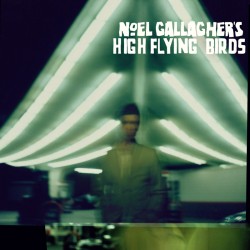
"On the way out he picked up a plum and threw it across the dressing room and it smashed against the wall," Gallagher Senior recounted at a press conference last July to announce his debut solo album, Noel Gallagher's High Flying Birds. "Part of me wishes it had ended like that. It would’ve made a great headline: ‘Plum throws plum',"
Musically, neither Gallagher has moved on with their respective projects. Beady Eye's Different Gear, Still Speeding and ...High Flying Birds could easily have been named Oasis: What Happened Next. Both Gallaghers remain rooted in the Beatles/Kinks/Steve Marriott-60s-vibe-with-psychadelic-hints that became the stock-in-trade of Oasis, and continues to be Paul Weller's muse to this day.
Solo albums invariably represent freedom and a chance to explore music that wouldn't have worked, or been accepted in a group environment. Some are pure self indulgence, some offer a cathartic release valve.
Noel Gallagher's High Flying Birds is neither indulgent or cathartic as it's perfectly clear the 44-year-old Gallagher really couldn't care less about what anyone, least of all his brother, thinks of him. It might not offer any dramatic directional surprises, but it is certainly the album of a supreme and natural songwriter, confidently enjoying his job.
Scanning the track listing, titles such as The Death Of You And Me and If I Had A Gun might fool the lazy journalist into thinking this is an album about Our Kid. It isn't. The Death Of You And Me, the album's first single release, is a Ray Davies-esque jaunt which includes a riotously carefree New Orleans trad jazz accompaniment created, apparently, by the various members of the production team impersonating brass instruments.
If I Had A Gun is just an unashamed love song built around Gallagher's favourite F#m7 chord (think Wonderwall, viewers) and more Mellotron and grungy Gibson to keep things from getting too sloppy. The happy-go-lucky, hippy-dippy 60s sentiment continues with Dream On, picking up the Oasis template for such throwback fluff with a song Gallagher himself brands "pop for pop's sake - a tune so good maybe people won't listen to the words".
Where Gallagher does let loose with his creative spirit, and shakes off his clear affection for The Kinks Are The Village Green Preservation Society, you get something that would make you put down the dishmop. AKA...What A Life! is such a track. With its chugging piano rhythm - reminiscent of Al Stewart's On The Border, or perhaps On The Border covered by the Scissor Sisters - it pounds along with a thudding big sound that defies the fact it was recorded by Gallagher in a tiny studio with the teaboy providing the piano sample (fact).
In the olden days, a great album was marked by a bold opening track, something intriguing to end Side 1 and keep up interest to turn over, a lively commencement to Side 2, and a memorable closer with, ideally, a lengthy guitar solo to take you into the album's outro. Stop The Clocks has that. Written by Gallagher ten years ago while in Thailand, had it have been recorded then it may have been just another Champagne Supernova. Without the Manchester scally act, it takes on a much more interesting dynamic, as rich and as curious as anything on Paul Weller's 22 Dreams, layered with more prog-ish coatings of Mellotron, acoustic guitar and organ, and closing with a storming piece of guitar work from Paul 'Strangeboy' Stacey, a former Oasis session player who brings Noel Gallagher's High Flying Birds to an end with fretwork that would leave the sky black with hats if it had Johnny Greenwood's name attached to it.
Noel Gallagher is, by his own admission, neither a great guitarist nor a gifted technical musician, but he gives what you and I want, sometimes, more than anything else in a record - a good time. Something to make the morning commute more bearable, something to tune the world out, to make washing up or other household chores pass by with vim, vigour and other brands of household cleaning products.
While ...High Flying Birds will never be a solo album to have the world shouting, in unison, "I never knew he had that in him", for all its resolute rooting in territory Oasis rarely - if ever - strayed from, it reeks of unbridled enjoyment. That of its originator, as well as that of us listeners.
Labels:
Blur,
Coldplay,
Duran Duran,
Lily Allen,
Noel Gallagher,
Noel Gallagher's High Flying Birds,
Notorious B.I.G.,
Oasis,
plums,
Simple Minds,
Spandau Ballet,
The Beatles,
the Rolling Stones,
Tupac,
U2
Subscribe to:
Posts (Atom)