Showing posts with label Simple Minds. Show all posts

Saturday, October 20, 2012

CP company - Keane, live in Paris:

Picture: Keane/Facebook
Let's face it, as rock music instruments go, the piano just isn't sexy.

Sorry if you were put through hell as a child to achieve your Grade 6 piano certificate, but it really is just a piece of noisy furniture.

No attempt to make it more interesting has ever worked. Chris Martin dawbing his Sunday school upright in right-on graffiti didn't do it either.

And, as for bone-domed Jan Hammer, poncing about on TV with a keyboard strapped to him like a guitar while performing the Miami Vice theme, this was about as far removed "rock god" as it is possible to be.

The guitar, on the other hand, is rock and roll itself; for its leading practitioners, it's an appendage, an extension and in some cases the distinction of themselves. BB King's vibrato is the most recognisable guitar technique in guitar history, and I would wager that most people would identify Eric Clapton, Keith Richards, Jimi Hendrix, Jimmy Page, Jeff Beck, David Gilmour and U2’s The Edge simply from a snippet of their guitar sound.

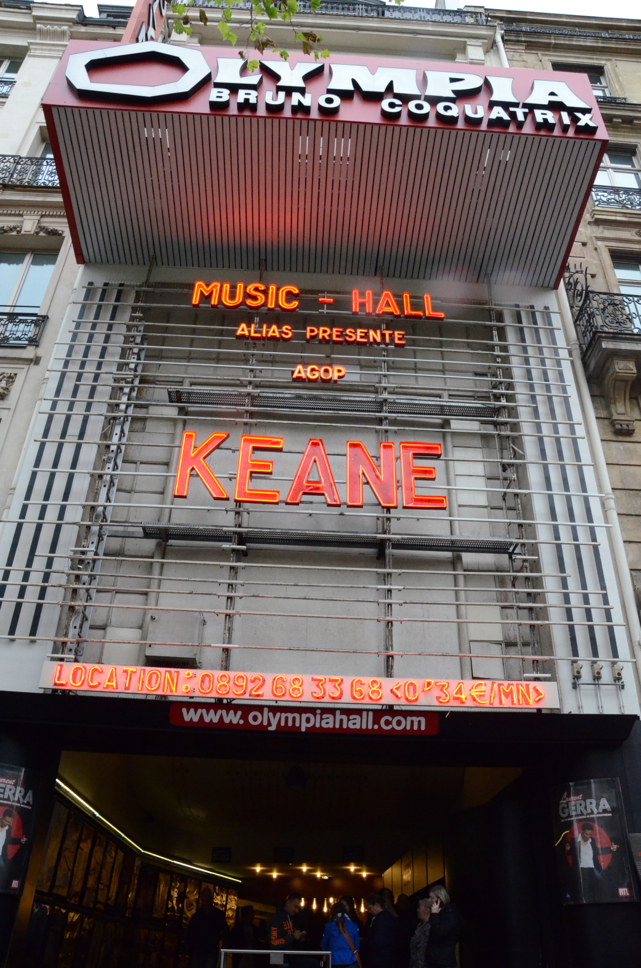
Keane, however have quite stubbornly ignored all of this. At the elegant but cavernous L'Olympia in Paris on Wednesday night, the only appearance of a guitar was the red Telecaster singer Tom Chaplin strummed along to Neon River, off their latest album Strangeland.

From the outset of their career, Keane have built their entire musical proposition around the piano of principal songwriter and keyboard player Tim Rice-Oxley, and one piano in particular. And here, forgive me a brief diversion into the realms of trivia. For, I strongly suspect, there is another band, who also started out in the somewhat blue-blooded environs of southern England, to thank for the Keane signature sound.

Banks of keyboards. Ho and, indeed, ho.
In the middle of their transformation from progressive rock giants to American FM radio-friendly...er....giants, Genesis made an album called Duke. Marking the acquisition of a more pop-rock sensibility than their former extensive forays into the ethereal, Duke - released in 1980 also marked the abandonment by keyboard player Tony Banks of the grand pianos, Moogs synths, Mellotrons and Hammond organs that had marked their territory and, essentially, defined prog rock in the 1970s.

On an album of notably shorter, poppier songs, Banks made liberal use of the Yamaha CP70 electric piano. You may not know or even care about the CP70. But it became one of the most important tools of the trade in the 1980s, it's distinctive "tinkly" sound turning up everywhere (think Alive & Kicking by Simple Minds or Peter Gabriel's In Your Eyes).

With this change of tone, Genesis started noticing women at their concerts. And hit singles. Their albums sold in the millions, and then in the multi-millions, the result of adopting bright, breezy English pop-rock. Rice-Oxley was clearly listening. Because the CP70 has been Rice-Oxley's - and, therefore, Keane's - principal instrument and defining sound.

Traces of Duke-era Genesis DNA can be found throughout their earlier albums, including Hopes & Fears, widely hailed as one of the best debut albums by a British band in decades and containing the likes of Somewhere Only We Know and Bedshaped.
Picture: Keane/Facebook
Live, Keane are a pleasant anomaly. The somewhat gauche, public schoolboyish intensity that characterised their public emergence when Hopes & Fears took off in 2004 is still there.

The lanky Rice-Oxley is hunched over his CP70, stabbing away at its keys like Lucy's brother Schroeder in the Peanuts cartoons. "Cherubic" (contractually-obliged description) vocalist Tom Chaplin is still a mixture of polite choirboy and energetic rocker. Drummer Richard Hughes just gets on with drumming without superfluous percussive pyrotechnics, and bass player Jesse Quin does what most bass players do - keep pace at the back and try not to draw too much attention to themselves.

Keane are still in a hard to define area of rock. Or pop. Or pop-rock. Warming the audience up with Bruce Springsteen's Dancing In the Dark unfortunately conditioned the expectation. Springsteen has, on occasion, veered away from his trademark time card-punchin' denim-clad rock'n'prole with songs like that. With Keane you sometimes wish they veer away from songs like that and grow a pair. I mean that kindly.

They could rockout, but I suspect they don't because their audience just adores the rock-pop/pop-rock they stick to. Their live show isn't a great deal more raucous than their album work, but whereas their albums make perfectly pleasant living room listening, their relatively sparse, drums-bass-piano-vocals structure fills out the space of a venue as spacious as L'Olympia.


Neither anthemic Coldplay pomp nor vacuous Euro clapalong pop, Keane more than satisfied the enthusiastic French audience with a string of energetic renderings of You Are Young, Meet Me In The Morning, and Is it Any Wonder, the latter building around its circuitous rhythm, with Chaplin adopting that theatrical semi-lunge into the mic stand of his, giving him the appearance of a slightly fey-looking Damon Albarn from a distance.


Picture: Keane/Facebook
At various moments of the evening Chaplin declared Keane's love for France, which was inevitably rewarded enthusiastically by the partisan crowd, which included a set of parents with toddler in toe. You can interpret this either as a sign of Keane's unthreatening nature, or an apparent dearth of babysitters in the Paris area. She seemed to enjoy herself, nevertheless.

It's unlikely that you'll find Keane stretching into extended live versions of their hits. The likes of Everybody's Changing, This Is The Last Time, Bedshaped and Somewhere Only We Know lasted the length of the album version, albeit with passionate audience participation. Some bands, when they stick resolutely to recreating their album versions, do so with sterility.

Keane could easily just phone in their hits - and with a set of some 16 songs, you realise just how much they've produced in the 15 years since their formation, but live they put heart and soul into every note. And yet you still get the feeling that this is a band that is just getting going. Coldplay, the band to which Keane probably get compared to more than most, came together just a year before, and yet have already given us the impression that they've outlasted their welcome. On this evidence, Keane have got plenty left in the tank.


Friday, August 3, 2012

Virgin Rebirth


Sometimes publicity stunts go right. And sometimes they go, well, spectacularly awry.

On Wednesday the media was gifted the mother of all sniggerfests when the hapless Mayor of London, Boris Johnson, found himself dangling by his political credentials when a zip-wire caper went hilariously wrong.

It was the sort of PR disaster that would form the master gag of an episode of The Thick Of It or Spin City. But, no, this was a very real stunt featuring the very real-life chief executive of the very real British capital and current host of the Olympic Games.

In the hands of another publicity-hungry blond, Sir Richard Branson, it would have been seen as one more wacky caper featuring the billionaire regarded in the UK as the "acceptable" face of entrepreneurism, owing to his peroxide locks, gleaming white teeth, life-long aversion to wearing ties and propensity for doing daft things for the cameras.

Strangely, Virgin is one of the few prominent global brands absent from London 2012. Indeed beyond the possibility that some athletes might train in one of Branson’s gyms, the only trace of Virgin DNA so far was a week ago today, with the appearance of Mike Oldfield in the opening ceremony.

Oldfield’s now almost 40-year-old opus Tubular Bells – part of which he performed in Danny Boyle’s expansive history of the National Health Service – holds an indelible mark on Branson’s career.  It was one of the first four albums to be released on the fledgling Virgin Records label in 1973. It had been recorded by the then-19 year-old Oldfield at Branson’s rural Oxfordshire studio, The Manor, bought itself by the 21-year-old Branson on a hunch that providing musicians a place in the country to get their heads together might prove creatively fruitful.

It’s the sort of apparently impulsive (but very well thought through) business punt that has been Branson’s hallmark. Over four decades he has spread the Virgin brand across a bottomless stream of commercial puns (e.g. Virgin Brides, fnrrr, fnrrrr...) built upon the Virgin brand ethic of fun.

To support them, there has been conspicuous self-promotion, relentless japery and no shortage of photo opportunities involving air hostesses and buckets of water.

"Oddly, the British find this perfectly charming," wrote Fast Company magazine once, adding: "Americans would probably sue him".

For a billionaire - and Britain's fourth richest person – Branson’s public popularity (or, perhaps, public tolerance of his self-publicity) has rarely waned, and he is frequently named as one of the people Britons would happily vote for as prime minister.

Over 42 years he has built an empire that has had, at certain moments, anywhere between 200 and 400 businesses within its fold, ranging from ranging from airlines to bridal wear, Caribbean islands, manicure services, banking services, mobile phones, wines and soft drinks.

"If you can run one successful company," he has said, "you can pretty much run any company”. And if the distinctive red and white Virgin logo hasn’t been prominent enough, Branson has ensured the brand is one of the world’s most recognizable through dare-devil trans-Atlantic capers by balloon, speedboat and anything else that can bear the company colours.

Beneath the business, however, still lurks the hippyish public schoolboy who left Stowe at the age of 16, having struggled through academia with dyslexia, to launch The Student magazine, later using it as an advertising platform for selling discounted records by mail order.

"There was tremendous excitement about music," Branson himself wrote in his autobiography, Losing My Virginity. "It was political; it was anarchic; it summed up the young generation’s dream of changing the world. And I also noticed that people would never dream of spending as much as 40 shillings on a meal wouldn't hesitate to spend 40 shillings buying the latest Bob Dylan album."

Eventually a full-on mail order service was launched, named Virgin Mail Order Records (named after a female acquaintance suggested the name on the basis that "We’re complete virgins at business."), only to be soon thwarted by a postal strike. Branson, never one to shirk a challenge - or an angle - moved Virgin Records to a former shoe shop at 24 Oxford Street in London. And an empire was born.

Having opened the Oxford Street shop with Nik Powell (later to become one of the godfathers of modern British film-making), Branson saw the next opportunity was to open a recording studio, presumably to create a supply chain for the store. Looking through Country Life magazine, he came across the 17th century pile The Manor and took out a £20,000 mortgage on it. "I imagined that the best environment for making records would be a big comfortable house in the country where a band could come and stay for weeks at a time and record whenever they felt like it."

The logical next step was to launch a record label on which to publish The Manor’s output. Even if record companies were normally set up by people pure music at their heart - the Ertegun brothers at Atlantic, for example, public schoolboys barely out of their teens. Tubular Bells, with its nods towards both classical music, prog rock and the first footings of ambient music, cast Virgin as a label you couldn't pin down.

Branson's nose for a stunt - and an opportunity - reared again in 1977 when the Sex Pistols were fired from EMI. Cashing in on the Queen's Silver Jubilee, Virgin released the Pistols' single God Save The Queen, and subsequent album Never Mind The Bollocks.


From prog to punk? No more varied than airlines and soft drinks, and when you consider Virgin's later roster - Culture Club, Phil Collins, Heaven 17, XTC, Simple Minds, Janet Jackson, the Rolling Stones and, er, the Spice Girls - a Virgin label ethos started to emerge: if it made money, sign it.

Risk was still a factor - signing the Pistols was, another opportunistic publicity stunt - and Culture Club's Boy George guaranteed much the same level of mainstream media in the early 1980s. In some respects Phil Collins - posssibly Virgin's biggest money-spinner - was another risk, given that he was, in 1981, merely the drummer of a moderately successful prog rock band who'd turned some bedroom demos into a melancholy album about his divorce. But then Face Value changed things considerably, for both artist and record label.

Branson clearly loves challenges. Whether launching Virgin Galactic, the world's first passenger space service, or a shop to get around industrial action, there's not much he won't have a go at, perhaps to prove himself right, perhaps to prove others wrong.

Which explains why he is considering going back into the record industry, two decades after he sold off the Virgin music industry to save his airline business at a time of heated pressure from both British Airways and post-Gulf War fuel prices.

Having sold, in 1991, Virgin to Thorn-EMI for £510 million in cash, he now wants back in, regarding Virgin as a "sleeping beauty" of an asset and one that could be an "innovative and leading label once again with the right management and investment", claiming that it has been mismanaged.

With EMI in the process of being acquired by Universal Music - part of the controversial £1.2 billion bailout plan revealed last November – Universal’s owners Vivendi may be forced by competition regulators in Brussels to shed some of its assets, including one or more of the record labels it would inherit with the EMI takeover.

Branson has seen this as his opportunity to get back into the music game, and has discussed the reacquisition of Virgin with French independent record label owner Patrick Zelnik (with whom Branson launched Virgin Records France in 1980).

His approach to create an independent label by merging Zelnik's Naive Records with Virgin, suggests that the blond tycoon isn't frightened of taking on new challenges any time yet - even in the current economy, when traditional notions of the music industry Branson joined in 1970 have been eroded by technology and the demise of physical recorded media.

Speaking about the talks with both Universal CEO Lucian Grainge and Zelnik, Branson has said. "I have known Lucian and Patrick for both 30 years. They are great record men and Patrick has committed to revitalise Virgin Records – which has been mismanaged in the last 10 years."

That said, even today, Virgin's roster includes the likes of Katy Perry, Gorillaz, Laura Marling, Professor Green and French star David Guetta - not a bad commercial foundation to pick up. If successful, however, Branson and Zelnik will restore Virgin to a global independent label.

But with the recording industry in decline, the viability of the plan remains to be seen. Industry insiders do, at least, concede that a new Virgin would have two very significant things going for it: a strong brand and the stewardship of a blond who, even at the age of 62, isn't suffering from diminished ambition.

Monday, October 17, 2011

Brother Beyond


Once or twice in a generation, pop music generates a rivalry that has the press gnawing upon it until they get bored and move on. The fact that the rivalry was, probably, their creation in the first place is neither here or there, the scamps.

In the 1960s we had The Beatles and The Stones; 20 years later, it was Duran Duran in a battle of hairspray with Spandau Ballet. They were followed after the intermission by Simple Minds and U2, a bout clearly won by the latter who went on to meet Coldplay in an exchange of ideas about fair trade coffee.

Thankfully, with the exception of Tupac and Notorious B.I.G., few have ever turned really nasty (although there were rumours of an ugly backstage spat between Mozart and that pipsqueak Beethoven at Glasto '90. 1790.)

It is, though, unusual that a member of pop's great firmament should find themselves absorbed by not one but two rivalries in the course of their career. Lily Allen came close by issuing the pop princess equivalent of the closing time "come on then!" to Courtney Love and Katy Perry, but to my knowledge, only Noel Gallagher has been embroiled in a full-on, no-holds-barred rock'n'roll dust-up twice.

The first came to a head on August 14, 1995 when, through either disruptive thinking or unbelievable stupidity, Blur's Country House was released on the same day as Oasis appropriately brought out Roll With It. Being the height of the silly season the event was marked by being the lead story on a host of organisations customarily indifferent to such triviality. It even made the BBC’s 10 O'Clock News, with summer stand-in presenter John Humphries harrumphing with unease as he introduced that evening's 'fancy that?' piece on the affair.

Planted, not particularly deeply, within the Blur-Oasis rough-and-tumble was the British class obsession: Blur's lower/upper-middle class art college background was pitched into the contretemps, with Oasis - hailing from Manchester's hardened streets - a journalistic gift. For a year or so it made for mildy amusing copy, but the true outcome of the handbags between Blur and Oasis (which saw Liam Gallagher turning his wannabe school playground bully persona up to 11) was to mask the simmering sibling rivalry within Oasis itself.
Part of me wishes it had ended like that. It would’ve made a great headline: ‘Plum throws plum'.
The sparring between the brothers Gallagher maintained the band's reputation from the moment they first emerged in the early 90s until its bitter end in 2009. For a while you could be forgiven for thinking it was part of their schtick. 

Fast-forwarding through more than a decade-and-a-half of simmering fraternal discord, the eventual separation of Noel and Liam Gallagher, the spiritual heart of Oasis, came as no surprise to anyone. The denouement unfolded backstage at the Rock en Seine festival in Paris when a row about the junior Gallagher's Pretty Green clothing label led to him threatening his elder brother with, first a guitar, and then a piece of fruit. 

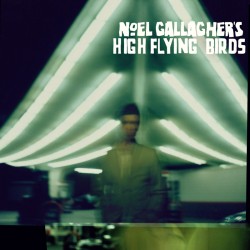
"On the way out he picked up a plum and threw it across the dressing room and it smashed against the wall," Gallagher Senior recounted at a press conference last July to announce his debut solo album, Noel Gallagher's High Flying Birds. "Part of me wishes it had ended like that. It would’ve made a great headline: ‘Plum throws plum',"

So, with Noel walking out of Oasis on the basis that he'd had enough of Liam being a twat (not necessarily his words, but not unlikely either), and his brother regrouping Oasis as Beady Eye, ("Shitbag" is all the monobrowed one could muster on Twitter) we have been presented with that hen's tooth of the pop world - a second great rivalry.

Musically, neither Gallagher has moved on with their respective projects. Beady Eye's Different Gear, Still Speeding and ...High Flying Birds could easily have been named Oasis: What Happened Next. Both Gallaghers remain rooted in the Beatles/Kinks/Steve Marriott-60s-vibe-with-psychadelic-hints that became the stock-in-trade of Oasis, and continues to be Paul Weller's muse to this day.

Solo albums invariably represent freedom and a chance to explore music that wouldn't have worked, or been accepted in a group environment. Some are pure self indulgence, some offer a cathartic release valve.

Noel Gallagher's High Flying Birds is neither indulgent or cathartic as it's perfectly clear the 44-year-old Gallagher really couldn't care less about what anyone, least of all his brother, thinks of him. It might not offer any dramatic directional surprises, but it is certainly the album of a supreme and natural songwriter, confidently enjoying his job. 

Scanning the track listing, titles such as The Death Of You And Me and If I Had A Gun might fool the lazy journalist into thinking this is an album about Our Kid. It isn't. The Death Of You And Me, the album's first single release, is a Ray Davies-esque jaunt which includes a riotously carefree New Orleans trad jazz accompaniment created, apparently, by the various members of the production team impersonating brass instruments.


If I Had A Gun is just an unashamed love song built around Gallagher's favourite F#m7 chord (think Wonderwall, viewers) and more Mellotron and grungy Gibson to keep things from getting too sloppy. The happy-go-lucky, hippy-dippy 60s sentiment continues with Dream On, picking up the Oasis template for such throwback fluff with a song Gallagher himself brands "pop for pop's sake - a tune so good maybe people won't listen to the words".

Where Gallagher does let loose with his creative spirit, and shakes off his clear affection for The Kinks Are The Village Green Preservation Society, you get something that would make you put down the dishmop. AKA...What A Life! is such a track. With its chugging piano rhythm - reminiscent of Al Stewart's On The Border, or perhaps On The Border covered by the Scissor Sisters - it pounds along with a thudding big sound that defies the fact it was recorded by Gallagher in a tiny studio with the teaboy providing the piano sample (fact).

In the olden days, a great album was marked by a bold opening track, something intriguing to end Side 1 and keep up interest to turn over, a lively commencement to Side 2, and a memorable closer with, ideally, a lengthy guitar solo to take you into the album's outro. Stop The Clocks has that. Written by Gallagher ten years ago while in Thailand, had it have been recorded then it may have been just another Champagne Supernova. Without the Manchester scally act, it takes on a much more interesting dynamic, as rich and as curious as anything on Paul Weller's 22 Dreams, layered with more prog-ish coatings of Mellotron, acoustic guitar and organ, and closing with a storming piece of guitar work from Paul 'Strangeboy' Stacey, a former Oasis session player who brings Noel Gallagher's High Flying Birds to an end with fretwork that would leave the sky black with hats if it had Johnny Greenwood's name attached to it.

Noel Gallagher is, by his own admission, neither a great guitarist nor a gifted technical musician, but he gives what you and I want, sometimes, more than anything else in a record - a good time. Something to make the morning commute more bearable, something to tune the world out, to make washing up or other household chores pass by with vim, vigour and other brands of household cleaning products.

While ...High Flying Birds will never be a solo album to have the world shouting, in unison, "I never knew he had that in him", for all its resolute rooting in territory Oasis rarely - if ever - strayed from, it reeks of unbridled enjoyment. That of its originator, as well as that of us listeners.