Showing posts with label Coldplay. Show all posts

Saturday, September 21, 2013

Just kidding: Liam Gallagher's greatest pearls of wisdom


A recent binge-watch of Simpsons episodes led to the sharp conclusion that Nelson Muntz, Springfield's teenage miscreant-in-chief, reminded me a bit of of Liam Gallagher.

Like Muntz, Liam has established himself as resident school playground thug, with his swagger, faux menace and daft proclamations about, well, anyone. All he lacks is the high-pitched mocking "Ha-ha!" of his cartoon prototype.

But as Gallagher Junior today celebrates his 41st birthday,dealing with being kicked out of the family home by wife Nathalie Appleton in the wake of allegations that he fathered a child with a Rolling Stone journalist, What Would David Bowie Do? thought it would cheer up the whole miserable mess by reminding you of why, like José Mourinho, Liam is immensely quotable. 

So, here's Our Kid on…

Pete Doherty: "Needs a slap, and the sooner he gets it, the better."

and: "What does the word Libertine mean? Freedom! He's in the corner doing smack with a helmet on his head. There's nothing free about that. It's nasty."

Coldplay's Chris Martin: "I don't hate him. I don't know him, know what I mean? I just think he's a bit giddy. He ought to calm down, he isn't going to save the world."

And [Chris Martin]: "Looks like a geography teacher."

Ageing: "I've mellowed, but not in the sense of liking Radiohead or Coldplay."

Coldplay & Radiohead: "I don't hate them, I don't wish they had accidents. I think their fans are boring and ugly and don't look like they're having a good time."

Radiohead: "Them writing a song about a fucking tree [The King of Limbs]? Give me a fucking break! A thousand year-old tree? Go fuck yourself!"

Robbie Williams: "I'd like to fucking hang Robbie Williams onstage. What's he done to me this time? Nothing. He's just somebody I'd like to hang."

And: "[Robbie Williams] "He's a fucking drama queen. You make a crap album then want everyone to feel sorry for you. Tosser!"

Bono: "You see pictures of Bono running around LA with his little white legs and a bottle of Volvic and he looks like a fanny."

Mumford & Sons: "Everyone looks like they’ve got fucking nits and eat lentil soup with their sleeves rolled up. They all look like they live on the heath. Maybe that’s where they record. Everyone’s fucking Don McLean — far too many acoustic guitars, no style. They look like they shop at Oxfam."

One Direction: "I like them. Fair play to them. Why not, man? They haven’t got a fucking clue either. I met them at the Olympics and their heads were up their ar*es, but they’re harmless."

Florence Welch: "I’m not having anyone with ginger hair making music. She sounds like someone has stood on her foot."

Gorillaz: "Like three-year-olds’ music — worse than Steps."

Victoria Beckham: "She can’t even chew gum and walk in a straight line, let alone write a book".

Kanye West: "If I ever win any more fucking awards I'd personally invite him to get up and fucking take my award of me. I fucking tell you that... That was rude when he did that to that girl, that Taylor Swift. So yeah, give me an award and see where it goes. It will roll out of his fucking arse."

Muse: "Muse fucking scare me. They're like fucking creepy shit. But people like 'em. They at least play guitars, but when I hear his voice I'm like, Ah, fuck him."

Scissor Sisters: "Bright colours and fucking weirdos on stilts? I'm more entertaining than that shit."

Franz Ferdinand: "You look at [Alex Kapranos] and the singer from Right Said Fred. It's the same person! he's just gone on the Atkins diet and grown his hair."

Billie Joe Armstrong (Green Day): "Fuck right off. I'm not having him. I just don't like his head."

La Roux: "No way, mate. She's got man hands."

On the Blur reunion: "I'm right into it, [because] it'll finish off the Kaiser Chiefs and put them to bed. There's nothing worse than a shit Blur."

Bloc Party: "They remind me of a band off University Challenge. Like they’re sitting on a panel."

Keith Richards & George Harrison (in 1997): "They're jealous and senile and not getting enough fucking meat pies".

Mick Jagger: "I don't think singers who start off singing should play guitar. It looks fucking stupid."

Amy Winehouse & Pete Doherty (as a couple): "I don’t give a fuck about her, I don’t give a fuck about the other dick and I don’t give a fuck about any of 'em".

Jack White: “The White Stripes? Fooking rubbish. School ties? At the age of 24? Fooking hell."

Ozzy Osbourne: "How come everyone thinks he’s great? He’s a bit of a fooking mong, if you ask me."

The Beatles-vs-God: "It's got to be being in The Beatles. When was the last time God made a decent record?"

Noel Gallagher: "Shitbag".

Thursday, April 4, 2013

All aboard the handbasket - next stop: Hell

As if a jittery world needed any further disquiet – what with a fat kid in North Korea threatening to throw his new toys around  – the BBC has this week delivered the somewhat grim news that Coldplay’s A Rush Of Blood To The Head is the all-time favourite album of listeners to the UK's Radio 2.

I have nothing against the album myself. I even own a copy. What depresses me, somewhat, is that it should be regarded as the album patrons of Radio 2 admire more than any other, along with Keane's Hopes & Fears (at 2), Duran Duran's Rio (3) and Dido's No Angel (5)..

I accept that Radio 2 has never been known for its edginess: in the era when Radio 1 was staffed by groovy youngsters like...er...Dave Lee Travis and Simon Bates, Radio 2 was the broadcasting equivalent of your grandad's slippers - DJs like ageing 1950s crooner Jimmy Young and dashing former Jukebox Jury panelist Pete Murray, easing you into the afternoon with the Norrie Paramour Orchestra and the Mike Sammes Singers.

But today, the station represents a sizeable chunk of the British listening public. In January it announced record audience figure of 15.1 million listeners, ranks swollen in recent years by importing presenters like Jo Whiley (who presented the Top 100) and Stuart Maconie, and including Nirvana and Green Day on its playlists.

Being 45 years old and from London's middle class suburbs, I'm probably smack-bang in the middle of Radio 2's desired demographic (if I still lived in the UK, of course). But it pains me to think that my peers would prefer James Blunt's Back To Bedlam, Dire Straits' Brothers In Arms, and ABBA's Arrival over albums lower down the chart like Elton John's Goodbye Yellow Brick Road and Marvin Gaye's What's Going On, or albums which don't even appear on the list, like London's Calling, New Boots and Panties, Never Mind The Bollocks and Exile On Main Street.

Is British mainstream music taste so unadventurous? It doesn't surprise me to see Coldplay topping this chart. Theirs is a brand of safe, predictable stadium rock, with clever little hooks to go 'woah-oh' to, a social conscience and enough aversion to shaving within the band to get the duster up of older folk who believe The Beatles lost it when they grew their hair.

A Rush Of Blood To The Head, released after 9/11 and influenced by the terror attacks and their aftermath, is actually quite a good album, don't get me wrong. Clocks, The Scientist and God Put A Smile Upon Your Face are perfectly decent songs. Live they are very competent (I last saw them in Arnhem on the day of the July 7 bombings in London, which provided an odd atmosphere to the show).

But, coming back to the central argument here, responsible for the best album? And should it come higher in the Top 10 (well, let's make it the Top 12 so I can include Led Zeppelin IV) than Dark Side Of The Moon and U2's The Joshua Tree and even Sgt Pepper's Lonely Hearts Club Band? And should Pepper have been chosen over Abbey Road or The White Album as the pick of The Beatles albums?

OK, so it's a matter of taste. But, then, the question is begged as to how Celine Dion and Shania Twain ended up on a list of the Top 100 albums released over the last 50 or 60 years. What was the application of taste there?

This chart is, obviously, a representative sample of listeners to one radio station, and was probably created to spark just such discourse as I've engaged in here ("The range of eras and genres exhibited by the chart is typical of the breadth of Radio 2 and its distinctive music policy," said Radio 2 head of music Jeff Smith), but I do worry for the musical health of a country that has lead the world - and continues to do so - in cutting edge music should be spending so much time listening to Adele's 21 or James Blunt's Back To Bedlam.


THAT RADIO 2 TOP 100 LISTENER'S ALBUMS CHART IN FULL


  1. Coldplay - A Rush Of Blood To The Head
  2. Keane - Hopes & Fears
  3. Duran Duran - Rio
  4. Pink Floyd - The Dark Side Of The Moon
  5. Dido - No Angel
  6. The Rolling Stones - Sticky Fingers
  7. Pet Shop Boys - Actually
  8. The Beatles - Sgt Pepper's Lonely Hearts Club Band
  9. U2 - The Joshua Tree
  10. Queen - A Night At The Opera
  11. Fleetwood Mac - Rumours
  12. Led Zeppelin - Led Zeppelin IV
  13. The Police - Synchronicity
  14. Madonna - True Blue
  15. James Blunt - Back To Bedlam
  16. Bruce Springsteen - Born To Run
  17. Adele - 21
  18. Oasis - Definitely Maybe
  19. Simon & Garfunkel - Bridge Over Troubled Water
  20. George Michael - Faith
  21. Dire Straits - Brothers In Arms
  22. Electric Light Orchestra - Out Of The Blue
  23. Meat Loaf - Bat Out Of Hell
  24. Kate Bush - The Kick Inside
  25. Kylie Minogue - Fever
  26. Bob Dylan - Blonde on Blonde
  27. Michael Jackson - Thriller
  28. Paul Simon - Graceland
  29. Billy Joel - An Innocent Man
  30. Kinks - The Kinks
  31. Guns N Roses - Appetite For Destruction
  32. Pulp - Different Class
  33. The Beach Boys - Pet Sounds
  34. Stevie Wonder - Songs In The Key of Life
  35. Take That - Beautiful World
  36. Blondie - Parallel Lines
  37. ABBA - Arrival
  38. Prince - Purple Rain
  39. The Eagles - Hotel California
  40. The Human League - Dare
  41. Supertramp - Breakfast In America
  42. R.E.M. - Automatic For The People
  43. Wings - Band On The Run
  44. Amy Winehouse - Back To Black
  45. Joni Mitchell - Blue
  46. Bon Jovi - Slippery When Wet
  47. Elton John - Goodbye Yellow Brick Road
  48. Robbie Williams - I've Been Expecting You
  49. Marvin Gaye - What's Going On
  50. Neil Young - Harvest
  51. Carole King - Tapestry
  52. The Verve - Urban Hymns
  53. Celine Dion - Falling Into You
  54. The Who - Tommy
  55. Donna Summer - Bad Girls
  56. George Harrison - All Things Must Pass
  57. Maroon 5 - Songs About Jane
  58. Bob Marley & The Wailers - Exodus
  59. Donald Fagen - The Nightfly
  60. Gerry Rafferty - City To City
  61. David Bowie - Let's Dance
  62. Crosby, Stills, Nash & Young - Déjà Vu
  63. Elvis Costello - My Aim Is True
  64. Roxy Music - Flesh and Blood
  65. Steely Dan - Can't Buy A Thrill
  66. Culture Club - Colour By Numbers
  67. David Gray - White Ladder
  68. Bryan Adams - Reckless
  69. Neil Diamond - Beautiful Noise
  70. Phil Collins - Face Value
  71. Genesis - Invisible Touch
  72. Barbra Streisand - Guilty
  73. Frank Sinatra - Songs for Swingin' Lovers!
  74. Simply Red - Stars
  75. Van Morrison - Avalon Sunset
  76. Rod Stewart - Atlantic Crossing
  77. Sade - Diamond Life
  78. Buddy Holly & The Crickets - The Chirping Crickets
  79. Whitney Houston - Whitney Houston
  80. Michael Bublé - Crazy Love
  81. Shania Twain - Come On Over
  82. Emeli Sandé - Our Version Of Events
  83. Elvis Presley - Moody Blue
  84. Bee Gees - Spirits Having Flown
  85. Eric Clapton - Slowhand
  86. The Pretenders - The Pretenders
  87. Eurythmics - Be Yourself Tonight
  88. The Carpenters - A Song For You
  89. John Lennon - Double Fantasy
  90. Don McLean - American Pie
  91. Chic - C'est Chic
  92. Aretha Franklin - Lady Soul
  93. Daryl Hall & John Oates - Private Eyes
  94. Earth, Wind & Fire - I Am
  95. The Doobie Brothers - Minute by Minute
  96. Lionel Richie - Can't Slow Down
  97. Diana Ross - Diana
  98. Paul McCartney - Pipes Of Peace
  99. Dionne Warwick - Heartbreaker
  100. Cee Lo Green - The Lady Killer


Sunday, December 16, 2012

Good evening Hammersmith!


You've bought the singles, bought the album, bought the concert ticket, bought the T-shirt, bought your bus ticket home and now you're being asked to buy it all over again as a live album of the show you've only just returned from. And, yes, you will buy it.

If you were at Newark's Prudential Center last night, I'm sure, soon, there will be a live CD/DVD/Blu-ray Disc package of this or one of the three other gigs in the Rolling Stones' run of 50th anniversary shows - two in London, two in New Jersey.

Over their fifty years as a band, they've released no less than 22 live performance albums. Such is their relentless self-merchandising under tireless CEO Mick Jagger (eight of the 22 albums are archive releases, brought out since the Stones' last full tour), that you wouldn't bet against a 23rd.

Stones live albums have, generally, caught the band in their natural musical habitat and, if you're prepared to work your way through the 22, you come notice just how much they have evolved, even if you hold some deep-seated prejudice about the band from London's suburbs who adopted the Chicago blues and went on to become easily the greatest rock and roll band in the world.

You should, then, start with the apostrophe-abusing Get Yer Ya-Ya's Out!, released in September 1970 (and re-released in 2010 as highly recommended 40th anniversary box set) captured the band in two shows in New York and Baltimore just as they were in the midst of, arguably, their most creative period, with Let It Bleed already recorded and Sticky Fingers about to go into production.

It captures a band in subtle transformation from boisterous, God-help-us-if-your-daughter-brought-them-home British beat and blues merchants into louche, 70s rock monsters.

The Beatles were, it appeared, on the way out, and new, heavier rivals like Humble Pie and Led Zeppelin were emerging from the 60s. Woodstock, Monterey and Isle Of Wight had set the bar for rock performances for the next few years, as had Jimi Hendrix, who died just three weeks after the Stones released Get Yer Ya-Ya's Out! to acclaim, with critics hailing it the best live album ever.

Fast forward to 1978 and The Rolling Stones: Some Girls Live, which was released last year along with the repackaging of Some Girls, and you get the full-on Stones in the 1970s, Keith Richards now clearly out of it on whatever laboratory he was living from, Ron Wood enjoying life as the 'new' Stone.

Musically, though, the 'weaving' of Richards and Wood's guitar is already starting to become more evident on Some Girls Live. Critics have suggested that the junkie Richards became a lazier guitarist, contributing rudimentary riffs to live performances while the more accomplished soloist Wood made all the effort. Not so: on Some Girls Live you can hear a distinct new Rolling Stones emerge, with Charlie Watts - solid to this day - at the back, Bill Wyman's often under-rated bass playing holding it together strongly, Richards and Wood over the top of it all with their guitar fabric, and Jagger out front, camping it up for England like Andy Pandy.

Fast forward again to 2004 and the Live Licks album, recorded on their 40th anniversary greatest hits tour and you have the corporate Stones, a polished, sports stadium band who, like some giant human jukebox, pick and choose their set lists on a night-to-night basis and can command guest appearances from Sheryl Crow (on Honky Tonk Woman) and Solomon Burke on their cover of his song, Everybody Needs Somebody To Love.

There may, inevitably, be some dross in the Stones' 22 live albums, but there are some gems too. But 22 live albums in 50 years: compare that to their great rivals, The Beatles, who barely lasted four years after their first hit record before they gave up touring altogether. The only evidence that The Beatles ever played live at all are the clips of news footage of performances drowned out by pre-pubescent screaming, or the somewhat tired and strained vibe of their 1969 Savile Row rooftop performance. If only someone had only recorded them at Hamburg's Star Club in 1960, or at the Cavern on their triumphant return to Liverpool two years later.

The live album has been one of the music industry's most contested products, regarded as either cynical plundering of the over-benevolent punter's bread, man, or pointless filler between studio albums. As the Rolling Stones have frequently demonstrated, the live album has - and continues to be - fittingly reflective of their supreme stagecraft.

Paul Weller, for example, can be similarly compared, having been responsible for some brilliant in-concert releases over the years, from music press front cover flexidiscs (I still own - somewhere - a Style Council EP from Sounds featuring a blistering version of Curtis Mayfield's Move On Up) to numerous plugged and unplugged sets on his own. And I haven't felt short changed or ripped off by any of them.

While it is true that some live releases are little more than greatest hits collections with added theatrical ambiance, many are deservedly landmark records in their own right. Johnny Cash's At Folsom Prison relaunched his career, capturing a raw and emotional performance in front of inmates at California's Folsom penitentiary, and coming on the back of the legendary country singer's struggle with drugs.

With this context, a song like Cocaine Blues becomes more than just ironic, and when you hear a tannoy in the background ordering an inmate to report in somewhere, you have a live album as thrillingly unpolished as possible.

Simon & Garfunkel's Concert In Central Park was another landmark, mostly for the fact it brought the warring duo back together again. The concert wasn't so much meant to be a reunion as a benefit show for New York's Central Park itself.

Despite being in the midst of some of Manhattan's wealthiest real estate, the park was in a state of disrepair. So, apparently, the idea of half a million people traipsing through it for a pop concert seemed to be the answer… Concert In Central Park could be seen as a live greatest hits album of Simon & Garfunkel, which is includes some of their own solo material. It's rough-round-the-edges (Garfunkel is said to have been unhappy with his vocals), but it superbly reminds you what made them folk-rock's superstars.

Rough-round-the-edges, on the other hand, is what you want from The Who. Their Live At Leeds album, with its brown paper cover art, epitomises The Who live throughout their entire career - what you see (and hear) is what you get.

A loud - even on an album - run through their late '60s 'standard' set, with hard core performances of Young Man Blues, Substitute, Eddie Cochran's Summertime Blues, and a 14-minute assault on My Generation, it has been hailed as the best live rock album ever, but that's always going to a subjective viewpoint.

There are, obviously plenty of  live albums to remind us that some acts are no more exciting live as they were in the studio, which will thankfully explain the absence of One Direction Live From The Budokan in your record collections any time soon.

Other live releases early on in careers, however, give fascinating insight in greatness to come. David Bowie's Live In Santa Monica '72 is possibly the greatest example.

It had been available for many years as a bootleg, but in being released as a limited edition CD four years ago, Bowie fans finally had their hands on an official version of a performance by the Dame in the midst of his Ziggy Stardust persona, with guitarist Mick Ronson at his absolute best, with the pair (and the other Spiders) romping through Rock’N’Roll Suicide, Life on Mars, Queen Bitch, John, I'm Only Dancing, The Jean Genie and Suffragette City, the latter presenting punk a full two years before anyone in New York had the idea of getting grungy with rock and roll.

Some live albums have built reputations as notable as many of the greatest studio albums. Frampton Comes Alive! has probably become more famous than any other album in the canon of Pete Frampton, the former Bromley schoolmate of David Bowie and Humble Pie founder.

Released in 1976 it provide to be another contradiction to the era of punk. While, elsewhere, some of Frampton's own contemporaries were spitting their way through the punk explosion (he's only a two years older than Joe Strummer…), here was this frizzy blond-haired pretty boy producing one of the biggest-selling albums of the 1970s, a live double album to boot, and one containing extended guitar solos.

Today, Comes Alive! comes across as somewhat pedestrian, the result of endless spins of the album's Show Me The Way, Baby I Love Your Way and Do You Feel Like I Do America's myriad classic rock radio stations. But there was a time when virtually every record collection featured that blue-spined double disc package with its distinct full-frame cover shot of Frampton looming out.

Another live album of genuine note is Seconds Out by Genesis. Recorded during their 1976 and 1977 tours for their A Trick Of The Tail and Wind And Wuthering records, it presented a band in transition.

After Peter Gabriel left in 1975, and Phil Collins stepped forward to become their new lead singer, the band started shifting towards more accessible material. Genesis were still telling stories, rather than performing pop songs (their first 'love song', Follow You, Follow Me wouldn't appear for another year), but Collins had clearly replaced Gabriel's somewhat aloof theatricality with his own impish, stage school-based cheeky-chappiness, which you can on the likes of Robbery, Assault And Battery and what was, then, their only hit single to date, I Know What I Like (In Your Wardrobe).

Seconds Out is a brilliant live album for its production quality. Plenty of bands have regarded live albums as well-intentioned 'gifts' for their hard-core fans, a souvenir of a memorable night, an acclaimed tour or simply a must-have for the collection with extended jams and unreleased cover versions capturing the band in their pomp and prime. Others have regarded them as official mitigations of bootleg recordings. Seconds Out is, even today, a live album I love for its authentic capture of the acoustic atmosphere of a big gig - the crowd's roar as a band breaks into its opening number, and complicated and intricate songs that fill up the entire soundstage of your home stereo system to the extent you easily replicate the experience of being there at home. Without the beer-sticky floor of course.

But as album sales dwindle (and, perversely mainstream bands make more money these days from live shows), there is a proportionate decline in live album releases too, presumably because there are marketing people advising that "core demographics" no longer go in for them.

It remains, so it would seem, for the old guard to keep the live album flame lit. Like Led Zeppelin. For a band that didn't really go in for releasing anything other than studio albums in their prime, they have been relatively prolific since their demise, with the awful The Song Remains The Same and How The West Was Won, not to mention Page and Plant's No Quarter 'unplugged' entry. By old, I mean either those old enough to have been on the original Woodstock or Monterey line-ups, or those who wished they'd been old enough to be there.

Led Zeppellin weren't at either Woodstock or Monterey, but then it's arguable that by the time they took hold, they'd have been too big for either festival.

It is ironic that the Zepp have released more live material since they folded than was ever available during their career, with the recently-released multi-format Celebration Day capturing their one-off 2007 show at London's 02 arena in honour of Atlantic Records founder Ahmet Ertegun.

It was, by all accounts of those who were there, a memorable show. But memorable for what? Probably seeing Page, Plant and Jones together again, with John Bonham's son Jason providing uncannily similar chops to his late dad on drums.

Is it a classic Zeppelin show? Probably not, but this is where the fan's compromise comes to effect: you know it won't be quite like Led Zep were at one of their legendary Los Angeles gigs in the early 1970s, at a time when they were the ultimate rock bad boys on the road, but Celebration Day still goes to demonstrate why Jimmy Page has been one of the greatest rock guitarists since he was a teenage session player from Epsom, Surrey, playing on songs by Lulu, Marianne Faithful and, believe it or not, the Rolling Stones and The Who.

This year's London 2012 Olympics, with its opening and closing ceremonies, perhaps suggested that the big stadium filling acts are in decline. Bruce Springsteen, U2 and their protégés Coldplay are amongst the few truly 'big' stadium bands left for whom you might want to buy a live album afterwards. Coldplay are certainly making the most of their elongated greatest hits show at the London 2012 Paralympics closing ceremony, by releasing Mylo Xyloto Live 2012, which captures the junior pomp rockers in their most arena-packing filling, U2 crown-usurping majesty.


The golden age of live albums was, however, without doubt the late 60s into the early 1980s. Hardly anyone who played Bill Graham's legendary Fillmore in San Francisco, or its sibling Fillmore East in New York during the 70s failed to release a live album on the back of such shows. The Fillmore East's unique acoustics even made for a more pristine recording that captured the hall's legendary ambience.

And thus, between the two venues, there is an enormous list of live releases from the likes of Henrix, The Grateful Dead, Steve Miller, Otis Redding, The Who, Jefferson Airplane, Frank Zappa, The Doors, Cream (and other Clapton vehicles), The Byrds, Carlos Santana, The Allman Brothers, Creedence Clearwater Revival, and Pink Floyd. Indeed, there was a time when if you hadn't released an album with at least one of the Fillmore venues in the title, you really weren't anything.

Today, do we need them? The live album harks back to an era before everyone carried a recording studio around in their pockets, as they do today. Live albums were meant to prevent bootleggers sneaking shoebox-sized cassette recorders into gigs and making off with second-rate bootlegs.

Today, however, the concert experience is a gymnastic exercise in craning through a sea of smartphones recording shaky but high(ish) definition clips for YouTube and posterity. And often, by the time you've caught the bus home, much of the show you've just seen will have already been posted online, with reasonably good quality picture and sound.

The only thing you don't get on a professionally recorded live album is the noise of people next to the iPhone owner, yakking on about their recurring flare-up of cystitis, or arguing about whose round it is...

Tuesday, October 2, 2012

Money for nothing?

Long before iPhones, iPods and iTunes, in fact long before Apple was anything more than an esoteric computer company making niche products for creative types who drove Saab convertibles, the Compact Disc was a thing of wonder and marvel.

And its marvel was no better exemplified than by Brothers In Arms, Dire Straits' 30 million-selling behemoth.

For, I suspect, many people of a certain age, it was the first time they'd ever heard a CD, and probably the first time they'd ever held in their hands anything "digital", apart from an LED watch that turned them into TV's Six Million Dollar Man.

Today, 27 years after its launch, Brothers In Arms still represents the very newness of the format. With its slick 80s production, Mark Knopfler’s crisp Stratocaster licks, and the acerbic lines of Money For Nothing, the satirical riff on the then-new MTV (including Sting-supplied backing vocals), the album epitomised a musical era made as much behind the mixing desk as in the studio itself.

It's contribution to the success of the CD has a lot to do with the fact it was used by almost every hi-fi dealer to promote the CD's audio quality. In turn, it became a symbol of mid-80s affluence - young middle classes with their CD mini system or, for a few, players in their brand new 3-series.

So with this image of shoulder-padded yuppydom in mind, it may come as a surprise to learn that by the time Brothers In Arms came out, the Compact Disc had already been on the market for three years.

In fact, yesterday marked the 30th anniversary of the very first commercially available CD going on sale - Billy Joel's 52nd Street.

Originally released in 1978 on vinyl, and containing te hits My Life and Big Shot, the CD version was on October 1, 1982 to kick-start the format as a viable music carrier.

It was, along with others launched in the next three years, only a half-step towards the CD's pristine reputation for clinical - some might say antiseptically soul-less - audio quality. For unlike Brothers In Arms, which earned its spurs as an audiophile reference,  52nd Street had been merely transferred from original analogue tapes. The Dire Straits record, on the other hand, was one of the first albums to be recorded using digital technology.

Another surprise for some is that the CD dates back even earlier than 1982: Philips began developing the technology as far back as 1974, applying its historical expertise in the application of light to its equal skills in recording media (having introduced the Compact Cassette 20 years before).

With Sony joining Philips in the later stages of development with a crucial piece of technology, error correction, the Dutch company had a powerful ally that would see them through future launches in so-called optical disc technologies like DVD and more recently Blu-ray Disc, forming a relationship with the content world that allowed these so-called 'optical disc' formats to flourish.

30 years on, however, and the CD is already in its death throes. Having heralded the digital consumer electronics revolution - what has, in many ways, led to you and I owning all those 'i'-devices - it has also precipitated its own demise.

CD sales have continued to plummet as digital downloads have taken over. Moreover, record shops themselves have continued to shrink and evaporate, with the likes of bricks-and-mortar retailers like HMV, Tower Records and Virgin giving way to the mail order giants. According to the UK record industry trade body, the BPI, album sales in Britain alone fell by 13.8% in the first half of 2012.


While that might not be a surprise for physical formats like the CD, it is surprising that over this summer the UK album chart recorded an all-time low for all album sales, both CDs and downloads, with Rihanna selling less than 10,000 copies of Talk That Talk. It's hard to imagine that eclipsing Brothers In Arms, or Dark Side Of The Moon, Thriller or Fleetwood Mac's Rumours, which remained on the Billboard 100 well into their second decade after release.

Worldwide, the CD (and, bizarrely, vinyl) continues to dominate record sales - accounting for almost two-thirds of all music sold worldwide – but the question is for how long? 

On-demand services like Spotify are taking over, with consumer tastes eschewing the notion of sitting down and listening to an album end-to-end (with pub debates breaking out about opening and closing tracks and the running order in between) in favour of a pick’n’mix approach, watching individual tracks on YouTube for free, or pre-compiled playlists on streaming sites.

Record industry watchers have also noticed a tailing off of releases from the world’s more bankable acts. Events like the London Olympics and Live 8 may have provided a boon to marquee acts like The Who, Paul McCartney, Pink Floyd and Coldplay, but the sales spikes they caused pale into insignificance to the cash register action created by Live Aid.

Staged just two months after Brothers In Arms was released, the strict, 20-minute set policy imposed by Bob Geldof and his “global jukebox” was just enough to showcase the likes of Queen, U2, David Bowie, Sting and Phil Collins, who all found themselves back up the charts in the weeks afterwards. This was a golden era for the record industry, even if the quality of the times – over-produced slabs of jingle-jangly chorused guitars and the ubiquitous chime of the Yamaha DX7 keyboard – didn’t match the boffo business the albums were doing.

The issue now is that with bankable bands and artists disappearing (from that list above, only U2 and Sting are still recording) through retirement or expiry, it is unlikely that an album will ever sell in the quantities that the CD helped fuel.

When Philips, Sony and a consortium of numerous film and television companies introduced the Blu-ray Disc format in 2006, people were already calling it a format too many. The Internet was here and high quality downloads fast becoming the media format of the future. It was only a matter of time before high-definition movies and music delivered down a line or through the air would be here. And now they are.

Which means that old heads like yours truly, with their anachronistic attachment to sleeve notes, cover art, Saturday afternoons spent browsing in record shops, and living room furniture built around the accommodation of a media library, are being flung, somewhat reluctantly, into the tender mercy of zeroes and ones flying through the ether.
Now that ain't workin' that's the way you do it
Let me tell you them guys ain't dumb

Monday, October 17, 2011

Brother Beyond


Once or twice in a generation, pop music generates a rivalry that has the press gnawing upon it until they get bored and move on. The fact that the rivalry was, probably, their creation in the first place is neither here or there, the scamps.

In the 1960s we had The Beatles and The Stones; 20 years later, it was Duran Duran in a battle of hairspray with Spandau Ballet. They were followed after the intermission by Simple Minds and U2, a bout clearly won by the latter who went on to meet Coldplay in an exchange of ideas about fair trade coffee.

Thankfully, with the exception of Tupac and Notorious B.I.G., few have ever turned really nasty (although there were rumours of an ugly backstage spat between Mozart and that pipsqueak Beethoven at Glasto '90. 1790.)

It is, though, unusual that a member of pop's great firmament should find themselves absorbed by not one but two rivalries in the course of their career. Lily Allen came close by issuing the pop princess equivalent of the closing time "come on then!" to Courtney Love and Katy Perry, but to my knowledge, only Noel Gallagher has been embroiled in a full-on, no-holds-barred rock'n'roll dust-up twice.

The first came to a head on August 14, 1995 when, through either disruptive thinking or unbelievable stupidity, Blur's Country House was released on the same day as Oasis appropriately brought out Roll With It. Being the height of the silly season the event was marked by being the lead story on a host of organisations customarily indifferent to such triviality. It even made the BBC’s 10 O'Clock News, with summer stand-in presenter John Humphries harrumphing with unease as he introduced that evening's 'fancy that?' piece on the affair.

Planted, not particularly deeply, within the Blur-Oasis rough-and-tumble was the British class obsession: Blur's lower/upper-middle class art college background was pitched into the contretemps, with Oasis - hailing from Manchester's hardened streets - a journalistic gift. For a year or so it made for mildy amusing copy, but the true outcome of the handbags between Blur and Oasis (which saw Liam Gallagher turning his wannabe school playground bully persona up to 11) was to mask the simmering sibling rivalry within Oasis itself.
Part of me wishes it had ended like that. It would’ve made a great headline: ‘Plum throws plum'.
The sparring between the brothers Gallagher maintained the band's reputation from the moment they first emerged in the early 90s until its bitter end in 2009. For a while you could be forgiven for thinking it was part of their schtick. 

Fast-forwarding through more than a decade-and-a-half of simmering fraternal discord, the eventual separation of Noel and Liam Gallagher, the spiritual heart of Oasis, came as no surprise to anyone. The denouement unfolded backstage at the Rock en Seine festival in Paris when a row about the junior Gallagher's Pretty Green clothing label led to him threatening his elder brother with, first a guitar, and then a piece of fruit. 

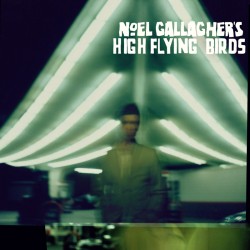
"On the way out he picked up a plum and threw it across the dressing room and it smashed against the wall," Gallagher Senior recounted at a press conference last July to announce his debut solo album, Noel Gallagher's High Flying Birds. "Part of me wishes it had ended like that. It would’ve made a great headline: ‘Plum throws plum',"

So, with Noel walking out of Oasis on the basis that he'd had enough of Liam being a twat (not necessarily his words, but not unlikely either), and his brother regrouping Oasis as Beady Eye, ("Shitbag" is all the monobrowed one could muster on Twitter) we have been presented with that hen's tooth of the pop world - a second great rivalry.

Musically, neither Gallagher has moved on with their respective projects. Beady Eye's Different Gear, Still Speeding and ...High Flying Birds could easily have been named Oasis: What Happened Next. Both Gallaghers remain rooted in the Beatles/Kinks/Steve Marriott-60s-vibe-with-psychadelic-hints that became the stock-in-trade of Oasis, and continues to be Paul Weller's muse to this day.

Solo albums invariably represent freedom and a chance to explore music that wouldn't have worked, or been accepted in a group environment. Some are pure self indulgence, some offer a cathartic release valve.

Noel Gallagher's High Flying Birds is neither indulgent or cathartic as it's perfectly clear the 44-year-old Gallagher really couldn't care less about what anyone, least of all his brother, thinks of him. It might not offer any dramatic directional surprises, but it is certainly the album of a supreme and natural songwriter, confidently enjoying his job. 

Scanning the track listing, titles such as The Death Of You And Me and If I Had A Gun might fool the lazy journalist into thinking this is an album about Our Kid. It isn't. The Death Of You And Me, the album's first single release, is a Ray Davies-esque jaunt which includes a riotously carefree New Orleans trad jazz accompaniment created, apparently, by the various members of the production team impersonating brass instruments.


If I Had A Gun is just an unashamed love song built around Gallagher's favourite F#m7 chord (think Wonderwall, viewers) and more Mellotron and grungy Gibson to keep things from getting too sloppy. The happy-go-lucky, hippy-dippy 60s sentiment continues with Dream On, picking up the Oasis template for such throwback fluff with a song Gallagher himself brands "pop for pop's sake - a tune so good maybe people won't listen to the words".

Where Gallagher does let loose with his creative spirit, and shakes off his clear affection for The Kinks Are The Village Green Preservation Society, you get something that would make you put down the dishmop. AKA...What A Life! is such a track. With its chugging piano rhythm - reminiscent of Al Stewart's On The Border, or perhaps On The Border covered by the Scissor Sisters - it pounds along with a thudding big sound that defies the fact it was recorded by Gallagher in a tiny studio with the teaboy providing the piano sample (fact).

In the olden days, a great album was marked by a bold opening track, something intriguing to end Side 1 and keep up interest to turn over, a lively commencement to Side 2, and a memorable closer with, ideally, a lengthy guitar solo to take you into the album's outro. Stop The Clocks has that. Written by Gallagher ten years ago while in Thailand, had it have been recorded then it may have been just another Champagne Supernova. Without the Manchester scally act, it takes on a much more interesting dynamic, as rich and as curious as anything on Paul Weller's 22 Dreams, layered with more prog-ish coatings of Mellotron, acoustic guitar and organ, and closing with a storming piece of guitar work from Paul 'Strangeboy' Stacey, a former Oasis session player who brings Noel Gallagher's High Flying Birds to an end with fretwork that would leave the sky black with hats if it had Johnny Greenwood's name attached to it.

Noel Gallagher is, by his own admission, neither a great guitarist nor a gifted technical musician, but he gives what you and I want, sometimes, more than anything else in a record - a good time. Something to make the morning commute more bearable, something to tune the world out, to make washing up or other household chores pass by with vim, vigour and other brands of household cleaning products.

While ...High Flying Birds will never be a solo album to have the world shouting, in unison, "I never knew he had that in him", for all its resolute rooting in territory Oasis rarely - if ever - strayed from, it reeks of unbridled enjoyment. That of its originator, as well as that of us listeners.