Showing posts with label the Rolling Stones. Show all posts

Wednesday, August 22, 2012

And in the end...


A tweet caught my eye in the aftermath of the London Olympics closing ceremony. It raised the point: "What will organisers of events like this do a few years from now when they can't wheel out acts like The Who?".

It was an interesting question. We're all very proud of our musical heritage in Britain, but the surviving members of the 60s beat and blues movements - half of the Beatles, half of The Who, four of the original Rolling Stones, as well as the likes of The Kinks, Eric Clapton, The Animals and others - can't go on forever. Not even Keith Richards.

Still, they are around and, if The Who's performance at the Olympic Stadium was anything to go by, still a force. And Sir Paul McCartney's finale appearance at the opening ceremony may have suffered sound problems, but those who saw him on tour this summer have said that the 70-year-old gave some of his best performances as a solo act.

50 years after the Rolling Stones made their debut at London's Marquee, there is still speculation that they have one more tour in them. Not bad considering their marathon, two-year Bigger Bang Tour - the last time they were all out on the road together - ended just five years ago.

Having seen them twice at various times of that run, I can vouch that they were as impressive an actas at any time over the 30-odd years I've seen them live. Despite a dubious story in the Daily Mail a few weeks back claiming that Richards struggles to remember chords, I could imagine the Stones would still cause most other touring bands to swallow something hard and jagged with a show if they were to go out on the road again now.

But at serious risk of writing the most middle-aged words I'm ever going to come out with, it's unlikely that any of today's X Factor-generation acts will be still in the public eye, let alone performing, 50 years from now. Jessie J may have been more ubiquitous at the Olympic closing ceremony than the stadium seating, but it says something that more was written about her performance of We Will Rock You with Queen than the three songs of her own she sang.

Try as some might, there is no escaping the longevity of that brotherhood of artists who, inspired by Elvis and liberated by the ending of post-war gloom, finally, made American rock and roll, blues, soul and R&B their own and, in the process, made Britain center of the musical world for much of the 1960s.

1962, in particular, was a significant year: little more than a month after that Stones gig at the Marquee, Ringo Starr took over from Pete Best as the drummer in The Beatles. Four days later - 50 years ago tonight - they made their own debut at Liverpool's Cavern Club.


The irony is that today, August 22, represents something of a bookend for The Beatles. Because it was on this day in 1969 that the band held their very last photo session, at Tittenhurst Park, the Berkshire mansion that John Lennon and Yoko Ono had moved into just 11 days before. It's the same house in which Lennon would later record his Imagine film, which made a tearful appearance in the Olympic closing ceremony.

Roger Waters has said that Dark Side Of The Moon was the beginning of the end for Pink Floyd. Its success and critical acclaim led to the demons that increasingly beset the band as they recorded Wish You Were Here, more intensively on Animals and then their denouement with The Wall. For The Beatles, the success and acclaim of Sgt. Pepper's Lonely Hearts Club band seemed to have the same effect.

Cracks were appearing during the 1968 sessions for the ambitious double 'White Album' (The Beatles). By the start of 1969 the cracks were becoming even more pronounced. The cheeky, yet innocent fun the Fab Four had exuded when they first broke through with Please Please Me in 1963, and then took to America at the spearhead of the British Invasion, had ebbed away.

In the January they started rehearsals for what would eventually be the Let It Be album. For a band that had given up touring in 1965, their public visibility had become limited. An idea was hatched for Michael Lindsay-Hogg - who had made early promotional films for both The Beatles and the Rolling Stones - to film the rehearsal process on a soundstage at Twickenham Film Studios.

The cavernous studio in south-west London was cold in January, and the scrutiny of a staged environment for what was supposed to be a creative process became a miserable experience for the band. "The lowest of all lows", is Harrison's later description.

So, recording of Let It Be - then to be called Get Back - moved to The Beatles' new studio at 3 Savile Row in London's West End, the headquarters of their Apple record label and entertainment empire. Unhappy with the album's recording, it and its summer release, was put on hold. At the end of the month the band took to the roof of the Apple building to stage their famous concert - the last time they'd all perform together. Even taking the time of year into account, there was little more warmth on show than had been seen at Twickenham, and certainly none of the bonhomie that had characterised the lovable mop tops' early career - which was still only a handful of years earlier.

George Martin is said to have been surprised that The Beatles wanted to record another album after  the Let It Be/Get Back disaster, but at the beginning of July 1969 they started work on what would be Abbey Road. Sessions for the album ran through to August 20 - two days before they assembled at Lennon's country pile for their final photoshoot.

The Tittenhurst gathering was the last time the four Beatles would be 'on show' together, and came just 15 years after the teenage Lennon invited McCartney to join The Quarrymen. By September, Lennon had announced he was leaving, only to be persuaded to hang on until a reworked version of Let It Be by Phil Spector could be released.


Incredibly, just seven years separate Starr's August defection, from Rory Storm & The Hurricanes to The Beatles, and this somewhat morose-looking group of hippies reluctantly posing for pictures. The sharp suits Brian Epstein had dressed them in had gone, and instead weird beards and weirder hats had taken over. But the body of work they were to leave behind could not - and is still not - to be touched.

With so many artists from that era continuing to be in business, it's easy to think what might have been, even if The Beatles had continued into the 1970s, even if John Lennon had still been shot in 1980. Lennon went on to enjoy hits, but rarely the same acclaim; McCartney has endured as a national treasure; Harrison recorded brilliant albums like All Things Must Pass, demonstrating that Something and While My Guitar Gently Weeps weren't random examples of genius; and Ringo, bless him, has continued to live the dream, underpinned by a reputation as a truly talented drummer - which is how he came to be poached from Rory Storm in the first place.

The memories, however, are of a long time ago. The Rolling Stones have kept their legacy burning bright by staying, mostly, together. Their creativity has never matched the peak of the period between Beggars Banquet and Exile On Main Street, but that's not to say Steel Wheels or Voodoo Lounge didn't have their moments. And as a touring entity, they can still justify being the greatest rock'n'roll band in the world.

The Who have maintained themselves as a creditable heritage act - with Roger Daltrey's 68-year-old lungs showing little evidence of age at the Olympic Park, as he ironically belted out the immortal words "I hope I die before I get old", while Pete Townshend windmilled furiously next to him, as if Woodstock and Live At Leeds had only taken place days previously.

McCartney's appearance on the opening night of the Olympics drew plenty of snarkiness. For some, I'm sure, the realisation that the boyish Beatle was now a 70-year-old with a questionable dye-job makes it hard to countenance that all of our rockers from the 60s and early 70s are now dealing with old age.

Why they still do it, however, shouldn't be in question. Sir Paul McCartney is one of the world's wealthiest individuals. He could have stopped making albums - stopped doing anything, for that matter - a long time ago. So why does he?

Let his onetime rival Keith Richards answer that: "People say 'why don't you give it up?', opined Richards in his acclaimed autobiography, Life. "I don't think they understand. I'm not doing it just for the money, or for you. I'm doing it for me."

And in the end, that's why they'll keep going - until they "can't no more".

Thursday, June 21, 2012

London Calling

When Britpop was in its prime, midway through the final decade of the last millennium, a thrusting young buck called Tony Blair came bounding down from the north-east of England to become Prime Minister of This Sceptred Isle™. Britain was, at the time, undergoing a purple patch of creative endeavour not seen since the 60s.

Indeed, such was the success of the 60s that Britain decided to recreate them in the 90s. For the Swinging Sixites, read the Loaded generation. There were artists pickling marine life (for David Bailey, read Damien Hirst) and London's Primrose Hill was fit to bursting with the cream of young British celebrity (for Caine, Stamp and Christie, read Law, Frost and Moss). Elsewhere, the country was draped, somewhat ironically, in red, white and blue. Britannia was Cool.


For a nation of natural cynics, which cherishes its heritage and loves the royals but regards all that America The Beautiful nonsense of our cousins over there a little bit, well, OTT, Britain was enjoying itself. To be seen wearing the Union Flag across your bosom (Geri Spice) or beneath the strings of your electric guitar (Gallagher, Noel) was not a misplaced and ever-so slightly gauche act of nationalism, but semi-ironic recognition that this little island of ours isn't that bad and, when you think about it, has contributed more good things to the world than the bad of its imperial past.

Today you can't go anywhere without seeing Union Flag-emblazoned sofas in furniture shops and the wartime legend KEEP CALM AND CARRY ON plastered on any printable surface. And I'm not just talking about London or anywhere else in the British Isles: Brit-chic is everywhere - even in Paris - where soft furnishings featuring the Jack are in vogue in the trendiest of home decoration boutiques.

Britannia is cool - again - or so it would appear. It has a charming new royal couple, a cheeky scamp of a prince who dates blondes, flies attack helicopters and hangs out in nightclubs, while the collective "Firm" of the House of Windsor has reanimated the world's love affair with it by celebrating Her Majesty's 60-years of majesty. And, as a neat coda to all that pomp, ceremony and ice cream, even the England football team is obliging us with a run in Euro 2012. For now.


If the world hasn't had enough of London flypasts and flagwaving for one year, 36 days from now the Olympic torch will arrive in the capital for what has been promised - by Boris Johnson, largely, so blame him if it doesn't work out -  to be the greatest celebration of Britain in living memory: the 2012 Summer Olympic Games - the Games of the XXX Olympiad. 


Such is the excitement about London 2012 that the BBC has moved to Salford, which is near Manchester and therefore not in London, and London cab drivers will universally - and gladly - tell you that they'll be spending the entire games on a beach - Canvey Island, Magaluf, Margate, doesn't matter, just anywhere that doesn't involve driving through a choked city. If you're coming to London, bring walking shoes or curb your claustrophobia by using the Underground. 


Snarkiness aside, the world has been promised a party, and a party they will get. Again, blame Boris - the cunning politician masquerading as a blond buffoon - if that doesn't work out, but it was he who, amid Jimmy Page, David Beckham and a Routemaster bus in Beijing, vowed a celebration.

As with any decent party, someone has made a mix tape. And like any playlist it will delight, divide, baffle and broach conflict in equal measure. Earlier this week, someone "leaked" this planned soundtrack for the opening ceremony of the Games, which is being compiled by the ceremony's co-musical directors, Underworld's Karl Hyde and Rick Smith.


On first inspection the playlist looks like a combination of the obvious and the in-joke, but that would be a harsh assessment of a program designed to last three hours and offer something for everyone - visitor and incumbent.

So what will we get, as we watch fireworks and garishly-clad athletes parading around the half-a-billion-pound stadium?


If the leaked playlist is correct, Hyde and Smith's sense of irony is certainly intact, kicking off the shindig with Drummond's Eton Boating Song, followed by the always rousing Land Of Hope And Glory, before letting The Jam loose with Going Underground, as bold a tribute to kitchen sink Britain as anything to come out of the post-punk era.


Later on, the Sex Pistols' God Save The Queen and Pretty Vacant (yes, we get it - and Lydon's now advertising butter...) and, perhaps, the most obvious inclusion of all - London Calling.

From the themes to EastEnders and Coronation Street to the chimes of Big Ben, the opening of London 2012 will leave no musical reference to the dear old lady of London untouched.

Prog rock - Floyd's Eclipse ("All that you...touch/see/taste/feel/love/hate/distrust/save/give/deal/buy/steal/create/destroy/do/say/eat") and two tracks from Muse (Map Of The Problematique and Uprising) - lies alongside with Elgar, Handel, Jerusalem and the always-spine tingling Cup Final anthem, Abide With Me.


There will be cinematic pomp - The Dambusters March (which I'm sure will go down well with Germany), 80s synth pop - OMD's Enola Gay (which I'm sure will go down well with the Japanese squad, especially as it will apparently precede the Sugababes' Push The Button...), West End musicals (Food, Glorious Food from Oliver!) and saucy English seaside postcard smut (The Stripper).


The more you look at the list, the more you come to think that Hyde and Smith have been handed the gig of the year in compiling it. Forget Danny Boyle with his Bond-themed opening film, the real fun,  I suspect, was in drawing up the usual suspects, and then augmenting them with a ribald twist. 


The obvious - a liberal sprinkling of The Beatles (She Loves You, The End and Hey Jude), the Rolling Stones (Satisfaction, inevitably), The Kinks (All Day And All Of The Night), The 'Oo (My Generation) and Bowie's Heroes - mix with the less obvious: Trampled Under Foot by Led Zeppelin (Stairway To Heaven would probably have been just a little too, you-know..., but why not Whole Lotta Love as Jimmy Page played in Beijing?).


As proud as we Brits should be for our classic rock heritage, the playlist denotes generous time to more contemporary London fare, such as Tinie Tempah's Pass Out and Random Antics by Kano & Mikey J. British dance culture is also properly represented by The Chemical Brothers (Galvanise), Prodigy's Firestarter (just to please Health & Safety...) and, of course, Underworld with their own Born Slippy, which will hopefully not turn up during the aquatic events.


Thematically, there will be Chariots Of Fire by Vangelis, who is Greek and will probably welcome the royalties, while Queen and the Dame's Under Pressure reflects the reputation of London's organisational skills as much as the demands about to be placed on the atheletes. 


The decades that British music has given to the global soundtrack are equally reflected, though strange to see nothing before 1962. Surely Peter Sellers' Any Old Iron or Lonnie Donegan's Rock Island Line - the skiffle song that launched the careers of most British rock stars born in the '50s, could have been found a place amongst the TV theme tunes and other ecoterica?


But that's the fun of a playlist: it's a provocation to good-natured argument, as Nick Hornby captured so well in High Fidelity (the book...). It is why athletes who have spent the last four - even eight - gruelling years preparing for these games, will be swooned by a lovey-dovey tune about a bloke who's had a few too many and is asking his better half to drive him home. Yep, I'm not entirely sure what you're supposed to do to Eric Clapton's Wonderful Tonight while walking around a running track either. Eric is a national hero, one of the greatest guitarists of all time, and I'm proud to be from (sort of) his neck of the woods, but is WT the best representation of his canon and the British blues boom he helped fuel? Surely Cream's Crossroads would have been better - a distinctly British interpretation of a song foundered in the heat of Mississippi.


And then there is Billie Jean by Michael Jackson. Why? On one hand, a good party song, but unless it is some obscure reference to the famously saphic, six-times Wimbledon Ladies Champion, I can't understand its inclusion, thematically or otherwise. I do have a theory, however: Jacko was, once, bizarrely paraded at Fulham FC's Craven Cottage ground during half time of a fixture with West Ham, whose fans sing I'm Forever Blowing Bubbles (also on the list). It is said that the entire crowd welcomed Jacko by singing this song...only with a markedly different purpose altogether...


So, progressing through the 1970s, Mud's Tiger Feet (an absolutely fantastic inclusion) and more Bowie (Starman) remind us of how much music injected colour to the otherwise drab British landscape of the decade, which was spent mostly on strike. For the 1980s - the decade that began with Thatcher, recession and war in the Falklands before erupting in a many-hued puffball skirt of  party exuberence - we'll have Duran Duran, The Eurythmics, New Order, Frankie Goes To Hollywood (Relax - my, how we've moved on as a nation...) and Soul II Soul.


And then we reach the 1990s. The circle of the 60s is turned fully with Wonderwall, an acknowledgement of Noel Gallagher's songwriting simplicity, a feature shared with Paul McCartney. Strange, though not to see one or two of the Oasis crowdpleasers - say Cigarettes And Alcohol, for a laugh, or Roll With It. Instead, The Hindu Times is on the list - a hit, but hardly a signature hit. 


Blur, on the other hand, are represented by Song 2 - a no brainer, some might say, even if it's overuse by American "sports" broadcasters has started to render it a tad annoying. Radiohead feature with Creep, presumably a reference to the speed with which London's traffic will progress for the Games' duration. Strangely, though, there's no room for Pulp, despite Lord Jarvis of Cocker hawking the Eurostar service on television adverts encouraging France to come and see what London took away from Paris. Ouch.


Looking back over the last 50 years of music represented by this list, it does warm the cockles to see just how good British music has been, and continues to be. The Arctic Monkeys' I Bet You Look Good On The Dancefloor is a fitting tribute to Alex Turner's gnarled pop senisibility, not to mention his prolific endeavour, while the good times will roll with the Kaisers' I Predict A Riot (ha-ha, ho-ho, he-he...) and Franz Ferdinand's Take Me Out.


For a contrast in fortunes, Amy Winehouse's zoot-suited version of Valerie will be heard in quick succession with Coldplay's Viva La Vida (not Clocks?) and then Adele's Rolling In The Deep. The Tottenham Tenor couldn't or shouldn't be ignored for an event like this, especially as she is single-handedly maintaining the UK's GDP with sales of 19 and 21, which between them now represent Britain's biggest export industry, ahead of Japanese cars made in Sunderland and Swindon, and the port wing of Airbus airliners made in Wales (don't you just love European collaboration?). 


Can we derive any Britishness from all this? Will this three-hour mix tape have us reaching for the Union Jack boxer shorts? Hard to say: Olympic ceremonies are hardly my cup of tea, but if this leaked list is the real deal, it would be fair to say that Karl Hyde and Rick Smith will pull off one of the more remarkable feats of London 2012 - drawing up a playlist that represents the good, the bad and the ugly of Britain and British music, from the serious to the silly, and - such as Ron Grainer's Doctor Who theme and Monty Python's The Liberty Bell - the humour that defines us Brits, and which probably only we will get.

Saturday, November 26, 2011

Topping up the pension plan


Frightening, as it may be, there is only a month to go until Christmas. However, take pity - if you can in these embittered, embattled, credit-downgraded, Wall Street-occupying times - on those who run any sort of enterprise, as they will be currently engaged in the annual freakout that is "Q4". If you are unfamiliar with - or simply don't care about - corporate jargon, this is the final 'quarter' of the financial year, in which Brer Loman and his kin pound the proverbial streets of commerce in a last-ditch push to load the corporate coffer before quill-and-ink monkeys close up the fiscal books on December 31.

Entertainment executives have traditionally pinned their hopes and, presumably, their following 12 months' narcotics budget on these final few weeks of the year. The 'holiday season' has traditionally been a bonanza opportunity to shift "units" (in English: CDs and DVDs), with record labels in particular banking on big releases from their most dependable acts to swell the cash flow.

To compensate for digital downloading cutting into profit margins, the music industry's suits have been increasingly turning to the 'mega package' to roll a coin. This has meant raiding the proverbial attics and basements of rock's dusty past to carton up classic albums replete with remastered CDs, vinyl LPs, Blu-ray Discs, DVDs, SACDs, live extras, outtakes, demos, bootlegs, postcards, badges, T-shirts and, probably, the pencil shavings from the original writing sessions. In the Champs-Élysées Virgin Megastore in Paris there is an entire island devoted to these box sets, each aiming to separate the nostalgic from their hard-earned Euros.

Along with U2's "über-deluxe" 20th anniversary package of Achtung Baby (a snip at 320 Euros!) I came across The Beach Boys' Smile Sessions. Though Brian Wilson only released a new version of the largely experimental Smile album three years ago, out comes a new and positively bulging box - as big as a board game - offering a cast array of CDs, different mixes and paraphernalia. There is even, in the US only, one suspects, a version available which includes a Beach Boys Smile-emblazoned surf board - for an eye-watering $5999.


For some artists, these repackages are exercises in loving detail. Jimmy Page personally oversaw the remastering of Led Zeppelin's back catalogue, and Pete Townshend - a feverish curator of The Who's archives - has now done the same with Quadrophenia, the band's legendary 1973 double-album.

It was, Townshend recently declared, the "last great album" the band produced. "I would say we only made three landmark records - Tommy, Who's Next and Quadrophenia," Townshend told fans at a recent question-and-answer session in London. "I've always felt Quadrophenia was the last definitive Who album. I've always regarded it as a very ambitious album, but what got away was the story."

That story, of course, was one of Townshend revisiting the Mod culture of early 60s Britain, and recalling many of the societal cues of his own youth in south-west London.

Unlike Tommy, which invariably got lost in the pretentiousness of trying to be a 'rock opera', Quadrophenia was indeed a tighter record, with a definite sense of The Who at their powerful peak, even despite the ever-present tensions between Townshend and Roger Daltrey, and drummer Keith Moon treading a thin line between eccentric lunacy and drug-addled rock casualty.

Now, in releasing Quadrophenia: The Director's Cut, Townshend has dived deeper into his art to package together the original double album remastered, along with  two whole CDs of previously unreleased material.

While not cheap, the complete set puts into a wider context the Quadrophenia story as well as a band channeling its own individual personalities through their self-styled brand of "maximum R'n'B". The extras - especially the demos and rough cuts - demonstrate a story in development, a voice, a tone and an attitude trying to find an outlet. Sonically, the remastering is fantastic, and if you haven't heard the album for a while, you will experience a new depth to it all.

Digital remastering may have enabled bands to milk their back catalogues, but it has also enabled them to bring out nuances that clunky 1970s analogue technology lost. When the Rolling Stones reissued many of their early 60s ABKCO releases a few years ago with new digital technology applied, a remarkable new clarity came through.

The Stones have always had a very astute approach to business. Mick Jagger's recent endorsement of the EMI takeover by Universal was spoken as a businessman first, and artist a distant second. "Mick likes to run a pretty tight ship," Keith Richards once said of his fellow Glimmer Twin, and it is true that the London School of Economics-educated Jagger is as much the band's CEO as he is its lead singer.

With the Stones - like U2 - running their financial affairs out of the Netherlands, thanks to a generous corporate tax system (subsidized by the Dutch taxpayer, of course), each year they meet at the sumptuous Amstel hotel in Amsterdam for formal board meetings. Their business acumen has inevitably seen them mining their own musical archives for nuggets of green from their almost 50-year recording career.

Following last year's reissue of Exile On Main Street as a box set laden with extras and a price tag to match, their 1978 album Some Girls has now followed suit. Originally appearing at the tale end of punk and the height of the disco era, Some Girls projected much of the Stones' tax-exile, rock star playboys status, like a Jackie Collins novel with electric guitars, playing up their abandonment of gloomy, strike-bound, supertaxed Britain for the playgrounds of New York, Los Angeles and the Caribbean.
The Some Girls package contains the requisite goodies - remixed original CD and another disc of overmatter, a DVD of the album performed live in Texas, plus a vinyl single, hardback book, a set of postcards (surely the clincher...!), a poster and a set of Helmut Newton prints. Like Quadrophenia, it'll liberate around 70 quid from your wallet, which is a lot for what is essentially the double CD you're really buying.

Like most Stones albums, Some Girls lacks a centre, a groove to define the piece, but instead builds up a raft of blues riffs which extend into songs, and have lyrics added to them. Beast Of Burden is one such example, apparently representing a personal 'thank you' note from Richards to Jagger for putting up with him being out of it for much of the time due to being the original human laboratory.

The indulgence of the times frequently comes through Some Girls, channeling the prevalent louche behaviour into what is now regarded - rightfully - as the last great Rolling Stones album.

It's a sparky, tight album, and the first to feature Ronnie Wood as a permanent member of the band. Already, you can hear the empathetic guitar interplay between Keith Richards and Wood on the album, an understanding that, for all the headlines these two have generated (and still do), they are still ashamedly underestimated as guitarists.

On the downside, there is Miss You, which opens the album. A worthy hit, I'll grudgingly accept (though I'll never forgive any breakfast time DJ for playing it as its refrain will not leave your head all day), even if it does feature the embarrassing cod-disco feel Rod Stewart was also striving for around the same time. It also features Jagger's ear-grinding appropriation of Harlem patois: "What's the matter wich yo' boy?". Jagger, it is worth remembering, comes from Dartford in Kent.

The Some Girls sessions garnered a bountiful harvest of new songs - more than 50, apparently - which would later surface on the Emotional Rescue and Tattoo You albums. To make up the second CD of the box set are 12 of the unreleased tracks which are good enough to have been easily released as an album in their own right. Amongst them are gems like the country cover You Win Again, featuring some great slide guitar from Wood, and a clear nod to Richards' great hero Muddy Waters on the rocking blues When You're Gone.

There is no denying that these box sets are brazen, some might say, cynical attempts to bleed the music fan further. I'm sure the majority of baby boomers buying them will have little or no use for postcards, posters and all the other bundled bumph. As discretionary purchases go, there is probably little artistic interest in listening to a bunch of outtakes and demos, any more than watching the 'deleted scenes' section of a DVD will add anything the plot you've just seen unfold. But in the case of Some Girls at least, the two-CD 'deluxe' edition of the album's reissue, with the CD of unreleased tracks makes genuine sense to revive a great album 33 years on. And that might just be the reason the Rolling Stones are such astute businessmen.

Sunday, October 30, 2011

Memories from the bottom of the garden


The Daily Mail is the self-appointed beating heart of Middle England. Much of its 'news' coverage is enraged thundering about BBC excess, or gratuitious photographs of female celebrities dressed in such a way as to leave "little to the imagination".

The Mail's other stock-in-trade is reunion stories. These come in two versions: D-Day veterans meeting up for the first time since pegging it across Juno Beach under significantly inconvenient German gunfire; and tales of childhood sweethearts who, since sharing a bus ride in 1937, have lived separate lives until a chance encounter outside a High Street pie shop ignites flames of octogenarian passion.

Thankfully, the Mail is unlikely to catch up with my own story of renewed acquaintance: it may not compete with lead-dodging Tommies for drama or Sid and Doris and their romance rekindled for warming of the heart's cockles, but it does roll back more years than I'm really at ease contemplating.

It starts with one of those lost evenings on Wikipedia that Eddie Izzard warns against - clicking on one blue link leads to another, and another, before you've acquired - momentarily - a small pile of trivia you have little use for and equally little chance of retaining.

One Tuesday evening two years ago in late March, I was idly touring the Wikiverse, vacantly jumping from link to link about rock stars connected to my native suburb on the London/Surrey borders. I'd long been curious about the high concentration of talent to have originated from this corner of England: Eric Clapton was born in the idyllic village of Ripley, was schooled in Surbiton and launched his career in the riverside pubs of Kingston. Paul Weller hails from Woking and, ironically, now has his HQ in Ripley; The Rolling Stones built their reputation at Richmond's Crawdaddy Club, The Who put nearby Eel Pie Island in Twickenham on the map, Rod Stewart was discovered busking at Twickenham railway station, and The Yardbirds shared a house in Kew. And, as What Would David Bowie Do? has previously noted, John Martyn was born in my birthtown, New Malden.

The last blue link I selected that evening revealed that, on November 3, 1967, the Royal Borough of Kingston-upon-Thames gained a new resident, Steven Wilson, lead singer, guitarist, principal songwriter and Grammy-nominated producer of Porcupine Tree, prolific collaborator of a restless number of side-projects including the highly acclaimed Blackfield with Israeli superstar Aviv Geffen, and more recently, taking on the task of remastering the entire King Crimson back catalogue.

Whether by fate or happy accident, some months before a colleague had recommended a listen to Porcupine Tree. I'd missed their emergence in the early 1990s - it happens - but dove in and acquired their albums Deadwing and In Absentia, discovering in the process a band that was regulalrly selling out legendary venues like New York's Radio City Music Hall and the Royal Albert Hall.

Although described as 'progressive rock' - by no means a derogatory description in my book - it was clear that Porcupine Tree's roots, ho-ho, lay in a rich foundation of influences, ranging from late ’60s psychedelia, early ’70s prog, ’80s metal and the more recent ambient/alt-rock scenes. Sitting, comfortably, somewhere between Muse, Athlete, Eno, Radiohead and TalkTalk, amongst other more extreme sources (German industrial rock is a strong possibility), it was a delight to hear an English band revelling in the musical territory I'd been enjoying since first taking interest in the fact I was taking interest in music itself.

So, back to my Wiki-clicking: the Steven Wilson of Porcupine Tree fame was the Steven Wilson born eight days before I arrived in the same borough. This was odd since, for the first six years of my existence there was a Steven Wilson living around the corner from me, who was born the week before me, and thus along with me would have been doing a decent job of keeping our respective neighbours awake in those winter months of 1967 and 1968.

This could still have been a huge coincidence, but I thought the easiest way to establish the facts was to chance a "This might seem strange, but..." e-mail sent to Steven's management company. Within an hour - and with the intermediary "Stalker or legit?" from his manager - the man himself wrote back: "Yes, I'm me, and you are you." Contact made, after 36 years.

Steven and I were six when we went our separate ways. His father's work took the family to Hertfordshire which, while hardly emigration, felt that way back then. Having met at kindergarten, we became friends and would frequently play together, Steven appearing at the hole in the fence at the bottom of our garden (his house backed on to mine), me going round to his house (and once disgracing myself by tripping arse-over-tit on his mum's newly washed front step, spilling vast flagons of claret all over it in the process.

Connecting again with Steven bridged a strange chasm of distance. Facebook and its ilk age have ensured that keeping in touch with your past, with school friends and old colleagues, no longer requires the services of the Pinkertons. This, however, was different. At four, five or six years old, life lacked any greater purpose or importance than what would be the Action Man outfit your next birthday might provide.

We tend to chapterise our life history: Childhood, The Teenage Years, School, First Romance, Leaving Home, Starting Work, and so on - departments of a life lived to date, each with their own set of characters, experiences and associated memories. Steven and I, on the other hand, shared only a prologue, which made me at least realise that the passing of 36 years was an awfully long time.

Before, however, we could meet in person and wistfully recount the expiry of time, progress and, in Steven's case, extreme achievement, fate intervened for, apparently, the second time (while I was working as a music journalist several years ago, Steven had in fact tried to get in touch with me. Sadly, his letter went astray). With purpose, a ticket and a backstage pass for Porcupine Tree's Amsterdam show in October 2009, we planned to catch up properly.

Unfortunately this attempt was thwarted by the brand of officiousness that is an occupational hazard to habitual liggers, but should not come between two childhood friends getting together after three and a half decades. Armed with the aftershow 'laminate' (backstage pass by another name) Steven had generously arranged for me to have, I strode up to what turned out to be a colour-blind security guard who decided that my pink pass wasn't the same colour as the puce pass on his clipboard - which by now matched the puce complexion of my face. By the time he'd resolved the issue with someone more senior, the opportunity had been lost.

This week, 36 became 38, and Steven and I finally met in Paris. His excellent solo album, Grace Before Drowning, had brought him to the prestigious Bataclan theatre in Paris.

As with the Amsterdam show, there was something surreal about seeing him on stage. I've seen friends in bands perform before, but when the lead singer is someone you last saw at the age of six, there is little to relate to apart from the knowledge that you knew each other only as young children.

When we shook hands later it wasn't a moment of or for sentiment, nor was it meant to be. It was more a moment of novelty, like two passing acquaintances from many years before falling through the same hole in time and landing in a now empty, cavernous Parisian hall.

Although almost four decades is an awful long time to cover in the handful of minutes available - the chapters both too numerous and too irrelevant to recount - it was a moment of satisfaction.

There was also pride that someone from the furthest reaches of my past, from before any of us had formed ambitions or an idea of what they wanted out of life, apart from beoming Colonel Steve Austin, had become a talented, successful musician making the kind of music I like.

There was also the sense that, in some small way, falling through that hole in time and meeting the grown up, adult Steven, built an abstract bridge to an increasingly distant chapter in my life. One that will be filled in with greater detail I'm sure when the two of us get together for a proper natter.

Monday, October 17, 2011

Brother Beyond


Once or twice in a generation, pop music generates a rivalry that has the press gnawing upon it until they get bored and move on. The fact that the rivalry was, probably, their creation in the first place is neither here or there, the scamps.

In the 1960s we had The Beatles and The Stones; 20 years later, it was Duran Duran in a battle of hairspray with Spandau Ballet. They were followed after the intermission by Simple Minds and U2, a bout clearly won by the latter who went on to meet Coldplay in an exchange of ideas about fair trade coffee.

Thankfully, with the exception of Tupac and Notorious B.I.G., few have ever turned really nasty (although there were rumours of an ugly backstage spat between Mozart and that pipsqueak Beethoven at Glasto '90. 1790.)

It is, though, unusual that a member of pop's great firmament should find themselves absorbed by not one but two rivalries in the course of their career. Lily Allen came close by issuing the pop princess equivalent of the closing time "come on then!" to Courtney Love and Katy Perry, but to my knowledge, only Noel Gallagher has been embroiled in a full-on, no-holds-barred rock'n'roll dust-up twice.

The first came to a head on August 14, 1995 when, through either disruptive thinking or unbelievable stupidity, Blur's Country House was released on the same day as Oasis appropriately brought out Roll With It. Being the height of the silly season the event was marked by being the lead story on a host of organisations customarily indifferent to such triviality. It even made the BBC’s 10 O'Clock News, with summer stand-in presenter John Humphries harrumphing with unease as he introduced that evening's 'fancy that?' piece on the affair.

Planted, not particularly deeply, within the Blur-Oasis rough-and-tumble was the British class obsession: Blur's lower/upper-middle class art college background was pitched into the contretemps, with Oasis - hailing from Manchester's hardened streets - a journalistic gift. For a year or so it made for mildy amusing copy, but the true outcome of the handbags between Blur and Oasis (which saw Liam Gallagher turning his wannabe school playground bully persona up to 11) was to mask the simmering sibling rivalry within Oasis itself.
Part of me wishes it had ended like that. It would’ve made a great headline: ‘Plum throws plum'.
The sparring between the brothers Gallagher maintained the band's reputation from the moment they first emerged in the early 90s until its bitter end in 2009. For a while you could be forgiven for thinking it was part of their schtick. 

Fast-forwarding through more than a decade-and-a-half of simmering fraternal discord, the eventual separation of Noel and Liam Gallagher, the spiritual heart of Oasis, came as no surprise to anyone. The denouement unfolded backstage at the Rock en Seine festival in Paris when a row about the junior Gallagher's Pretty Green clothing label led to him threatening his elder brother with, first a guitar, and then a piece of fruit. 

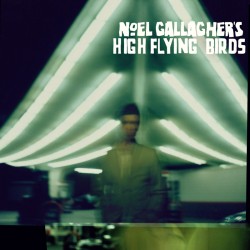
"On the way out he picked up a plum and threw it across the dressing room and it smashed against the wall," Gallagher Senior recounted at a press conference last July to announce his debut solo album, Noel Gallagher's High Flying Birds. "Part of me wishes it had ended like that. It would’ve made a great headline: ‘Plum throws plum',"

So, with Noel walking out of Oasis on the basis that he'd had enough of Liam being a twat (not necessarily his words, but not unlikely either), and his brother regrouping Oasis as Beady Eye, ("Shitbag" is all the monobrowed one could muster on Twitter) we have been presented with that hen's tooth of the pop world - a second great rivalry.

Musically, neither Gallagher has moved on with their respective projects. Beady Eye's Different Gear, Still Speeding and ...High Flying Birds could easily have been named Oasis: What Happened Next. Both Gallaghers remain rooted in the Beatles/Kinks/Steve Marriott-60s-vibe-with-psychadelic-hints that became the stock-in-trade of Oasis, and continues to be Paul Weller's muse to this day.

Solo albums invariably represent freedom and a chance to explore music that wouldn't have worked, or been accepted in a group environment. Some are pure self indulgence, some offer a cathartic release valve.

Noel Gallagher's High Flying Birds is neither indulgent or cathartic as it's perfectly clear the 44-year-old Gallagher really couldn't care less about what anyone, least of all his brother, thinks of him. It might not offer any dramatic directional surprises, but it is certainly the album of a supreme and natural songwriter, confidently enjoying his job. 

Scanning the track listing, titles such as The Death Of You And Me and If I Had A Gun might fool the lazy journalist into thinking this is an album about Our Kid. It isn't. The Death Of You And Me, the album's first single release, is a Ray Davies-esque jaunt which includes a riotously carefree New Orleans trad jazz accompaniment created, apparently, by the various members of the production team impersonating brass instruments.


If I Had A Gun is just an unashamed love song built around Gallagher's favourite F#m7 chord (think Wonderwall, viewers) and more Mellotron and grungy Gibson to keep things from getting too sloppy. The happy-go-lucky, hippy-dippy 60s sentiment continues with Dream On, picking up the Oasis template for such throwback fluff with a song Gallagher himself brands "pop for pop's sake - a tune so good maybe people won't listen to the words".

Where Gallagher does let loose with his creative spirit, and shakes off his clear affection for The Kinks Are The Village Green Preservation Society, you get something that would make you put down the dishmop. AKA...What A Life! is such a track. With its chugging piano rhythm - reminiscent of Al Stewart's On The Border, or perhaps On The Border covered by the Scissor Sisters - it pounds along with a thudding big sound that defies the fact it was recorded by Gallagher in a tiny studio with the teaboy providing the piano sample (fact).

In the olden days, a great album was marked by a bold opening track, something intriguing to end Side 1 and keep up interest to turn over, a lively commencement to Side 2, and a memorable closer with, ideally, a lengthy guitar solo to take you into the album's outro. Stop The Clocks has that. Written by Gallagher ten years ago while in Thailand, had it have been recorded then it may have been just another Champagne Supernova. Without the Manchester scally act, it takes on a much more interesting dynamic, as rich and as curious as anything on Paul Weller's 22 Dreams, layered with more prog-ish coatings of Mellotron, acoustic guitar and organ, and closing with a storming piece of guitar work from Paul 'Strangeboy' Stacey, a former Oasis session player who brings Noel Gallagher's High Flying Birds to an end with fretwork that would leave the sky black with hats if it had Johnny Greenwood's name attached to it.

Noel Gallagher is, by his own admission, neither a great guitarist nor a gifted technical musician, but he gives what you and I want, sometimes, more than anything else in a record - a good time. Something to make the morning commute more bearable, something to tune the world out, to make washing up or other household chores pass by with vim, vigour and other brands of household cleaning products.

While ...High Flying Birds will never be a solo album to have the world shouting, in unison, "I never knew he had that in him", for all its resolute rooting in territory Oasis rarely - if ever - strayed from, it reeks of unbridled enjoyment. That of its originator, as well as that of us listeners.

Friday, August 19, 2011

What will David Bowie do now?

In a recent posting to this whoopee cushion of laughs I call What Would David Bowie Do? I begged allowance for the regularity with which dead musicians get laid out on the mortuary slab of editorial examination.

So to change the mood a little, let's discuss retirement: earlier this week it was reported that the man who lends his name to this very blog "may" have reached for the pipe and slippers.

This isn't, generally, in the script. Rock stars are meant to die before they get old, or rock on until they drop.

Nowhere does it say that they should, at a certain moment, chuck it all in for a gold carriage clock and the chance to work on their allotments, or to take up Crown Green Bowls.

However, it can't be ignored that our rock stars are getting on a bit. The Rolling Stones now have a combined age of 264. Mick Jagger, at 68, is still prancing around like someone a third his age (or, roughly speaking, the same age as Ronnie Wood's latest girlfriend), while Keith Richards (67) continues to defy all known terrestrial medical science by simply being alive. There have been rumours for a while that the Stones might be planning one last hurrah of a tour to celebrate their 50th anniversary, but so far nothing.

Retirement was, nevertheless, an option pursued by 60-year-old Phil Collins, who announced earlier this year that he’d hung up his drumsticks for good. This was partly because of a chronic back problem which meant he could no longer hold his drumsticks without having them taped to his fingers (which probably means he's off Chinese food now too). Collins also wanted to focus on bringing up his two young sons, while at the same time spending more time with his model trains and bizarre obsession with the Alamo (the battle, not the car rental company). All fine, I suppose, but it shouldn't be forgotten that drummers generally don't retire. As Spinal Tap once explained, drummers expire in bizarre gardening accidents or on-stage explosions. Or in the case of Keith Moon and John Bonham, caning it.

So what about David Bowie? According to Paul Trynka, author of this year's excellent biography Starman, The Dame might not record again. “My heart says he’ll come back,” Trynka told Spinner, “but my head says he’s likely not to.  I think he would only come back if he thinks he could deliver something that will be seismic. It would be a bit of a miracle if he comes back, but miracles do happen."

Bowie certainly hasn’t released any new material since Reality in 2003, with the exception of an unofficial 'lost' album, Toy, which was leaked on the Internet earlier this year. At the end of Bowie's 2004 tour he underwent an emergency angioplasty for a blocked artery. While hardly a career-ending procedure, his public appearances have been sporadic and few ever since, and there has been no sign of his Thin White Dukeness visiting a recording studio.

If, at 64, Bowie has scaled things down, he will certainly be living comfortably off the royalties of his considerable back catalogue. This is the rock star's pension plan. Long after you've decided to leave behind the touring, the 48-hour studio sessions and the cocaine lifestyle, you can at least be assured of royalty cheques dropping through the letter box from record sales and radio airplay in far-flung places.

Perhaps ironically, one of the few public performances David Bowie has made since 2004 was to join David Gilmour on stage at London's Royal Albert Hall in 2007 for a performance of Pink Floyd's Arnold Layne. It was a tribute to Syd Barrett, who'd written the song and had passed away the previous year. Long after the madcap Barrett's sad reclusion from society, Gilmour - who had replaced him in Pink Floyd - continued to ensure he received his royalty cheques at his semi-detached suburban Cambridge home. Legend has it that they had gone uncashed for a number of years.

For the rest of us, unfortunately, we don't have such a lucrative legacy to draw from in our dotage. Indeed, the idea of retirement is an increasingly distant one, thanks to the global financial turmoil which is squeezing private and national pension plans. Inevitably, many of us from the baby boom and post-baby boom will be expected to work, like seaside donkeys, well beyond current statutory retirement age. Unless we are lucky enough to have 43 years of albums to sustain us - which pretty easily answers the question: what would David Bowie do?