Showing posts with label Genesis. Show all posts

Wednesday, October 23, 2013

Every dome should have one: Peter Gabriel - Live at the O2

© Simon Poulter 2013
For a self-confessed dilettante such as Peter Gabriel, who releases new studio albums with as much regularity as ice ages, I'm a tad overwhelmed by the relative bounty of seeing him live for the second time in three years.

Apart from anything else, how has he found the time to go out on the road again? It wasn't that long ago that Gabriel was touring his New Blood show of orchestral renderings of his greatest hits.

Then, 48 years after leaving Charterhouse to form Genesis, Gabriel finally took his gap year, travelling the world with second wife Meabh and their two young sons in what he called "The Year of Interesting Things".

But even rock star sabbaticals must be paid for, so last year Gabriel celebrated (belatedly) the 25th anniversary of his hit-stuffed So album with a US tour of the record in its entirety. And now, after a further break, presumably to do more interesting things, Gabriel has returned to the day job with a much anticipated European tour that this week brought him to London's Thames-side tent, the O2 Arena.

If anything at all can claim a long history in London's 'new' East End, Gabriel and the Greenwich venue go back to the end of the last century when it was merely the Millennium Dome. Then, Gabriel co-directed the Cirque du Soleil-like Millennium Dome Show, supplying the 'soundtrack' featuring contributions from the late Richie Havens, Neneh Cherry, Alison Goldfrapp and The Blue Nile's Paul Buchanan.

So, three years after bringing the guitar and drums-free New Blood tour to the O2, Gabriel's return - for Back To Front 2013 - is a more conventional affair, calling up his most trusted lieutenants, the flush-bonced Tony Levin (a Gabriel stalwart since 1976) and English guitarist David Rhodes, along with keyboard player David Sancious and electrifying Parisian, Manu Katché, on drums, all of whom were part of the original So tour 26 years ago. The line-up is augmented by Swedish singer-cellist Linnea Olsson and her compatriot Jennie Abrahamson on backing vocals.

'Conventional' formation notwithstanding, Gabriel has never been one for conventional anything. In his Genesis days he famously donned masks, headgear and costumes that invariably impeded his ability to get songwords out.

It was a theatricality few of his peers possessed 40 years ago, Bowie being the obvious exception. But in 2012, and at the age of 63, Gabriel is still charging about the stage, acting out songs, awkwardly dad-dancing and occasionally missing his cues. He's always done it and the audience of Gabriel-faithful accept he always will. What also hasn't changed is his remarkable voice - which, for a rock artist into his seventh decade is in truly fine fettle - or his love of doing things just that little bit differently.

 © Simon Poulter 2013
Which is why the show begins with the O2 house lights fully up as Armenian duduk player Lévon Minassian takes to the stage on his own and unannounced to play the hauntingly beautiful The Feeling Begins, the opening track of Passion, Gabriel's stunning soundtrack to The Last Temptation Of Christ.

Minassian is no support act and his performance is just a prologue to the first of three sections of an evening built with typically artistic contrivance.

The first taste of the main event comes with Gabriel himself springing on stage, dressed in what looks like a dark black Mod's fishtail parka. In tow is Levin who provides gentle bass accompaniment to his Gabriel's piano on a work-in-progress, OBUT, a Randy Newman-like song being effectively demoed on the tour.

I could end the review right there: because, in just two songs, Gabriel has demonstrated himself at his most Gabrielesque - a lone performance from a Middle Eastern musician followed by a song that hasn't even been finished.

But that's the sort of idiosyncracy that keeps Gabriel going long after many of his peers - including the band that launched him - have stopped. Even for a trawl through the hits such as this show is, it is never going to be a straightforward rock concert ending with the obligatory fankuverymuchgoodnight.

It continues with the third song of the night, as Rhodes appears with an acoustic guitar and Sancious wearing an accordion. Any fears Gabriel might coming over all Mumford are soon allayed as a) no one else joins with a banjo and b) the band kick into a semi-unplugged version of Come Talk To Me, the honest-as-the-day-is-long confessional set during the singer's failing first marriage.

Gabriel is famous for his elaborate layering on record, but the stripped back approach, even in a venue as vast as the O2, works brilliantly. So goes the same with Shock The Monkey, a song even less likely to succeed semi-acoustically, but with this configuration, does so perfectly

The sparsity, with the house lights still up, continues with Family Snapshot, an old favourite from the third solo album, and concerning a lonely child's fixation with the Kennedy assassination in 1963. Always a powerful number, it marks the show's transition from semi-acoustic to the main course of full-on rock performance, as its mournful, piano-led introduction gives way to a power-chorded break that brings the house lights down and turns the stage lighting up to 11.

 © Simon Poulter 2013
It is during Family Snapshot that the amazing vocal talents of a tuneless, ability-free fucker in Seat 551, who insists on singing along profoundly off-key and at full pelt, prove unsustainable. A stern word soon takes care of his ruination of an otherwise early highlight in the show, much to the relief of everyone else in Block 404.

Vocal travesties amongst the puntership notwithstanding, Gabriel and his ensemble have hit their stride. Digging In The Dirt and Secret World, a brace from the 'divorce' album Us, rip the O2 apart, the former's restrained funk and repressed anger demonstrating Gabriel's kinship to that other member of rock's awkward squad David Byrne. Secret World's arcing theatre provides Rhodes with a platform to demonstrate how one man, in possession of a lump of wood, some strings and a plectrum can fill a 20,000-seat dome.

Having just reflected on his own marriage, Gabriel unearths The Family and the Fishing Net, a somewhat complex - and lengthy - track off his fourth solo album which, via some obscure lyrics, compares the act of getting hitched to the rituals of voodoo. Prescient in its original form, its inclusion in the set now might appear cute, but it provides a pounding springboard for another reach back into the past, No Self Control, Gabriel's hats off to greed which was even released as a single in 1980, perhaps to cash in on Kate Bush's atypically ethereal backing vocals.

The pre-So heads in the audience are, of course, besides themselves with this trawl through the distant past, and their glee is only amplified by the swirling acclamation of freedom, Solsbury Hill. Written mainly to express liberation from the restricted structure of rock star life, it fills the O2 with fresh vigour, 36 years after it was first committed to tape.

Gabriel's second act closes with another risky divert to something untried and new, as he debuts another box-fresh song, Why Don't You Show Yourself, written for the new Guillermo Arriaga film project, Words With Gods, and a tender love song that takes some of its musical cues from the orchestral work of the Scratch My Back album.

With that, and without any pause, Gabriel begins Act III - So. It has become somewhat fashionable for artists to tour complete classic albums. From Meatloaf to Kraftwerk, and Public Enemy to The Who, the heritage trail has provided a lucrative, if occasionally, uninspiring opportunity to recreate 45 minutes of vinyl for live audiences.

But as Gabriel explains, the restrictions of vinyl - and, in particular, the physical groove space occupied by bass notes - meant that many albums were something of a compromise when they were first released.


And so, the...er... So section of the Back To Front show is performed in the intended original sequence of the 1987 album which, after almost 20 years in the business, took Gabriel into the relatively uncharted territory (for him) of pop stardom.

There had been the odd Genesis single, like 1973's I Know What I Like (In Your Wardrobe) to bother the charts, and the likes of Solsbury Hill and Shock The Monkey had been radio hits in their day. So was a different deal altogether, where Sledgehammer's mock Stax sound and the simply joyous In Your Eyes turning Gabriel into an MTV frequent flyer. Five of its songs even found their way into episodes of Miami Vice. 

Critics have since accused it of being a "desperate bid" for commercial success, but given that So finally enabled Gabriel to realise his teenage dream of being Otis Redding, the switch of gears from his fourth album's darkness to So's radio friendliness shouldn't be held against him. And, really, the shift was not that dramatic.

© Simon Poulter 2013
Katché's frantic hi-hat teasing heralds So's thunderous opening Red Rain, with the entire auditorium bathed in a biblical red light. If anything, songs like this on So brought to the Gabriel canon a completely new energy that continued with his subsequent releases.

Who knew, when Sledgehammer came out, that an old Carthusian from Surrey could play the soul star? 26 years ago it became Gabriel's biggest hit to date, boosted by its video featuring Nick Park's pre-Wallace & Gromit animations, and by the fact it got away with cheeky references to shagging (unlike Frankie Goes To Hollywood's Relax not so long before). It was also an infectious party hit, and still is, providing the largely greying, balding O2 audience with an opportunity to test their arthritis medication.

And who knew that someone from the depths of the progressive rock movement could write a song as tender as Don't Give Up? Even more disturbing is that this somnolent Depression-era romance was originally written as a duet with Dolly Parton in mind. Kate Bush, of course, made it to the eventual album and single release, but for this live tour, Abrahamson does the co-lead, and does so with an uncannily Dolly Parton-like vocal treatment.

That Voice Again was never one of So's strongest tracks, but it's something of a contractual obligation when doing the album in its entirety, soon making way for a spine-tingling rendition of Mercy Street. Clearly still a devotee of junior school 'music and movement' classes, Gabriel performs the song about tragic poet Anne Rice lying flat on his back. It is, we assume, intentional, and not the result of a trapped nerve. As he sings, stagehands push WALL-E-like lighting pods into place over him. It's all very theatrical. And, if I may, I'll use that word again - Gabrielesque.

© Simon Poulter 2013
Back on his feet, and the entire band get to test their funk chops again with Big Time, the wry swipe at fame which was recently covered by the equally wry Randy Newman on I'll Scratch Yours, the reciprocation of Gabriel's Scratch My Back covers project.

Seen, at the time, as being a little too much of a clone of Sledgehammer it bumps and grinds away pleasantly on this tour, raising the collective heart rate before the dystopian We Do What We're Told (Milgram's 37) recounts the electric shock experiments of Stanley Milgram on obliging human lab rats in an attempt to understand obedience.

The idea that Gabriel sold out when he made So is, however, nonsense. True, it was a lot more accessible than its direct predecessor Peter Gabriel 4, but it still contained the layered complexity that is Gabriel's hallmark, and his occasional forays into the avant garde, such as his duet with Laurie Anderson, This Is the Picture (Excellent Birds). It was an obscurity on the album, even left off the vinyl release due to space constraints, but nevertheless part of the original album tour. Resurrected, 26 years on, it's still rather hard to nail down, but Rhodes adds a Nile Rodgers touch to it (ironic, seeing as Rodgers played on So), giving it an unexpected groove.

So's exposure to a wider audience was aided, in some small measure, by the American airplay of In Your Eyes as well as it's appearance in John Cusack's rom-com Say Anything. When Gabriel played the So show last year at the Hollywood Bowl, Cusack appeared at the side of the stage, a boombox held aloft as it was in the film's pivotal scene. Alas, no such showbusiness here, but there is little need for any peripheral adornment.

In Your Eyes is an uplifting, warmly infectious festival of a song and even after all these years of hearing it done live, and being a repeat fixture on Gabriel's live albums, it never fails to raise a grin, and certainly doesn't on this particular evening. As the intended conclusion of So it closes the third act, the band quickly reassembling for the evening's epilogue.

© Simon Poulter 2013
The Tower That Ate People, part of the Millennium Dome Show, brings the event to a spectacular finale, with Gabriel literally disappearing into a corkscrew tower that springs up out of a lighting ring.

Gabriel's tour for the Up album featured all sorts of elaborate staging like this, and until this point the Back To Front show has been somewhat devoid of such amusements.

That's not a complaint, however. After the bicycles, revolving stages and Zorb balls of Gabriel's tour to promote Up, his last full album of original material 11 years ago, the relative conventionality of this show is quite refreshing.

There is, though, one Gabriel convention still to uphold: Biko. Written about the 1977 death in police custody of South African civil rights campaigner Steve Biko, it has, since the 1980 tour, been an expected, no - demanded fixture of the live show.

Promoting the South African cause might seem dated now, 23 years after Nelson Mandela's long walk to freedom, but Biko remains one of the most powerful, neck hair-rising anthems about humanity ever-written. Live, it still chills, driven by its thumping dum-dum-DUM, dum-dum-DUM rhythm and industrial-buzz bass notes, and the massed clench fist-salute of solidarity that accompanies the chorus.

Biko may have been written out of hippy idealism by one of rock's finest idealists, but it closes a show as memorable as any I've seen over the last 26 years since I saw Gabriel in concert for the first time, when So was 'just' his fifth solo album.

Hopefully there will be another next year and, who knows? Perhaps a return to the big tent parked on a bend in the Thames at Greenwich?

Thursday, April 18, 2013

Art For Art's Sake - a tribute to Storm Thorgerson: 1944-2013

If you were to ask me to make a list of the greatest albums of all time, I could start now and probably never finish. Magazines and radio stations regularly try to give it a go, but rarely come up with a top 10, top 100 or even top 100 that will truly cover things adequately.

You might, however, stand a chance of coming up with a decent list of the greatest albums based on their cover art.

From Sgt. Pepper's Lonely Hearts Club Band to London Calling, album covers were an integral part of the record buying experience in the pre-CD era.

With the 2013 Record Store Day taking place throughout the world tomorrow, you won't have to go far to hear old heads - like me - ruing the disappearance of gatefold sleeves, of liner notes and lyrics, and the whole tactility of buying music in a physical format.

As a schoolboy, album art meant as much to me as the music contained within. Dull geography lessons on Upper Volta would pass more meaningfully while recreating band logos in biro on the cover of an exercise book. Entire band back catalogues could be filed and discussed according to their sleeve art, while no adolescent male could resist a sneaky peak at Roxy Music's Country Life while perusing the record racks on a Saturday afternoon.

Some covers - and more pertinently, their designers - became synonymous with the impact of the album's musical content. Barney Bubbles was the creative force behind Stiff Records during the New Wave, while further back, Roger Dean's elaborate fantasyscapes will be forever associated with Yes.

But, perhaps, the most inventive and iconic cover art designer of them all was Storm Thorgerson, who died yesterday from cancer at the age of 69.

He is mostly associated with Pink Floyd, but together with Hipgnosis, the design collective he co-founded in 1968, Thorgerson was responsible for designing covers for 10CC, Muse, Led Zeppelin, Audioslave, The Cranberries, Peter Gabriel, Black Sabbath, Ian Dury, Steve Miller and Genesis.

Growing up in Cambridge, Thorgerson was a childhood friend of eventual Floyd members Syd Barrett, Roger Waters and David Gilmour. "We first met in our early teens," Gilmour wrote yesterday on his website. "We would gather at Sheep's Green, a spot by the river in Cambridge and Storm would always be there holding forth, making the most noise, bursting with ideas and enthusiasm. Nothing has ever really changed. He has been a constant force in my life, both at work and in private, a shoulder to cry on and a great friend."

In 1968 Thorgerson and fellow Cambridge designer Aubrey Powell were asked by the Floyd to design the cover for A Saucer Full Of Secrets. It was to seal Thorgerson's association with the band forever: "The artworks that [Storm] created for Pink Floyd from 1968 to the present day have been an inseparable part of our work," Gilmour added in his online tribute.


In 1973 the band released Dark Side Of The Moon, for which Thorgerson came up with a cover design as iconic as the record itself. It's origins were pretty functional: the band's Rick Wright had suggested Thorgerson produce something simple and straightforward. The outcome is something so straightforward and simple that it has adorned T-shirts and posters for the last 40 years

"No amount of cajoling would get them to consider any other contender, nor endure further explanation of the prism, or how exactly it might look," Thorgerson has explained. "'That's it', they said in unison, we got to get back to real work, and returned forthwith to the [Abbey Road] studio upstairs."

"The refracting glass prism referred to Floyd light shows - consummate use of light in the concert setting. Its outline is triangular and triangles are symbols of ambition, and are redolent of pyramids, both cosmic and mad in equal measure, all these ideas touching on themes in the lyrics. The joining of the spectrum extending round the back cover and across the gatefold inside was seamless like the seguing tracks on the album, whilst the opening heartbeat was represented by a repeating blip in one of the colours."

Throughout Thorgerson's work, artistic influences can be easily identified, from Picasso to Magritte, but also plenty of humour. With the Floyd's Animals, Thorgerson created another icon, with a pig famously flying over Battersea Power Station.

The shot has now passed into lore thanks to the inflatable pig used for the photograph slipping its mooring and drifting off into the incoming flight path for Heathrow Airport.

As the 1970s unfolded, and conceptual cover art became increasingly intertwined with musical narrative, Hipgnosis expanded their client roster to include other bands, and notably those on the artier side of rock, like Genesis and 10CC.


The studio also picked up Black Sabbath's Technical Ecstasy, the cover of which was once described eloquently by Ozzy Osbourne as "two robots screwing on an escalator"


More often than not covers were conceptual interpretations rather than literal representations, eschewing the pop notion that albums should be adverts for the bands, featuring the members themselves.


Through Thorgerson's work with Pink Floyd, however, notable design cues emerged that would appear in his work for other acts. Anonymity played a major part. Even with albums like Floyd's Wish You Were Here, ...And Then There Were Three by Genesis, and jazz-rockers Brand-X's Moroccan Roll (my favourite album title ever), which feature photography of people, they are never in close-up. Faces are never clear and in several cases feature figures with their backs to the camera.

Distance is always significant, something Thorgerson's work shared with Floyd's Roger Waters, who became increasingly obsessed with absence and separation, culminating in the entire narrative of The Wall. Thorgerson returned to Water's feelings with the cover for Is There Anybody Out There?, the box set of the live Wall show, which simply features the four face masks worn by the fake Waters, Gilmour, Wright and Mason at the beginning of the ambitious show.

One dominant cue throughout Thorgerson's projects has been the prominence of flat, green grassy fields in the lower half of the cover, blue sky in the upper half, and a prominent object or objects in the immediate foreground.

Perhaps inspired by Grantchester Meadows in Cambridge (immortalised by Floyd on Ummagumma), Thorgerson returned to this device again and again, on everything from Floyd's Atom Heart Mother and The Division Bell through to Biffy Clyro's single God & Satan and Synrise by obscure Belgian electro band Goose. Along with the setting, Thorgerson's photography would often have an unreal reality about it - rich greens in the grass, bold blues in the skyscapes, and an unnerving clarity of objects in the fore.


"I listen to the music, read the lyrics, speak to the musicians as much as possible," Thorgerson has explained. "I see myself as a kind of translator, translating an audio event – the music – into a visual event – the cover. I like to explore ambiguity and contradiction, to be upsetting but gently so. I use real elements in unreal ways."

As albums have become reduced to bitstreams, and music consumption shifts from having the patience to listen to two or even four sides of vinyl to downloaded singles or Spotify mixes, Thorgerson's artistry is, sadly, diminishing. 

There are still, thankfully, champions of the art of record design, who regard the packaging and presentation of their music as more than just a marketing exercise, and who look to today's multiple formats as an opportunity for renewed design creativity. 

But with Storm Thorgerson's passing, we should mourn the death of an era when the album cover meant more than just the thing that stops your record from getting scratched.


Wednesday, April 17, 2013

Mac - Ze Knife!

What a difference 40 years makes. In 1973, Steve Hackett played the Bataclan theatre in Paris as a member of the 'classic' line-up of the prog giants Genesis.

Somewhere on YouTube is a clip of the show, featuring the-then Peter Gabriel-fronted band succumbing to snafus such as the 22-year-old Phil Collins missing a drum cue and Gabriel himself fluffing lines because he is busy charging about in a variety of cumbersome stage costumes.

In 2013, however, and a short ride from the Bataclan in the 10th arrondissement to Le Trianon in the 18th, Hackett's biggest problem is a crashed MacBook requiring a reboot.

"How about we play some blues while we sort this out?" asks the convivial guitarist to an audience of invariably paunchy, balding, T-shirt-wearing Frenchmen in their 50s and 60s. Indeed, with scarcely a full head of hair to be seen, it is likely this crowd is enjoying a rare night out and frequently uttering the French for "they don't make songs like this any more".

The frozen Mac is unfortunate, but it happens. In days gone by entire concerts could be wrecked by drunken drummers turning up under the influence (Keith Moon, obviously) or not at all. Tonight, though, it's the opening night of Hackett's European tour, so not ideal timing for the laptop attached to ivory-tinkler Roger King's keyboards to crash. But, then, I'm still amazed that entire gigs are held together by just such a laptop. Which probably explains why you see more Macs than PCs.

But I digress. It is just two songs into the evening. Hackett and band - King, drummer/singer Gary O'Toole, saxophonist and flautist Rob Townsend, bassist Lee Pomeroy, and the flamboyant Swedish vocalist Nad Sylvan - having already dusted off Watcher Of The Skies, from the 1972 Genesis album Foxtrot, and Chamber Of 32 Doors from 1974's Lamb Lies Down On Broadway, the double album that made nods to punk's stirring, and which proved to be Gabriel's final studio record with the band.


That Hackett has resurrected two of his old band's older songs to open the show is no coincidence: his entire tour is a presentation of Genesis Revisited II, a second compilation of new recordings of material Hackett played on as the band's lead guitarist between 1971 and 1977.

This does make it tempting to position Hackett as another rock star on the heritage trail, raiding the back of the sofa for lost coins and errant M&Ms, but this is no Spandau Ballet/Go West package tour digging up the puffball-skirted 1980s just for the nostalgia of it. True, there is clear nostalgic value - as the cast of Cocoon: The Return bopping away in the rows in front of me are clearly indulging - but for a guitarist who left Genesis in 1977 out of creative frustration (his own songwriting wasn't receiving enough consideration from the rest of the band), he is here to remind us all just how fluid and innovative his guitar playing is. Indeed Eddie van Halen and Brian May are said to have picked up their fretboard 'tapping' technique from Hackett, who first used it on 1971's Nursery Cryme.

Performing material from his years with the band in 2013 it sounds surprisingly fresh. Unlike the breath of the bone-domed air drummer sat next to me who manages to sing, out of tune, through most of the show. A few rows further forward, an even older fellow - resplendent in braces holding up his elasticated trousers - spends the evening wigging out as if his nurse dropped something into his pre-show meds.

No wonder the venue is seated for the evening. Even more considerate, the provision of an intermission, presumably to allow some of the more delicately aged members of the audience to empty the bladder (or bag) and be back in their seats for the second half.

But, back to the first half, and what is - thanks to modern technology - still only the third track of the evening.

"Can you tell me where my country lies?", sings the preening Sylvan, who is part Regency dandy, part Robert Plant with his pre-Raphaelite blond curls, and part master scenery eater, as if lifted direct from some We Will Rock You-style tribute show.

At times his theatricality is tediously diverting, but as a singer - with notable vocal similarities to both Gabriel and Collins - he carries off the complexity of this material with aplomb, none more so than on Dancing With A Moonlit Knight, the puntastic opening track of Selling England By The Pound , an early take on Euro-scepticism with such 1973-topical wordplay as "Knights of the Green Shield stamp and shout".

Selling England... remains Hackett's favourite Genesis album, and the reaction to its opening track being performed on this warm April evening, four decades after its originally release, provides a clear watermark for the 119-year-old Pigalle theatre's 1000 or so patrons.

There is more to come with Firth Of Fifth. Always one of the original band's stage favourites, King plays Tony Banks' original arpeggiated piano introduction note perfectly. The song's much-anticipated highlight is its guitar solo. I learned to play it myself as a teenager, and on a Spanish guitar. I was very proud to tell this to Hackett himself when I interviewed him a few years ago. He wasn't that impressed, to tell you the truth. I don't blame him.

For me, Hackett's career in Genesis has existed largely through photographs: having left the band in 1977, before they became mirthsome stalwarts of MTV, and before they became quite the stadium force they became, Hackett playing Firth Of Fifth has, for me, existed largely through a relatively slender number of still photographs, and no live recordings. Not for the first time this week, I am taken back to my youth, though with happier memories than that of a certain prime minister's time in office.

Hackett's last two albums with Genesis, A Trick Of The Tail and Wind And Wuthering, also contained some of his strongest contributions. The earlier albums were often complex tapestries of rock, jazz, folk and even classical music, lyrically wedded to literary influences like Lewis Caroll, Keats and Coleridge.

As the band's sound started to warm up a tad, and their storytelling started to become a little less surreal,   another side of Hackett's guitar playing emerged.

A Trick Of The Tail's Entangled was and remains a beautiful song, and tonight Hackett and band recreate it with pristine arrangement - Hackett's 12-string acoustic guitar picking out the song's pleasing melody, the entire band combining on vocal harmonies which, on the original carried more than just a hint of Crosby, Stills and Nash.

The irony of Hackett leaving Genesis after Wind And Wuthering is that it also contains some of his most expressive work with the band: the intro of Blood On The Rooftops, co-written by Hackett and Collins, was a brief but delightful showcase of this guitarist's accomplished classical playing. He has since recorded entire albums of classical guitar, with interpretations of compositions by Bach. As he plays the ...Rooftops intro, seated and with a nylon-stringed acoustic, I conclude that I could listen to Hackett just playing classical guitar all night long.

There is more pomp and circumstance to come from Wind And Wuthering as the ensemble move on to Unquiet Slumbers For The Sleepers, the first part of an Abbey Road-style melody which continues with the stomping ...In That Quiet Earth, a long-time part of Hackett's live show, and another showcase for Hackett's fretboard dexterity.

After the interval, the band the band kick off Part 2 with A Trick Of The Tail's Dance On A Volcano. A sizeable number of punters are still shuffling back from their comfort break. However, clearly the pause proved to be a useful reviver, as the next song, The Musical Box - the oldest track of the night - leads to a notable rocking sensation in the rows.

The already excitable audience is then thrown into relative paroxysms by Supper's Ready. When recorded in 1972 for the Foxtrot album, it was a collage of several songs, a pick'n'mix of time signatures (one 'bit' being Apocalypse In 9/8 {Co-Starring the Delicious Talents of Gabble Ratchet}), resulting in a 23-minute piece full of loud bits and quiet bits, battles scenes and even ambitious Biblical references, such as the bombastic "take me to the New Jerusalem!" denoument, which sees Sylvan standing at the top of the stage steps, arms stretched out as if being crucified. The giggles from the row behind me - which have been getting louder with each of Sylvan's appearances - are now audible above the PA.

As the band emerges for their encore of the always enjoyable Los Endos, there are shouts of "Ze Knife! ZE KNIFE!!!". Thankfully this doesn't herald an otherwise unnoticed blade-wielding assassin, but a call for a track off the first 'proper' Genesis album, Trespass in 1970, and recorded prior to Hackett and Collins joining the band. It's an admirable shout. Recorded long before the Sex Pistols came along, it would have made an admirable punk song. Which just goes to show that you think you know a music genre, and then you discover that pigeonholing really doesn't mean a thing.

The European continent was always a fertile territory for Genesis in the early days, and progressive rock continues to be alive and indecently healthy in France. Just last month my friend Steven Wilson brought his own tour to Le Trianon, where he met a similarly enthusiastic response from a dedicated crowd of followers. Go to Belgium, the Netherlands, Germany and Italy in particular and it is treated with reverence rather than the disdain it meets in Britain.

The stupid thing is that, as Steve Hackett has demonstrated tonight, it's all just musical notes. Whether they're delivered in bursts of three or 30-minute songs, it is only ever about melody and rhythm, rather than the labels attached to them.

Walking into Le Trianon tonight I was somewhat hesitant about what a show, based on such old material of a now defunct band (as opposed to Chic, who were a funk band, hem-hem...) would hold up live under the auspices of their onetime lead guitarist. In actual fact, quite well: Hackett leaves plenty of room for his supporting players to add their part (if, in Sylvan's case, a little too much), while giving him the space and the platform to demonstrate his considerable virtuosity, one which, in the pantheon of guitar heroes, is not recognised anywhere near enough.

Sunday, December 16, 2012

Good evening Hammersmith!


You've bought the singles, bought the album, bought the concert ticket, bought the T-shirt, bought your bus ticket home and now you're being asked to buy it all over again as a live album of the show you've only just returned from. And, yes, you will buy it.

If you were at Newark's Prudential Center last night, I'm sure, soon, there will be a live CD/DVD/Blu-ray Disc package of this or one of the three other gigs in the Rolling Stones' run of 50th anniversary shows - two in London, two in New Jersey.

Over their fifty years as a band, they've released no less than 22 live performance albums. Such is their relentless self-merchandising under tireless CEO Mick Jagger (eight of the 22 albums are archive releases, brought out since the Stones' last full tour), that you wouldn't bet against a 23rd.

Stones live albums have, generally, caught the band in their natural musical habitat and, if you're prepared to work your way through the 22, you come notice just how much they have evolved, even if you hold some deep-seated prejudice about the band from London's suburbs who adopted the Chicago blues and went on to become easily the greatest rock and roll band in the world.

You should, then, start with the apostrophe-abusing Get Yer Ya-Ya's Out!, released in September 1970 (and re-released in 2010 as highly recommended 40th anniversary box set) captured the band in two shows in New York and Baltimore just as they were in the midst of, arguably, their most creative period, with Let It Bleed already recorded and Sticky Fingers about to go into production.

It captures a band in subtle transformation from boisterous, God-help-us-if-your-daughter-brought-them-home British beat and blues merchants into louche, 70s rock monsters.

The Beatles were, it appeared, on the way out, and new, heavier rivals like Humble Pie and Led Zeppelin were emerging from the 60s. Woodstock, Monterey and Isle Of Wight had set the bar for rock performances for the next few years, as had Jimi Hendrix, who died just three weeks after the Stones released Get Yer Ya-Ya's Out! to acclaim, with critics hailing it the best live album ever.

Fast forward to 1978 and The Rolling Stones: Some Girls Live, which was released last year along with the repackaging of Some Girls, and you get the full-on Stones in the 1970s, Keith Richards now clearly out of it on whatever laboratory he was living from, Ron Wood enjoying life as the 'new' Stone.

Musically, though, the 'weaving' of Richards and Wood's guitar is already starting to become more evident on Some Girls Live. Critics have suggested that the junkie Richards became a lazier guitarist, contributing rudimentary riffs to live performances while the more accomplished soloist Wood made all the effort. Not so: on Some Girls Live you can hear a distinct new Rolling Stones emerge, with Charlie Watts - solid to this day - at the back, Bill Wyman's often under-rated bass playing holding it together strongly, Richards and Wood over the top of it all with their guitar fabric, and Jagger out front, camping it up for England like Andy Pandy.

Fast forward again to 2004 and the Live Licks album, recorded on their 40th anniversary greatest hits tour and you have the corporate Stones, a polished, sports stadium band who, like some giant human jukebox, pick and choose their set lists on a night-to-night basis and can command guest appearances from Sheryl Crow (on Honky Tonk Woman) and Solomon Burke on their cover of his song, Everybody Needs Somebody To Love.

There may, inevitably, be some dross in the Stones' 22 live albums, but there are some gems too. But 22 live albums in 50 years: compare that to their great rivals, The Beatles, who barely lasted four years after their first hit record before they gave up touring altogether. The only evidence that The Beatles ever played live at all are the clips of news footage of performances drowned out by pre-pubescent screaming, or the somewhat tired and strained vibe of their 1969 Savile Row rooftop performance. If only someone had only recorded them at Hamburg's Star Club in 1960, or at the Cavern on their triumphant return to Liverpool two years later.

The live album has been one of the music industry's most contested products, regarded as either cynical plundering of the over-benevolent punter's bread, man, or pointless filler between studio albums. As the Rolling Stones have frequently demonstrated, the live album has - and continues to be - fittingly reflective of their supreme stagecraft.

Paul Weller, for example, can be similarly compared, having been responsible for some brilliant in-concert releases over the years, from music press front cover flexidiscs (I still own - somewhere - a Style Council EP from Sounds featuring a blistering version of Curtis Mayfield's Move On Up) to numerous plugged and unplugged sets on his own. And I haven't felt short changed or ripped off by any of them.

While it is true that some live releases are little more than greatest hits collections with added theatrical ambiance, many are deservedly landmark records in their own right. Johnny Cash's At Folsom Prison relaunched his career, capturing a raw and emotional performance in front of inmates at California's Folsom penitentiary, and coming on the back of the legendary country singer's struggle with drugs.

With this context, a song like Cocaine Blues becomes more than just ironic, and when you hear a tannoy in the background ordering an inmate to report in somewhere, you have a live album as thrillingly unpolished as possible.

Simon & Garfunkel's Concert In Central Park was another landmark, mostly for the fact it brought the warring duo back together again. The concert wasn't so much meant to be a reunion as a benefit show for New York's Central Park itself.

Despite being in the midst of some of Manhattan's wealthiest real estate, the park was in a state of disrepair. So, apparently, the idea of half a million people traipsing through it for a pop concert seemed to be the answer… Concert In Central Park could be seen as a live greatest hits album of Simon & Garfunkel, which is includes some of their own solo material. It's rough-round-the-edges (Garfunkel is said to have been unhappy with his vocals), but it superbly reminds you what made them folk-rock's superstars.

Rough-round-the-edges, on the other hand, is what you want from The Who. Their Live At Leeds album, with its brown paper cover art, epitomises The Who live throughout their entire career - what you see (and hear) is what you get.

A loud - even on an album - run through their late '60s 'standard' set, with hard core performances of Young Man Blues, Substitute, Eddie Cochran's Summertime Blues, and a 14-minute assault on My Generation, it has been hailed as the best live rock album ever, but that's always going to a subjective viewpoint.

There are, obviously plenty of  live albums to remind us that some acts are no more exciting live as they were in the studio, which will thankfully explain the absence of One Direction Live From The Budokan in your record collections any time soon.

Other live releases early on in careers, however, give fascinating insight in greatness to come. David Bowie's Live In Santa Monica '72 is possibly the greatest example.

It had been available for many years as a bootleg, but in being released as a limited edition CD four years ago, Bowie fans finally had their hands on an official version of a performance by the Dame in the midst of his Ziggy Stardust persona, with guitarist Mick Ronson at his absolute best, with the pair (and the other Spiders) romping through Rock’N’Roll Suicide, Life on Mars, Queen Bitch, John, I'm Only Dancing, The Jean Genie and Suffragette City, the latter presenting punk a full two years before anyone in New York had the idea of getting grungy with rock and roll.

Some live albums have built reputations as notable as many of the greatest studio albums. Frampton Comes Alive! has probably become more famous than any other album in the canon of Pete Frampton, the former Bromley schoolmate of David Bowie and Humble Pie founder.

Released in 1976 it provide to be another contradiction to the era of punk. While, elsewhere, some of Frampton's own contemporaries were spitting their way through the punk explosion (he's only a two years older than Joe Strummer…), here was this frizzy blond-haired pretty boy producing one of the biggest-selling albums of the 1970s, a live double album to boot, and one containing extended guitar solos.

Today, Comes Alive! comes across as somewhat pedestrian, the result of endless spins of the album's Show Me The Way, Baby I Love Your Way and Do You Feel Like I Do America's myriad classic rock radio stations. But there was a time when virtually every record collection featured that blue-spined double disc package with its distinct full-frame cover shot of Frampton looming out.

Another live album of genuine note is Seconds Out by Genesis. Recorded during their 1976 and 1977 tours for their A Trick Of The Tail and Wind And Wuthering records, it presented a band in transition.

After Peter Gabriel left in 1975, and Phil Collins stepped forward to become their new lead singer, the band started shifting towards more accessible material. Genesis were still telling stories, rather than performing pop songs (their first 'love song', Follow You, Follow Me wouldn't appear for another year), but Collins had clearly replaced Gabriel's somewhat aloof theatricality with his own impish, stage school-based cheeky-chappiness, which you can on the likes of Robbery, Assault And Battery and what was, then, their only hit single to date, I Know What I Like (In Your Wardrobe).

Seconds Out is a brilliant live album for its production quality. Plenty of bands have regarded live albums as well-intentioned 'gifts' for their hard-core fans, a souvenir of a memorable night, an acclaimed tour or simply a must-have for the collection with extended jams and unreleased cover versions capturing the band in their pomp and prime. Others have regarded them as official mitigations of bootleg recordings. Seconds Out is, even today, a live album I love for its authentic capture of the acoustic atmosphere of a big gig - the crowd's roar as a band breaks into its opening number, and complicated and intricate songs that fill up the entire soundstage of your home stereo system to the extent you easily replicate the experience of being there at home. Without the beer-sticky floor of course.

But as album sales dwindle (and, perversely mainstream bands make more money these days from live shows), there is a proportionate decline in live album releases too, presumably because there are marketing people advising that "core demographics" no longer go in for them.

It remains, so it would seem, for the old guard to keep the live album flame lit. Like Led Zeppelin. For a band that didn't really go in for releasing anything other than studio albums in their prime, they have been relatively prolific since their demise, with the awful The Song Remains The Same and How The West Was Won, not to mention Page and Plant's No Quarter 'unplugged' entry. By old, I mean either those old enough to have been on the original Woodstock or Monterey line-ups, or those who wished they'd been old enough to be there.

Led Zeppellin weren't at either Woodstock or Monterey, but then it's arguable that by the time they took hold, they'd have been too big for either festival.

It is ironic that the Zepp have released more live material since they folded than was ever available during their career, with the recently-released multi-format Celebration Day capturing their one-off 2007 show at London's 02 arena in honour of Atlantic Records founder Ahmet Ertegun.

It was, by all accounts of those who were there, a memorable show. But memorable for what? Probably seeing Page, Plant and Jones together again, with John Bonham's son Jason providing uncannily similar chops to his late dad on drums.

Is it a classic Zeppelin show? Probably not, but this is where the fan's compromise comes to effect: you know it won't be quite like Led Zep were at one of their legendary Los Angeles gigs in the early 1970s, at a time when they were the ultimate rock bad boys on the road, but Celebration Day still goes to demonstrate why Jimmy Page has been one of the greatest rock guitarists since he was a teenage session player from Epsom, Surrey, playing on songs by Lulu, Marianne Faithful and, believe it or not, the Rolling Stones and The Who.

This year's London 2012 Olympics, with its opening and closing ceremonies, perhaps suggested that the big stadium filling acts are in decline. Bruce Springsteen, U2 and their protégés Coldplay are amongst the few truly 'big' stadium bands left for whom you might want to buy a live album afterwards. Coldplay are certainly making the most of their elongated greatest hits show at the London 2012 Paralympics closing ceremony, by releasing Mylo Xyloto Live 2012, which captures the junior pomp rockers in their most arena-packing filling, U2 crown-usurping majesty.


The golden age of live albums was, however, without doubt the late 60s into the early 1980s. Hardly anyone who played Bill Graham's legendary Fillmore in San Francisco, or its sibling Fillmore East in New York during the 70s failed to release a live album on the back of such shows. The Fillmore East's unique acoustics even made for a more pristine recording that captured the hall's legendary ambience.

And thus, between the two venues, there is an enormous list of live releases from the likes of Henrix, The Grateful Dead, Steve Miller, Otis Redding, The Who, Jefferson Airplane, Frank Zappa, The Doors, Cream (and other Clapton vehicles), The Byrds, Carlos Santana, The Allman Brothers, Creedence Clearwater Revival, and Pink Floyd. Indeed, there was a time when if you hadn't released an album with at least one of the Fillmore venues in the title, you really weren't anything.

Today, do we need them? The live album harks back to an era before everyone carried a recording studio around in their pockets, as they do today. Live albums were meant to prevent bootleggers sneaking shoebox-sized cassette recorders into gigs and making off with second-rate bootlegs.

Today, however, the concert experience is a gymnastic exercise in craning through a sea of smartphones recording shaky but high(ish) definition clips for YouTube and posterity. And often, by the time you've caught the bus home, much of the show you've just seen will have already been posted online, with reasonably good quality picture and sound.

The only thing you don't get on a professionally recorded live album is the noise of people next to the iPhone owner, yakking on about their recurring flare-up of cystitis, or arguing about whose round it is...

Sunday, October 21, 2012

Say it isn't So - Gabriel's landmark turns 25(ish)

Such is Peter Gabriel's habitual delinquency that even his 25th anniversary release of So has slipped by a year.

He has a good excuse. Well, good excuses - namely the tale end of his New Blood project, along with the usual disparate interests and causes that have a habit of slowing his progress like weeds dragging a boat.

But, finally, So 25 is here, in a number of commemorative forms, from the basic CD reissued through a treasure chest of a box set, more of which in a moment.

Let's first consider the original form, released in the late spring of 1986, just as I was taking my A-levels. It was an album that turned Gabriel into a superstar, transforming him from that bloke who'd had slightly eccentric hits like Solsbury Hill, Games Without Frontiers and Shock The Monkey, and who, further back, had worn a variety of bizarre costumes as lead singer of Genesis Mark I.

The path to So had taken many forms. His first four title-free solo albums (later named by their Hipgnosis cover art to help confused Americans), were each like pieces of molten metal being banged into shape by a master blacksmith, perpetually hammering to find the optimum form.


The first ('Car'), released two years after leaving Genesis, was the freedom album, symbolised by Solsbury Hill (about leaving Genesis, the band he'd formed at school) and its sibling Excuse Me, a cod-barbership number which begins: "Excuse me/You're wearing out my joie de vie/Grabbing those good years again/I want to be alone".

The second ('Scratch') in 1978 had an edgier feel, thanks to Robert Fripp's production and staffing by predominantly American musicians, including Bruce Springsteen's keyboard player Roy Bittan, which fused an odd hybrid of punk and West Coast rock. For the third ('Melt'), Gabriel changed direction once more as he embraced his own version of synth-rock New Wave with guest spots by Kate Bush, Paul Weller (guitar on And Through The Wire) and former bandmate Phil Collins on cymbals-free drums (thus giving birth to the gated reverb sound that would become his signature as a superstar in his own right).

This third album, more experimental and slightly less accessible than the first two ended with Biko, the fist-pumping anthem about South African civil rights leader Steve Biko, and arguably the first example of a western rock star embracing what we now call "world music". This continued on Gabriel's fourth solo album ('Security'), which opened with the tribal drumming of The Rhythm Of The Heat and contained the story of Native American mysticism, San Jacinto (beautifully rearranged for orchestra on New Blood, Gabriel's recent symphonic retread).

Three years, a live album of the fourth album's tour, and the soundtrack to Alan Parker's Birdy had elapsed by the time Gabriel started work on So. Incredibly he'd been a recording artist for almost 20 years, having cut his first album with Genesis while at Charterhouse as he still harboured ambitions of being a drummer and soul singer (he was a passionate Otis Redding fan, a feature that lay largely publicly suppressed until So came along with the obvious Stax pastiche, Sledgehammer).

The years separating So from its predecessors may have been decades. With the assistance of Daniel Lanois, the Canadian who'd just produced U2's Under A Blood Red Sky with Brian Eno, Gabriel and an eclectic cast (including Stewart Copeland, Otis Redding's trumpeter Wayne Jackson and other members of The Memphis Horns, Senegalese superstar Youssou N'Dour, Simple Minds' Jim Kerr, performance artist Laurie Anderson and Chic guitarist Nile Rodgers), Gabriel stepped out of the artistically-worthy but commercially flimsy shadows to become a proper, breakfast telly-patronising star, especially in America.

So wasn't, however, some crude attempt to go pop. It was an album made, still, on Gabriel's trademark awkward terms, but musically it took the singer further towards layered songwriting and recording than he'd ever attempted before.


Armed with new toys like the Fairlight CMI sampling keyboard, Gabriel indulged his laborious passion for texturing and, in particular, rhythm, which dated back to his schoolboy soul band drumming. Coupled to a voracious appetite for (and consumption of) oddballstories, the more obscure the better, and you had the makings of the most multi-dimensional album Peter Gabriel had recorded to date.

So's opener, Red Rain depicted a vision of vulnerability, though many have wrongly assumed it's a direct comment on the ecology. 26 years on, it is still powerful, even more so live, and its recent orchestral treatment by Gabriel for the New Blood project gave it an even greater sense of the epic.

For an album written and recorded in 1985, amid yuppies and the decadent red braces and puffball skirts of Thatcher's supposedly loadsamoney Britain, Don't Give Up was as caustic a song about Thatcherism's cause and effect as Elvis Costello's Shipbuilding had been about the leaderene's Falklands adventure. Featuring Kate Bush - whose memorable embrace with Gabriel for the song's video led to tabloid rumours of the two being an item - Don't Give Up had been inspired by the Great Depression, hence the 1930s gospel feel. It is said people contemplating suicide changed their minds thanks to the song's sentiment. Its poignancy touches still, today.

Big Time was an oddly prescient swipe at rock superstar egotism, caricaturing pop success on an album that would turn Gabriel into a major star himself. So, he has said, "was the end of the idea of me being a sort of cult artist at the fringes of the mainstream, especially in America. There wasn’t an option to go and hide in the shadows any more."

The album reached number one in seven countries including the UK, and went on to sell five million copies in the US alone. It regularly shows up in lists of the best albums of all time. Part of this success is down to one song in particular.

Even he'd wanted to, Sledgehammer would ensure his place in pop history forever. With its unreservedly simplistic Memphis soul sound, and borderline BBC ban-sexuality (remember, the BBC were still blacklisting records in 1986 for the slightest hint of deviance. Shame they weren't applying the same prurience to their presenters....) Sledgehammer blasted Gabriel onto charts around the world.

It gave Gabriel his first ever US No.1 single (which was, ironically, later knocked off the top by his old band's Invisible Touch), helped significantly by the stop-frame promo made by a then-unknown animator from Bristol called Nick Park. Today, Sledgehammer is still the most-screened video in MTV history.


Sledgehammer and Big Time may have been the album's tempo tracks, but Gabriel's interest in the obscure was never far away. Mercy Street took So into a colder space than Sledgehammer and Big Time, focusing on the story of troubled poet Anne Sexton, and her struggles against depression and suicide. We Do What We're Told (Milgram's 37), in a similar vein, recounted the controversial electro-shock obedience experiments by Yale scientist Stanley Milgram, while This Is The Picture (Excellent Birds), a collaboration between Gabriel and performance artist Laurie Anderson, took the album into Gabriel's occasionally abstruse areas of departure.

For the most part, however, everything about So seemed to say "different" and "new". Even the choice of a simple, black and white cover shot by Dutch photographer Anton Corbijn suggested a clean approach for the 36-year-old Gabriel. As his old band Genesis had found, making the transition from mythical creatures and Victorian whimsy to saying "I love you" in a song hadn't been easy for these former English public schoolboys and their somewhat repressed backgrounds that had been liberated by The Beatles, the Stones and Motown.


Having seemingly avoided emotion on any of his previous works, Gabriel ended So with one of the 1980s' most uplifting songs about romance, In Your Eyes. Combining jaunty, danceable African rhythms with a backing chorus featuring Youssou N'Dour, it coincided with Paul Simon's Graceland (released just three months after So) as one of the first mainstream pop records to reach into Africa for inspiration - and be a hit. Gabriel had been involved in the burgeoning World Music scene for some time, having launched WOMAD in 1982 (nearly bankrupting him in the process) to provide a showcase for music from the Middle East, Asia, Africa and Latin America.

In Your Eyes became a bigger hit thanks to Cameron Crowe's rom-com Say Anything. During a pivotal scene, in which John Cusack holds up a boombox to Ione Skye's bedroom, he plays In Your Eyes. In America, at least, it remains a song to fall in love to.

A couple of weeks ago, Gabriel's Back To Front tour of the US to celebrate So's anniversary came to the Hollywood Bowl in Los Angeles, during which the performance of In Your Eyes prompted a cameo from Cusack...and his music machine...

What makes So remarkable, 27 years after it was written and recorded, is just how timeless it sounds. So much from the 1980s has dated; rock songs with over-chorused guitars, dance songs with fake brass as if played on a My First Botempi keyboard, and the sheer party streamer fakery of it all. Sledgehammer had real, Stax horns on it; Don't Give Up had a genuinely supportive warmth to it; and In Your Eyes remains, to this day, a song to lift the spirits.

So why re-release it? Good question. With record sales in terminal decline, rock's biggest stars are plundering their libraries and exploiting the heritage appetite left-right-and-centre. Hardly a classic album can pass a major milestone anniversary without it being re-packaged, re-boxed and re-toured.

For So's slightly belated anniversary, Gabriel has produced a similar choice of packages as Pink Floyd, The Rolling Stones and others have done with their reissues, offering a choice of remastered version of the original album, a three-CD pack containing the original plus a double live album from the So tour, or, for the über fan, the So 'immersion' box set, comprised of the remastered album, the So DNA CD - a "unique insight" into So's creation featuring bits of tracks while they were still in development, the Live in Athens 1987 DVD executive produced by Martin Scorsese, the So - Classic Albums DVD documentary, along with a high quality vinyl version of the album, a 12-inch disc containing unreleased songs, a high-definition digital download and a luxury book about the album.


The ideal Christmas gift? Maybe not for some people. Blogger Paul Sinclair recently wrote an open letter to Gabriel to complain about the lack of 5.1-channel mixes of So, amongst other absent format choices. Gabriel wrote back, at length, ending: "While I accept we may not have made all the right decisions, I do resent any implication that this is a cynical or exploitative project."

Gabriel concluded by writing: "It's something that all of us involved are proud of, and I really hope will be appreciated for what it is".

While you can debate the merits of artists going to such elaborate lengths to repackage such epoch-making albums, there is certainly something to celebrate about So. An '80s album that was of its time but hasn't aged one bit. Now, how is that so?


Saturday, October 20, 2012

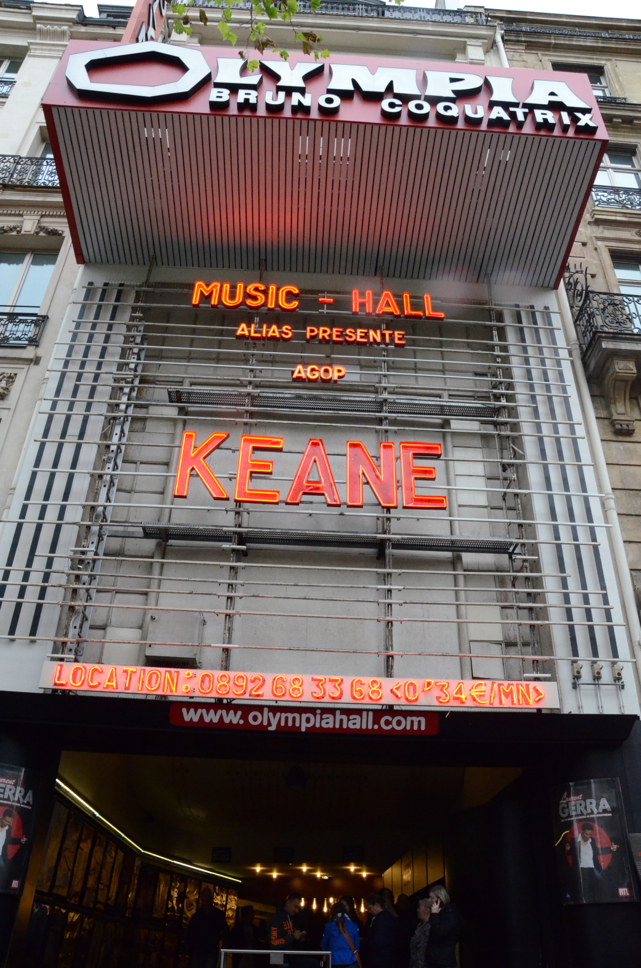
CP company - Keane, live in Paris:

Picture: Keane/Facebook
Let's face it, as rock music instruments go, the piano just isn't sexy.

Sorry if you were put through hell as a child to achieve your Grade 6 piano certificate, but it really is just a piece of noisy furniture.

No attempt to make it more interesting has ever worked. Chris Martin dawbing his Sunday school upright in right-on graffiti didn't do it either.

And, as for bone-domed Jan Hammer, poncing about on TV with a keyboard strapped to him like a guitar while performing the Miami Vice theme, this was about as far removed "rock god" as it is possible to be.

The guitar, on the other hand, is rock and roll itself; for its leading practitioners, it's an appendage, an extension and in some cases the distinction of themselves. BB King's vibrato is the most recognisable guitar technique in guitar history, and I would wager that most people would identify Eric Clapton, Keith Richards, Jimi Hendrix, Jimmy Page, Jeff Beck, David Gilmour and U2’s The Edge simply from a snippet of their guitar sound.

Keane, however have quite stubbornly ignored all of this. At the elegant but cavernous L'Olympia in Paris on Wednesday night, the only appearance of a guitar was the red Telecaster singer Tom Chaplin strummed along to Neon River, off their latest album Strangeland.

From the outset of their career, Keane have built their entire musical proposition around the piano of principal songwriter and keyboard player Tim Rice-Oxley, and one piano in particular. And here, forgive me a brief diversion into the realms of trivia. For, I strongly suspect, there is another band, who also started out in the somewhat blue-blooded environs of southern England, to thank for the Keane signature sound.

Banks of keyboards. Ho and, indeed, ho.
In the middle of their transformation from progressive rock giants to American FM radio-friendly...er....giants, Genesis made an album called Duke. Marking the acquisition of a more pop-rock sensibility than their former extensive forays into the ethereal, Duke - released in 1980 also marked the abandonment by keyboard player Tony Banks of the grand pianos, Moogs synths, Mellotrons and Hammond organs that had marked their territory and, essentially, defined prog rock in the 1970s.

On an album of notably shorter, poppier songs, Banks made liberal use of the Yamaha CP70 electric piano. You may not know or even care about the CP70. But it became one of the most important tools of the trade in the 1980s, it's distinctive "tinkly" sound turning up everywhere (think Alive & Kicking by Simple Minds or Peter Gabriel's In Your Eyes).

With this change of tone, Genesis started noticing women at their concerts. And hit singles. Their albums sold in the millions, and then in the multi-millions, the result of adopting bright, breezy English pop-rock. Rice-Oxley was clearly listening. Because the CP70 has been Rice-Oxley's - and, therefore, Keane's - principal instrument and defining sound.

Traces of Duke-era Genesis DNA can be found throughout their earlier albums, including Hopes & Fears, widely hailed as one of the best debut albums by a British band in decades and containing the likes of Somewhere Only We Know and Bedshaped.

Picture: Keane/Facebook
Live, Keane are a pleasant anomaly. The somewhat gauche, public schoolboyish intensity that characterised their public emergence when Hopes & Fears took off in 2004 is still there.

The lanky Rice-Oxley is hunched over his CP70, stabbing away at its keys like Lucy's brother Schroeder in the Peanuts cartoons. "Cherubic" (contractually-obliged description) vocalist Tom Chaplin is still a mixture of polite choirboy and energetic rocker. Drummer Richard Hughes just gets on with drumming without superfluous percussive pyrotechnics, and bass player Jesse Quin does what most bass players do - keep pace at the back and try not to draw too much attention to themselves.

Keane are still in a hard to define area of rock. Or pop. Or pop-rock. Warming the audience up with Bruce Springsteen's Dancing In the Dark unfortunately conditioned the expectation. Springsteen has, on occasion, veered away from his trademark time card-punchin' denim-clad rock'n'prole with songs like that. With Keane you sometimes wish they veer away from songs like that and grow a pair. I mean that kindly.

They could rockout, but I suspect they don't because their audience just adores the rock-pop/pop-rock they stick to. Their live show isn't a great deal more raucous than their album work, but whereas their albums make perfectly pleasant living room listening, their relatively sparse, drums-bass-piano-vocals structure fills out the space of a venue as spacious as L'Olympia.


Neither anthemic Coldplay pomp nor vacuous Euro clapalong pop, Keane more than satisfied the enthusiastic French audience with a string of energetic renderings of You Are Young, Meet Me In The Morning, and Is it Any Wonder, the latter building around its circuitous rhythm, with Chaplin adopting that theatrical semi-lunge into the mic stand of his, giving him the appearance of a slightly fey-looking Damon Albarn from a distance.


Picture: Keane/Facebook
At various moments of the evening Chaplin declared Keane's love for France, which was inevitably rewarded enthusiastically by the partisan crowd, which included a set of parents with toddler in toe. You can interpret this either as a sign of Keane's unthreatening nature, or an apparent dearth of babysitters in the Paris area. She seemed to enjoy herself, nevertheless.

It's unlikely that you'll find Keane stretching into extended live versions of their hits. The likes of Everybody's Changing, This Is The Last Time, Bedshaped and Somewhere Only We Know lasted the length of the album version, albeit with passionate audience participation. Some bands, when they stick resolutely to recreating their album versions, do so with sterility.

Keane could easily just phone in their hits - and with a set of some 16 songs, you realise just how much they've produced in the 15 years since their formation, but live they put heart and soul into every note. And yet you still get the feeling that this is a band that is just getting going. Coldplay, the band to which Keane probably get compared to more than most, came together just a year before, and yet have already given us the impression that they've outlasted their welcome. On this evidence, Keane have got plenty left in the tank.